
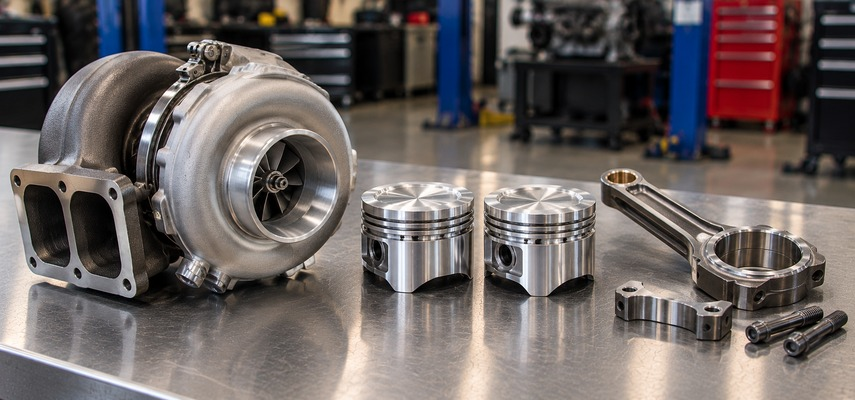

The Subaru EJ207 is a 2.0 liter turbocharged flat-four built for the Japanese-market Impreza WRX STI, with a 92 mm bore, a 75 mm stroke, and 8.0:1 compression. Factory output ran from roughly 275 to 280 PS in most versions, climbed to about 308 PS in later twin-scroll cars, and reached 328 hp in the final S207, and builders widely regard it as tougher under power than the US EJ257. Figures vary by year and chassis, so the numbers below are ranges, not a single spec.
The EJ207 has a reputation among Subaru fans that few engines match. It never appeared in a US-market car, which adds to the mystique, and owners hear about it constantly in conversations about swaps, builds, and what the STI could have been. This guide covers what the engine is, what it makes, how it differs from the EJ257, and what it means for US owners.
EJ207 Specs at a Glance
The EJ207 displaces 1,994 cc from a bore of 92.0 mm and a stroke of 75.0 mm. Compression is listed at 8.0:1, and the layout is a horizontally opposed four-cylinder with DOHC and four valves per cylinder. The engine is turbocharged and fed premium fuel, and it appeared in the JDM Impreza WRX STI across several generations.
Later versions add Subaru’s AVCS variable valve timing, and some added a twin-scroll turbocharger. Builders and dealers describe several sub-versions, from a basic single-scroll setup, to AVCS cars, to twin-scroll cars, so it helps to know which chassis and year a particular engine came from. Early STIs used a single-scroll roller-bearing turbo, and Australian-delivered cars made roughly 16 psi of peak boost. The EJ20 stayed in Japanese STIs until the WRX STI EJ20 Final Edition marked the end of its production.
How Much Power Does the EJ207 Make
Japanese automakers followed a voluntary limit of 280 PS for years, so many JDM STI figures sit right at 280 PS, which is about 276 hp. A 2001 STI is listed at 280 bhp at 6,400 rpm. Torque on early versions runs about 373 to 394 N·m, which is roughly 275 to 290 lb-ft, depending on the year and source.
Later versions climbed higher once the limit relaxed. Twin-scroll versions are quoted at about 308 PS, and the S207 special edition makes a listed 328 bhp at 7,200 rpm with 431 N·m of torque, roughly 318 lb-ft. Those top figures belong to limited cars, so a typical used engine sits closer to the 275 to 308 PS range.
Owners curious how that compares with the US engine can read how much power the stock STI turbo makes and what a stock EJ257 can handle.
EJ207 vs EJ257: The Short Version
The EJ257 is the 2.5 liter engine in the US WRX STI from 2004 to 2021. Its bore grows to 99.5 mm and its stroke to 79 mm, which is where the extra torque comes from. According to one engine builder, the two share the same basic architecture but differ in many internal details, and the EJ207 is smaller yet makes its power with a more advanced turbo setup.
That is the summary, and the detailed comparison lives in EJ207 versus EJ257. Owners also curious about the newer engine can read EJ257 versus FA24.
Is the EJ207 Reliable
The EJ207 has a better durability reputation than the EJ257 among builders. Several describe it as the more robust motor, citing stronger internals, thicker cylinder liners, and a tougher crankshaft and connecting rods than the US engine. Those advantages explain why it handles more power and why many builders favor it for swap projects.
It is not bulletproof, though. Piston ring failure and the high oil consumption that comes with it show up on EJ207s too, and any high-mileage engine needs a close look before it goes into a car. The EJ257’s best known weak points are piston ring lands and rod bearings, and those are the problems the EJ207’s reputation is measured against.
Deck design is where sources disagree. Builders commonly call the EJ207 block semi-closed deck, and they use the same term for the EJ257, while some spec sheets list the EJ207 as closed deck, so treat claims about its deck with caution. The explainer on what a closed deck engine is covers why the distinction matters.
Can You Put an EJ207 in a US WRX or STI
One JDM engine dealer lists an EJ207 as a direct fit for the 2002 to 2005 WRX, with the note that it needs the AVCS harness and a JDM ECU to run. Swaps of that kind involve wiring, engine management, and parts that are harder to source than US components, and they raise local rules on imports and emissions. Anyone planning one should research the specific chassis and talk to a shop that has done it.
For most US owners, the practical question is different. They have an EJ257 and want its durability to improve, and that is a problem a good build can solve.
Getting EJ207-Style Toughness From an EJ257
A stronger bottom end is the best route. The IAG 550 EJ25 Short Block adds forged internals for street builds up to 550 BHP, and it is the sensible first step for an owner whose engine needs a rebuild anyway.

Owners who want to go further can step up to the IAG 750 EJ25 Closed Deck Short Block, which uses a new case converted to closed deck. The IAG 550 guide and the IAG 750 guide explain who should build each one.

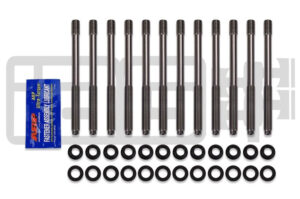
Head studs are the other piece that matters on a built engine. The IAG and ARP 14mm Head Stud Set fits the 2002 to 2020 WRX and STI, and why ARP head studs matter covers when they become necessary.
The whole path is mapped in which EJ257 build level is right for you, and short block versus long block explains the choice between a bottom end and a complete engine. A finished plan appears in the reliable 400whp EJ257 build recipe.
What to Know Before You Spend
An engine is only as good as the care and tuning around it. Detonation, lean fueling, and heat break any EJ, regardless of its reputation, and the most common STI engine failures guide explains what usually goes wrong. Boost limits matter too, and how much boost is safe on a stock WRX or STI sets a baseline.
Owners planning more power can compare options in the best turbo upgrades for the STI. The full engine lineup lives on the IAG short block page, and more STI parts sit on the Subaru STI parts page.
Frequently Asked Questions
What is the Subaru EJ207 engine?
The EJ207 is a 2.0 liter turbocharged flat-four used in the Japanese-market Impreza WRX STI. It has a 92 mm bore, a 75 mm stroke, and 8.0:1 compression.
How much horsepower does the EJ207 make?
Most versions are rated at about 275 to 280 PS, which is roughly 276 hp. Later twin-scroll versions reach about 308 PS, and the S207 special edition makes 328 bhp.
Is the EJ207 better than the EJ257?
Builders generally call the EJ207 the more durable engine under power, thanks to stronger internals and thicker cylinder liners. The EJ257 is larger at 2.5 liters and makes more torque from its bigger displacement.
Was the EJ207 ever sold in the US?
No. The EJ207 was fitted to the JDM WRX STI, and the US STI used the 2.5 liter EJ257 from 2004 to 2021.
Is the EJ207 reliable?
It has a better durability reputation than the EJ257, but it is not immune to problems. Piston ring failure and high oil consumption are reported on EJ207s, and any used engine needs a careful inspection.
Can you swap an EJ207 into a US WRX?
One JDM engine dealer lists it as a direct fit for the 2002 to 2005 WRX, with the AVCS harness and a JDM ECU required. Swaps involve wiring, engine management, and local rules, so research the specific chassis first.
0 Comments for “Subaru EJ207 Engine: Specs, Power and Reliability”