Subaru STI Performance Upgrades Guide
A complete guide to building power, improving reliability, and choosing the right upgrades for your STI, from entry-level bolt-ons to fully built EJ257 engines.
FREE SHIPPING ON ALL ORDERS OVER $199

Upgrading a Subaru STI is not just about adding horsepower. The EJ257 is a capable platform, but it responds to modifications differently than the FA-series engines in the WRX lineup. Every upgrade affects how the engine, turbo system, fueling, and supporting components work together, and the open deck architecture of the EJ257 means those interactions carry more consequences as power climbs.
This guide breaks down the STI upgrade path into key stages, helping you understand which modifications matter most and how to build a setup that works as a complete system. Whether you are starting with basic bolt-ons or planning a high-power engine build, choosing the right combination of parts makes all the difference.
Different goals require different upgrade strategies. Start by defining how you plan to use your STI.
Balanced performance with a focus on reliability and drivability.
Basic bolt-on upgrades
Improved throttle response and efficiency
Minimal impact on engine stress
Ideal for daily driving
Increased power with supporting modifications to maintain balance.
Turbo and airflow upgrades
Fuel system and tuning improvements
Enhanced cooling and reliability
Strong mid-range and top-end power
Maximum performance with fully upgraded supporting systems.
Built engine components
High-capacity fuel system
Advanced turbo setup
Designed for high boost and track use
Each guide below covers a specific area of the STI build in depth, with product recommendations and supporting context for your platform and power goals.
STI Bolt-On Upgrades & Entry-Level Mods
Where every STI build starts. Intake, exhaust, Accessport tune, and the right order to approach each upgrade.
STI Exhaust Upgrades & Systems
Headers, downpipes, and catback systems explained by build stage for the EJ257 platform.
STI Fuel System Upgrades & Supporting Mods
Pumps, injectors, flex fuel kits, and E85 strategy for every power level on the STI.
STI Turbo & Airflow Upgrades
Intercooler, intake, and turbo upgrade paths matched to your STI build and power goals.
STI Engine Reliability & Supporting Mods
The foundation every modified STI depends on, from oil control to engine stability under boost.
STI Engine Build & Power Goals
Short blocks, turbo matching, and how to plan a high-power EJ257 build from the ground up.

Explore key Subaru STI performance upgrades below, organized by stage to help you build a balanced setup across airflow, fueling, and engine reliability.
The first stage focuses on improving airflow and overall responsiveness without significantly increasing engine stress. These upgrades make the STI feel more responsive and give the ECU a better platform to work from while maintaining factory reliability.
At this level, the goal is to build a solid foundation before moving into higher power modifications. Getting the tune right early on matters more on the EJ257 than most people expect, because the platform runs conservative from the factory to protect the open deck architecture.
Typical upgrades include: intake systems, exhaust components, and ECU calibration via Accessport.
As power goals increase, airflow becomes the main limiting factor. Upgrading the turbocharger, intercooler, and charge piping allows the engine to move more air efficiently and produce higher power under boost.
This stage is where the STI begins to transition from basic modifications to true performance gains. On the EJ257, choosing the right turbo at this stage also means thinking ahead about what the bottom end can support. Our boost control and forced induction guide explains how these systems interact.
Typical upgrades include: turbochargers, intercoolers, and charge pipe systems.
Increased airflow requires proper fueling to maintain safe air-fuel ratios. At this stage, upgrading fuel pumps and injectors becomes necessary to support higher boost levels and prevent lean conditions. E85 and flex fuel setups are especially common on STI builds at this power level.
Proper ECU tuning is critical here to ensure the engine runs safely while maximizing performance gains. Our E85 vs pump gas guide and fuel system upgrade guide break down how these upgrades work together on the EJ257.
Typical upgrades include: fuel pumps, injectors, flex fuel kits, and custom ECU tuning.
As power increases, supporting modifications become essential for long-term reliability. Oil control systems, cooling upgrades, and reinforced components help the EJ257 handle increased stress and maintain consistent performance under sustained boost.
This stage is often overlooked, but it plays a critical role in protecting the engine as power levels rise. Upgrades like IAG oil catch can systems, engine mounts for WRX and STI, and insights from our AOS guide are especially important at this level on the STI. Our STI engine reliability upgrades guide covers everything at this stage.
Typical upgrades include: oil control systems, cooling upgrades, and reinforced mounts.
For high horsepower goals, internal engine components must be upgraded. The EJ257 open deck architecture has well-documented limits under sustained high boost, and a built closed deck short block is the correct solution once power goals move beyond what the factory bottom end can safely support.
At this level, every component in the system must be properly matched to support performance and durability. Our short block vs long block guide and IAG short block power limits guide help define realistic expectations and plan the build correctly.
Typical upgrades include: built short blocks, upgraded internals, and high-capacity supporting systems.
Power gains alone do not define a successful STI build. The key is balance. Airflow, fueling, cooling, and engine strength must all work together to support the desired power level.
The EJ257 is not a forgiving platform under stress. As modifications increase, each upgrade places additional demand on a bottom end that was not designed for open-ended power increases. Without the right supporting components in place, performance becomes inconsistent and engine longevity is at risk.
A well-planned upgrade path ensures that every component supports the next stage of the build, allowing the STI to deliver consistent power, better drivability, and improved durability over time. The builds that hold up are the ones where every system was chosen to support the same goal.

The Subaru STI ran the EJ257 from 2004 through 2021, making it one of the most widely supported performance platforms in the Subaru aftermarket. The EJ257 uses an open deck block architecture that responds well to bolt-on modifications at lower power levels, but requires a closed deck short block to support serious power goals reliably over time.
Understanding this platform difference is important when planning any STI build beyond Stage 2. The EJ257 has a deep aftermarket ecosystem, a well-documented set of failure points under high boost, and a proven set of solutions for every power level.
If you are starting your upgrade path, explore the Subaru-specific collections:
Other Subaru turbo platforms such as the Forester XT, Legacy GT, and Impreza share EJ-based architecture with platform-specific differences in tuning and supporting component requirements.
For most STI owners, the best starting point is an Accessport tune combined with a downpipe upgrade. The EJ257 responds well to exhaust flow improvements, and a proper tune unlocks the gains that other bolt-ons are waiting on. From there, an intake and catback round out a solid Stage 1 to Stage 2 foundation. Our STI bolt-on upgrades guide covers the right order and what to expect from each mod.
On the EJ257, most stock engines reliably support 350 to 380 wheel horsepower with conservative tuning on pump gas. On E85 or flex fuel, that ceiling moves up, but the bottom end limitation remains. Exceeding these thresholds without a built short block increases the risk of head gasket failure and cylinder wall distortion. Our 400whp EJ257 STI build guide defines what a safe, reliable build at that level looks like.
Yes, always. A larger turbo increases airflow demand across the entire system. Fueling, intercooling, exhaust flow, and tuning all need to match what the new turbo is capable of moving. On the EJ257 specifically, the bottom end also needs to be factored into the plan before committing to a big turbo setup. Our STI turbo and airflow upgrades guide covers what the full supporting setup looks like at each power level.
Once power goals consistently push beyond 380 to 400 wheel horsepower on sustained hard use, the factory open deck EJ257 architecture starts to show its limits under elevated boost and cylinder pressure. At that point a closed deck short block becomes the correct long-term foundation. Our STI engine build and power goals guide explains how to plan around a built engine from the start.
The EJ257 is the engine in every STI produced from 2004 through 2021. It uses an open deck block architecture with a deep performance aftermarket built around it, including closed deck short blocks, performance heads, and a full range of turbo and fuel system options. The FA20 and FA24 power the WRX lineup with a more modern twin-scroll turbo configuration and updated tuning flexibility, but a different set of supporting requirements. Our FA20 vs FA24 guide explains how each platform responds to upgrades.
On any STI that is being tuned or driven hard under boost, an oil catch can or AOS system is an important addition. The EJ257 generates significant crankcase pressure under boost, which carries oil vapor into the intake system and can reduce effective octane and cause carbon buildup over time. As power and boost increase, this becomes more important to manage proactively. IAG oil catch can and AOS systems are the most established solution for this platform.
A well-built STI is never the result of one great part. It is the result of every system in the build matching the power level being asked of it. That is why supporting mods matter at every stage on the EJ257, not just at the top end of the build.
For owners just starting out, the right foundation begins with bolt-on upgrades and entry-level mods that improve airflow and give the ECU a proper tuning platform to work from. Getting this stage right on the STI makes every upgrade after it more effective.
As power goals increase, the exhaust path needs to support the turbo’s ability to spool and evacuate gases efficiently. The EJ257 responds especially well to header and downpipe upgrades at this stage. Our STI exhaust upgrades guide covers how headers, downpipes, and catback systems work together across different build stages.
Fueling is one of the first systems to reach its limits as boost climbs, and E85 or flex fuel is a common direction on serious STI builds. Our STI fuel system upgrades guide covers pumps, injectors, and flex fuel setups matched to the power level being targeted.
On the forced induction side, the turbo and intercooler need to be matched to both the engine’s capability and the fuel system supporting it. Our STI turbo and airflow upgrades guide explains how intercooler, intake, and turbo choices connect across the full build.
Stabilizing the drivetrain with engine mounts for WRX and STI becomes increasingly important as torque rises on the EJ257. Excess drivetrain movement under load works against the consistency every other upgrade is designed to deliver.
Managing crankcase pressure is non-negotiable on any modified STI driven hard under boost. IAG oil catch can and AOS systems protect the intake system and support cleaner, more consistent engine operation under sustained boost on the EJ257.
For builds where the power goal has moved beyond what the factory short block can support, IAG short blocks for WRX and STI provide the closed deck foundation that serious EJ257 builds are built around. Our STI engine build and power goals guide covers how to plan that stage of the build from the start.
Every upgrade on a STI works best when it is part of a complete plan. The builds that hold up longest and perform most consistently are the ones where every system was chosen to support the same goal.
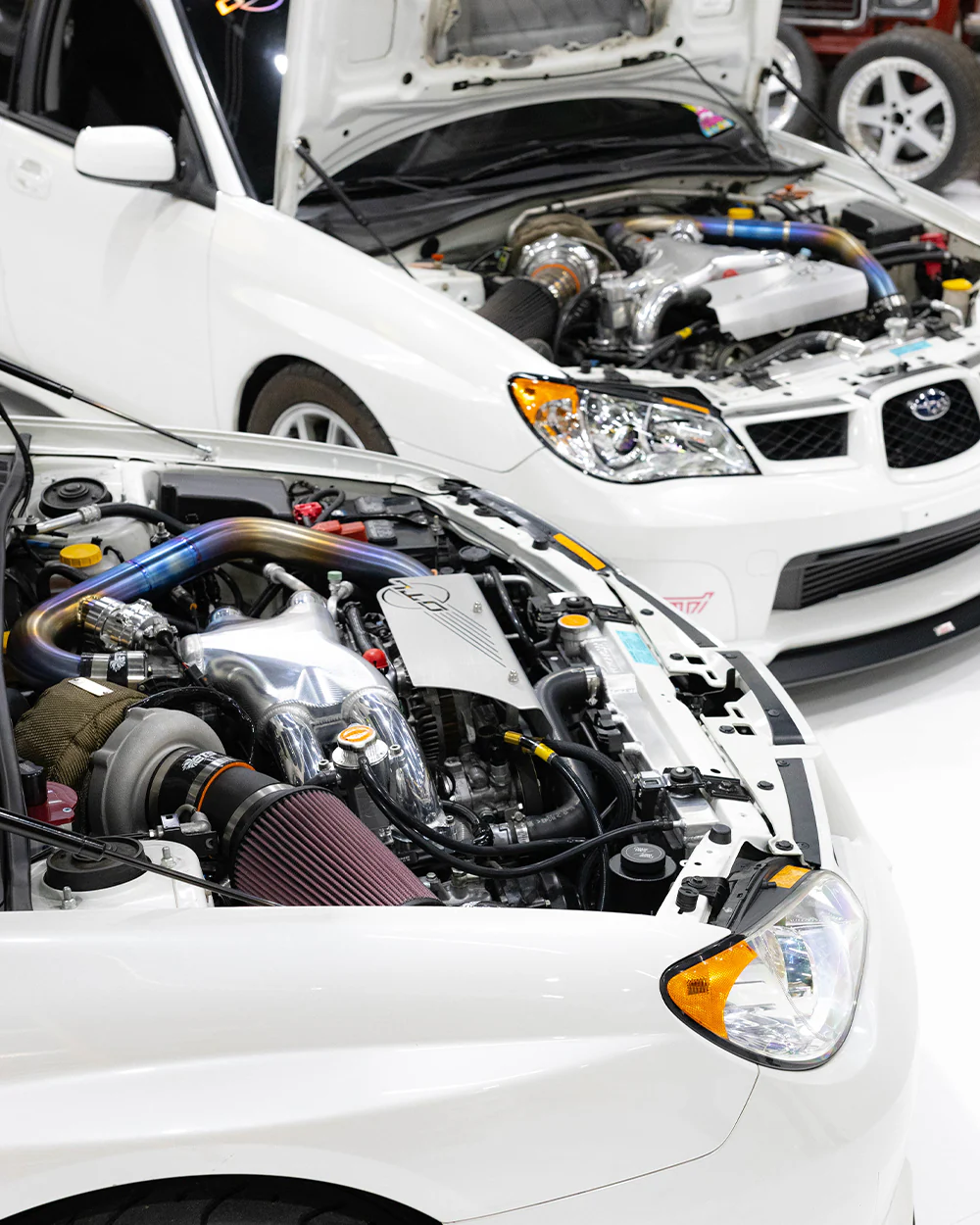
Wrench Masters focuses on Subaru performance platforms and the components that work together as a complete system. From entry-level upgrades to fully built EJ257 engines, the goal is matching parts based on real-world build paths and performance goals.
The goal is to help you build a STI that performs consistently, with every component working together to support your power goals and long-term reliability on the EJ257 platform.
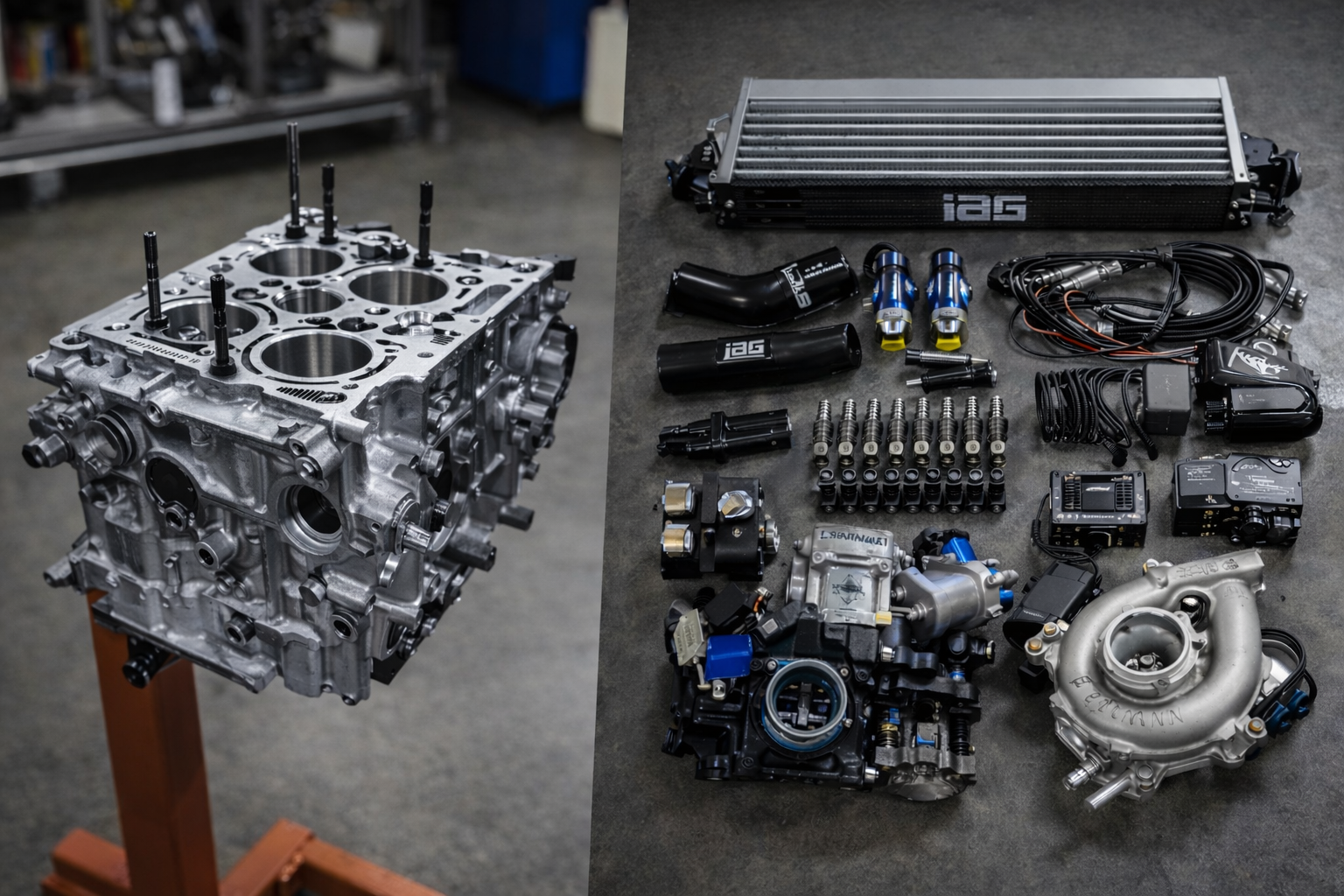
Engine Build Guides
If you are planning a STI build, these guides explain how key upgrades work together across airflow, fueling, and engine reliability on the EJ257:
Related STI Performance Components
Building around a stronger foundation with IAG short blocks for WRX and STI, stabilizing the drivetrain with engine mounts for WRX and STI, and managing crankcase pressure through IAG AOS and catch can systems all support a more complete and consistent STI build at every power level.