
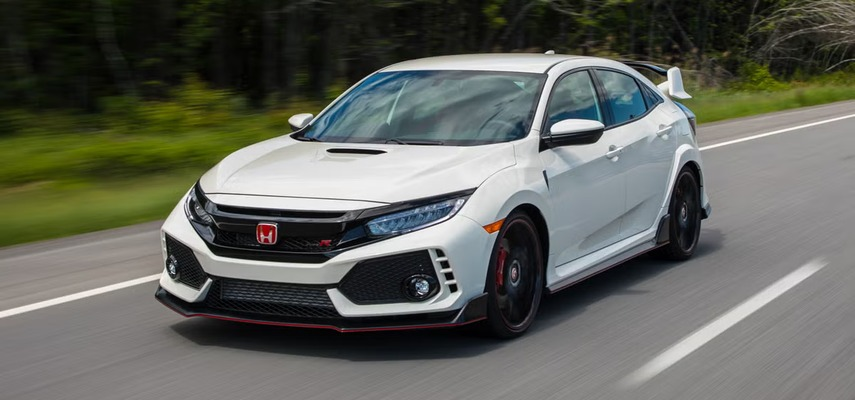

The Honda Civic Type R has earned a genuinely strong reliability reputation, owners regularly report 90,000, 130,000, even 170,000 plus miles on original clutches and original turbos with no major powertrain failures. That said, no car is without known weak points, and the Civic Type R has a handful of well documented issues that show up consistently enough to be worth understanding before they catch an owner off guard. This post covers what actually fails, how often, and what actually prevents it.
The 1st to 2nd Gear Grind: The FK8’s Signature Issue
This is, by a wide margin, the most widely reported issue on the FK8 specifically, significant enough to have generated a single forum thread running well past 100 pages dedicated entirely to the topic. The large ratio gap between first and second gear puts unusually heavy stress on the synchros during that specific shift, and a grinding or crunching sensation shifting from first to second is the resulting symptom. This is frequently addressed through clutch adjustment and proper shifting technique rather than always requiring a transmission rebuild, though severity varies enough between cars that some do need more involved repair. Notably, Honda revised this on the FL5, which does not share the same widely reported grind, a rare case of a known issue actually getting fixed in the next generation rather than carrying forward.
Prevention here comes down to a specific driving habit rather than any part or maintenance schedule. Deliberate, unhurried shifts through the first to second gear transition, rather than rushed or aggressive shifting, noticeably reduce how often the grind actually presents itself on affected cars. This does not eliminate the underlying mechanical tolerance issue, but it meaningfully reduces how often it becomes noticeable in daily driving.
Track Use and Gearbox Synchro Failure
Beyond the common first to second gear grind, a more serious gearbox issue affects cars used on track, third and fourth gear synchro failure under sustained track conditions. This has been documented seriously enough that Honda has replaced affected gearboxes under warranty in the US. Symptoms include grinding or crunching engaging third or fourth gear, and in more severe cases the gearbox locking up or failing to select a gear at all. This is specifically a track-use failure mode rather than something that shows up under normal street driving, which matters for anyone planning regular track days on either platform.
Fuel Dilution: A Direct Injection Reality, Not a Defect
As a direct injection engine, the K20C1 injects fuel straight into the cylinder rather than through the intake ports, which means fuel never gets the chance to wash across the intake valves the way it does on a port injected engine. A side effect of direct injection generally, not unique to Honda, is fuel dilution, where a small amount of fuel washes past the piston rings and mixes into the engine oil. Checking the dipstick for a fuel smell is a reasonable way to gauge whether dilution is occurring more than expected. Because this is considered normal operation for a direct injection engine rather than a defect, it is generally not covered under warranty, which makes the maintenance response the owner’s responsibility rather than something to expect Honda to address.
Carbon Buildup on Intake Valves
The same direct injection design that causes fuel dilution also creates a second, related issue, carbon buildup on the intake valves over time. Without fuel washing across the valves the way it does on port injected engines, carbon deposits from combustion gasses and oil vapor gradually accumulate on the valve surfaces. Symptoms include reduced power, a rough idle, and eventually misfires as buildup becomes severe enough to disrupt proper valve sealing and airflow. This is a slow, cumulative issue rather than a sudden failure, which means it is also one of the more preventable items on this list with the right maintenance approach.
The Maintenance Response: Oil Changes and Catch Cans
Both fuel dilution and carbon buildup point toward the same practical response. Shortened oil change intervals, commonly recommended at 5,000 miles rather than stretching toward the upper end of Honda’s suggested range, directly address fuel dilution before it degrades oil quality significantly. For carbon buildup, an oil catch can intercepts crankcase vapor before it reaches the intake tract, reducing the oil vapor contribution to valve deposits over time. Neither fix eliminates these issues entirely, since they are inherent to direct injection design, but both meaningfully slow their progression compared to factory maintenance intervals alone.
Fuel Pump Reliability
Fuel pump failures on early FK8 models were significant enough to prompt a manufacturer recall covering 2018 and 2019 model year cars. For anyone shopping the used market, confirming whether a specific car falls within the recall window and whether the recall repair was actually completed is worth checking directly with a dealer before purchase, since recall completion is not always obvious from a casual inspection.
Track-Specific Wear Items
Beyond the gearbox issue already covered, track-driven Civic Type Rs show a few other predictable wear patterns. Brembo brake discs on track-driven cars commonly develop uneven pad deposits that manifest as judder under braking, a cosmetic and performance annoyance rather than a safety issue, but one that eventually requires disc resurfacing or replacement to fully resolve. Rear wing mounting points on track-driven FK8s have also been documented developing cracks over time from sustained aerodynamic load, worth a periodic visual inspection on any car that sees regular track use.
A Sound That Isn’t Actually a Problem
Wastegate rattle on cold start is worth mentioning separately, since it is frequently mistaken for a problem when it is actually normal behavior on this platform. A light rattling sound from the turbo area during the first few seconds after a cold start is a documented, expected characteristic rather than a wear indicator, and it typically disappears once the engine and turbo reach normal operating temperature. Distinguishing this from an actual mechanical issue matters, since chasing a nonexistent problem wastes time and money that would be better spent on the maintenance items that actually matter.
What This Means for Ownership
None of this changes the fundamental picture, the K20C1 remains a genuinely robust engine with a real track record of high mileage reliability when properly maintained. The issues covered here are specific, well documented, and in most cases either preventable through maintenance discipline or manageable once understood, rather than signs of a fundamentally fragile platform. Shortened oil intervals, an oil catch can, confirming recall completion on a used purchase, and paying attention to shift feel and gearbox behavior under track use cover the majority of what separates a well maintained, long lived Civic Type R from one that runs into avoidable problems.
For more on how much power the K20C1 can actually support before internals become a genuine concern, the post on how much power can a stock Honda Civic Type R handle covers that territory directly. For a broader look at how the FK8 and FL5 differ, including the transmission revision discussed here, the post on FK8 vs FL5, what actually changed covers the full platform comparison.
Frequently Asked Questions
Is the first to second gear grind on the FK8 dangerous to drive with?
It is generally more of an annoyance than a safety concern in mild cases, and often improves with clutch adjustment and shifting technique. Severe or worsening grinding is still worth having inspected rather than ignored.
Does the FL5 have the same transmission issues as the FK8?
The specific first to second gear grind widely reported on the FK8 was addressed on the FL5, which does not share the same widespread complaint, though third and fourth gear synchro stress under track use has been documented on both platforms.
Is fuel dilution something I should be worried about on a daily driven car?
It is a normal characteristic of direct injection engines generally rather than a defect specific to this car. Maintaining shortened oil change intervals is the primary way to manage it rather than something that requires repair.
Do I need an oil catch can on a Civic Type R?
It is not mandatory, but it directly addresses the oil vapor contribution to carbon buildup on the intake valves, which is a real, documented issue on direct injection engines including this one.
How do I know if a used FK8 had its fuel pump recall completed?
Checking directly with a Honda dealer using the vehicle’s VIN is the most reliable way to confirm recall completion, since it is not always apparent from a visual inspection alone.