
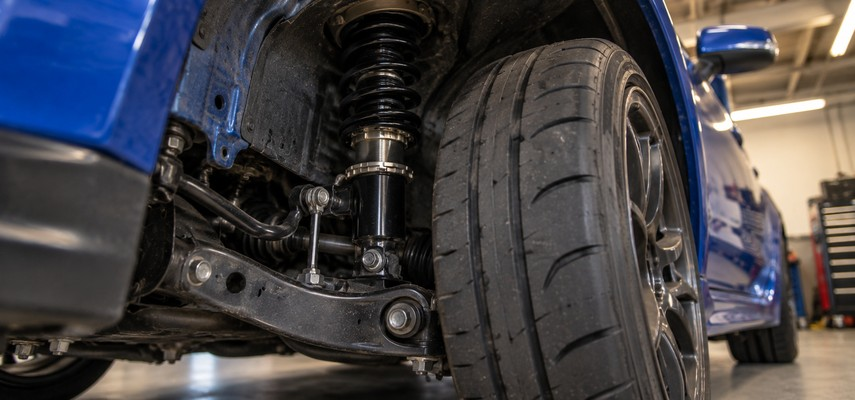

Lowering a WRX or STI on springs pulls the front camber negative, shifts the front roll center, and throws the rear control arms out of their factory geometry, and a standard alignment cannot fix any of that on its own. You need a camber bolt kit up front, a roll center correction kit, and adjustable rear lower control arms to bring the suspension geometry back to where it should be. Springs are the easy part of a lowering job. The alignment kit is what actually makes the car handle right afterward.
Most WRX and STI owners drop a set of springs, get a basic four wheel alignment, and call it done. Then the tires start wearing unevenly on the inside edge within a few thousand miles, the steering feels vague on turn in, and the car develops a slight pull that nobody can quite explain. None of that is a defective part. It is geometry that was never corrected in the first place, because a stock alignment shop can only adjust what the factory hardware allows, and factory hardware was never designed around a lowered ride height.
Why Lowering Springs Create an Alignment Problem
Every time a WRX or STI drops in ride height, three things happen to the suspension geometry whether the owner notices or not. Camber goes more negative at the front because the control arms swing through a different arc than they were designed for. The front roll center drops relative to the center of gravity, which changes how the chassis transfers load through a corner. Rear control arms, which set both camber and toe on the rear axle, lose their factory alignment range and often cannot be adjusted back into spec at all without aftermarket arms.
A set of H&R Sport Springs is a good example of exactly how this plays out on a 2022 and up WRX Non-GT. The springs themselves are excellent, a well engineered drop that keeps the ride quality reasonable while tightening up body roll. But dropping ride height on any spring, H&R included, moves every geometry point downstream of it. That is not a flaw in the springs. It is physics, and it applies to every lowering spring on the market, not just this one.
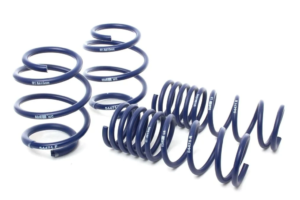
None of this means lowering springs are a mistake. It means the alignment kit that follows them is not optional if the goal is a car that handles well and wears tires evenly for the long haul. Owners who read the coilovers versus lowering springs comparison already know springs are the budget friendly path to a lower stance. The tradeoff is that springs alone do not include any way to correct the geometry they disturb, unlike some coilover kits that ship with camber plates built in.
Front Camber: The Eibach Bolt Kit Fixes What the Alignment Shop Cannot
Stock front camber adjustment on a WRX or STI has a very narrow range, and that range assumes stock ride height. Drop the car an inch or more and the front camber frequently maxes out the factory adjustment before it gets anywhere close to a healthy alignment number. This is the single most common reason a lowered WRX chews through the inside edge of its front tires within a season.
The fix is a camber correction bolt kit, and the Eibach Pro-Alignment Camber Bolt Kit is a direct bolt in replacement for the factory strut bolts that extends the available camber adjustment range at the front. It does not change ride height or spring rate. This part exists purely to give the alignment tech enough range to actually dial the front end back into a proper spec after the car has been lowered.
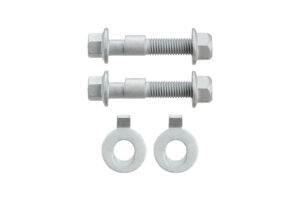
This is one of the cheapest parts in this entire kit and one of the most overlooked. A lot of WRX and STI owners spend real money on springs, coilovers, or sway bars and skip the twenty nine dollar bolt kit that would have let their alignment shop actually correct the front camber properly. It is worth doing before the first alignment appointment after installing springs, not after the tire wear shows up.
Front Roll Center: Why the Whiteline Kit Matters More As the Car Gets Lower
Roll center is one of those suspension terms that gets thrown around without much explanation, but the practical effect on a lowered WRX or STI is straightforward. As ride height drops, the front roll center drops faster than the rear does, which increases body roll and changes how quickly the front end loads up in a corner. The car can start to feel less predictable at the limit even though camber and toe read fine on paper.
The Whiteline Front Roll Center and Bump Steer Correction Kit repositions the front control arm mounting point to correct the roll center back closer to its factory relationship with the chassis, and it addresses bump steer at the same time, which is the tendency for the front wheels to toe in or out slightly as the suspension compresses over bumps. On a car that has only been lowered on springs with no other correction, bump steer is often the culprit behind vague, nervous steering over rough pavement.
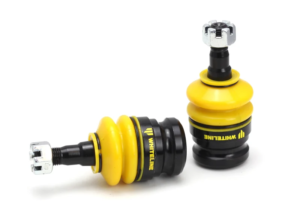
This kit tends to matter more the lower the car sits. A mild one inch drop might get away without it. Anything closer to two inches, which is common with aggressive lowering springs or a coilover set run low for looks, makes this kit close to mandatory for a car that still needs to handle predictably and not just look the part in a parking lot.
Rear Control Arms: The Part Most Owners Forget Entirely
Front camber gets most of the attention because it is the easiest to see in a tire wear pattern, but the rear suspension on a lowered WRX or STI has its own geometry problem that stock hardware simply cannot solve. The factory rear lower control arms have no meaningful camber or toe adjustment built in. Lower the car and the rear camber goes negative with zero way to correct it back, which means uneven rear tire wear and a rear end that does not track as cleanly through fast sweepers.
The Whiteline Adjustable Rear Lower Control Arms replace the fixed factory arms with a pair that includes camber and toe adjustment, giving an alignment shop something to actually work with at the rear axle after a lowering job. Without this part, a rear alignment on a lowered car is essentially a measurement with no way to correct what it finds.
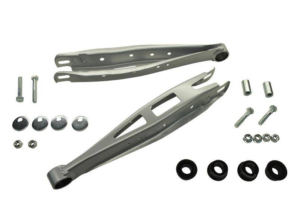
This is the part most commonly skipped in a lowering job, and it is also the reason so many lowered WRX and STI builds end up with rear tires wearing faster than the fronts. Anyone doing this job once and doing it right should treat the rear control arms as part of the same purchase as the springs, not an upgrade to consider later.
What This Kit Actually Solves, Together
Each of these three parts corrects a specific piece of geometry that lowering springs disturb. The camber bolt kit restores front adjustment range. A roll center kit corrects front roll center height and bump steer. Rear control arms add adjustment that never existed at the rear axle in the first place. Run all three alongside a set of lowering springs and an alignment shop can actually put the car into a proper street or track alignment spec, rather than doing the best they can within a factory range that was never built for a lowered ride height.
Owners planning a broader suspension and handling refresh alongside this kit often look at it in the same pass as brakes, since a car that corners better also needs to stop better to match. The best catback exhaust guide and best turbo upgrades guide cover the power side of a build, but handling and alignment corrections like this one are the part of a build that pays off every single time the car turns a corner, not just on a dyno sheet.
This kit also pairs naturally with a broader supporting mods mindset. Builds that have already gone through supporting mods for big turbo builds or a bolt on power upgrade path tend to be the same owners who care about the car handling as well as it accelerates. Geometry correction is the quiet, unglamorous half of a build that never shows up on a spec sheet but shows up every single time the car changes direction. Cooling is another piece of that same mindset, and the recent cooling capacity guide covers the other unglamorous half of keeping a modified build reliable.
How Much Does This Kit Cost Compared to Just Getting an Alignment
A standard four wheel alignment runs somewhere between eighty and one hundred fifty dollars at most shops, and on a lowered WRX or STI with no correction hardware, that alignment is capped by how far the factory parts can adjust. Adding this three part kit costs more upfront, but it turns that same alignment appointment into one that can actually hit a proper spec instead of the closest the shop can get within stock limits. Buying the correction hardware once is cheaper in the long run than replacing a set of front tires early because the alignment was never able to get camber into spec.
Owners who have already gone through a full build, including drivetrain and clutch work covered in whether a built transmission is needed, tend to treat suspension geometry the same way: correct it once, properly, rather than living with a compromise for years. The same logic shows up in the perfect street STI build breakdown and the best air intake upgrades guide, where the parts that matter most are rarely the flashiest ones on the car.
Frequently Asked Questions
Do I need an alignment kit if I only lowered my WRX an inch?
A mild one inch drop still pushes front camber closer to the edge of factory adjustment range, so the camber bolt kit is worth adding even on a light drop. The roll center kit and rear control arms become more important the further the car is lowered, but nobody has ever regretted having more camber adjustment range available.
Can a shop just add more negative camber without this kit?
Not usually. Most alignment shops are limited to whatever adjustment range the factory suspension hardware physically allows. Once a lowered car maxes out that range, the shop cannot dial in more camber no matter how skilled they are, because the hardware itself has run out of adjustment.
Will this kit make my WRX or STI ride harsher?
No. None of these three parts change spring rate or damping. The camber bolt kit and roll center kit reposition existing suspension geometry, and the rear control arms replace a fixed arm with an adjustable one. Ride quality is set by the springs and dampers, not by any part in this kit.
Does this kit work with coilovers instead of springs?
Yes. Coilovers lower the car the same way springs do and create the same geometry issues at the front and rear. Some coilover kits include camber plates that reduce the need for the Eibach bolt kit specifically, but the roll center kit and rear control arms still apply regardless of whether the car is on springs or coilovers.
What order should these parts be installed in?
Install the springs first, then the camber bolt kit, roll center kit, and rear control arms during the same suspension job before the car goes in for an alignment. Doing the alignment before all four parts are installed means paying for a second alignment once the correction hardware goes in.
0 Comments for “Lowering Your WRX or STI? Here’s the Alignment Kit You Actually Need”