
More power always means more heat, but the point where cooling actually becomes a limiting factor is not the same for every build. A mild bolt-on car and a big turbo E85 build put very different demands on the cooling system, and upgrading before it is actually needed is just as common a mistake as waiting too long. This post covers what actually determines how much cooling capacity a build needs and the signs the factory system has reached its limit.
Why Stock Cooling Has More Margin Than People Assume
The factory radiator, oil cooler setup, and fan system on a WRX or STI are sized with real margin built in, not just enough to survive a dyno pull. For mild bolt-on builds running close to stock boost with a tune, the factory cooling system often has enough headroom to handle the added heat load without issue. The mistake many owners make is upgrading cooling components preemptively based on power numbers alone rather than actual heat soak symptoms, spending money on a problem that has not actually shown up yet.
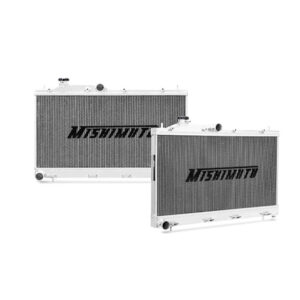
What Actually Drives Cooling Demand Up
Boost level matters, but it is not the only factor. Track use, sustained high load driving, and hot climate conditions all push cooling demand well beyond what dyno numbers alone suggest, since a dyno pull rarely replicates sustained high RPM operation the way a track session or a long pull up a mountain grade does. E85 also changes the equation, since it burns cooler than pump gas in some respects but often gets paired with more aggressive boost and timing, which raises overall heat generation even if the fuel itself is not the direct driver. The post on E85 vs pump gas on WRX and STI covers this fuel side of the equation in more depth.
Signs the Cooling System Has Reached Its Limit
Rising coolant temperatures during sustained hard driving, a noticeable drop in boost or power on back to back pulls, and oil temperatures climbing into a range the factory system was not built to sustain are all signs cooling capacity has become the actual limiting factor rather than anything else in the build. These symptoms tend to show up specifically under repeated hard use rather than a single short pull, which is why a car that feels fine on a quick drive can still be running into cooling limits during a longer track session or a hot summer commute in traffic.
Radiator, Oil Cooler, or Intercooler: Which One Actually Needs Attention
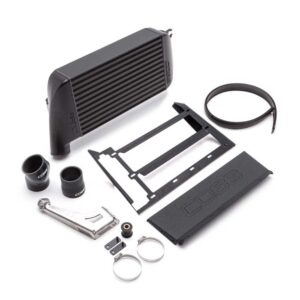
These three components handle different heat loads, and a build showing symptoms in one area does not necessarily need all three addressed at once. Rising coolant temperature points toward the radiator specifically, while climbing oil temperature under sustained load points toward an oil cooler need rather than a radiator issue. Heat soak affecting intake air temperature and power consistency points toward the intercooler instead. The post on WRX cooling mods, radiator vs intercooler vs oil cooler breaks down how to diagnose which specific component is actually the bottleneck rather than upgrading all three preemptively.
Where Cooling Fits in a Build Sequence
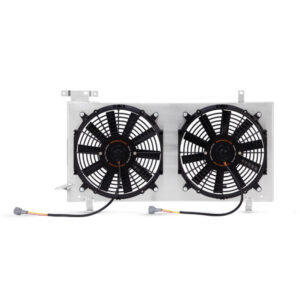
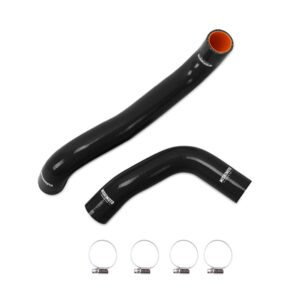
Cooling upgrades tend to matter more as a build moves from mild bolt-ons into sustained higher boost or track use, rather than being a first-priority upgrade on a lightly modified car. A radiator shroud and improved hose routing can meaningfully help airflow and coolant flow even before a full radiator swap becomes necessary, making it a lower cost intermediate step for builds not yet showing severe symptoms. The WRX turbo and airflow upgrades hub and STI turbo and airflow upgrades hub both cover how cooling upgrades fit alongside turbo and boost decisions on either platform.
Frequently Asked Questions
Does a mild bolt-on build need a cooling upgrade?
Usually not right away. Factory cooling systems have real margin built in, and most mild bolt-on builds running close to stock boost do not push past that margin without additional factors like track use or hot climate driving.
How do I know if it’s the radiator, oil cooler, or intercooler that needs upgrading?
The specific symptom points to the specific component. Rising coolant temperature points to the radiator, climbing oil temperature points to the oil cooler, and heat soak affecting intake air and power consistency points to the intercooler.
Does E85 increase cooling system demand?
Indirectly, yes. E85 builds are often tuned more aggressively with higher boost and timing, which raises overall heat generation even though the fuel itself burns somewhat cooler in some respects.
Is a radiator shroud worth adding before a full radiator upgrade?
It can be a useful, lower cost intermediate step, since improving airflow and coolant flow can meaningfully help before a full radiator swap becomes necessary.