
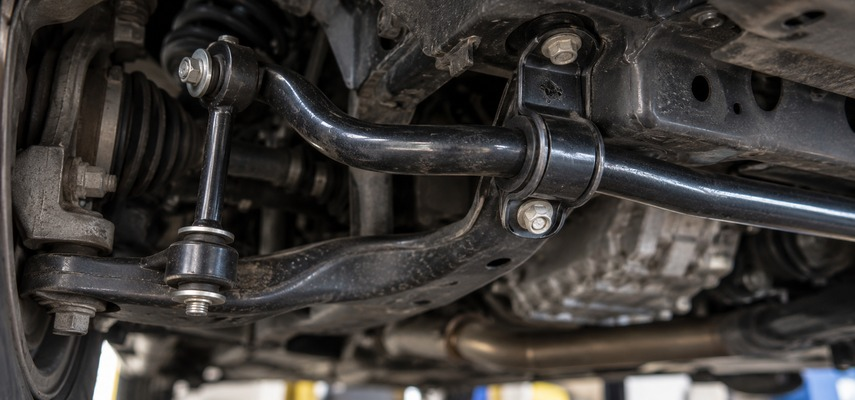
Upgrading the rear sway bar delivers the more noticeable handling change for most Civic Type R owners, since it directly reduces the factory’s built-in understeer bias and sharpens turn-in and rotation. A front sway bar upgrade works in the opposite direction, increasing front roll resistance rather than reducing it at the rear. Sway bar end links are a separate consideration entirely, they don’t change stiffness at all, they ensure whichever bar is installed actually delivers its full effectiveness. Here is how each piece actually affects the way the car handles.
What a Sway Bar Actually Does
A sway bar, also called an anti-roll bar, connects the suspension on one side of the car to the other, resisting body roll during cornering by transferring load between the two sides. A stiffer bar on a given axle reduces how much that axle rolls relative to the other axle, which shifts more of the car’s total grip demand onto that end of the car during hard cornering. This is the mechanism behind every handling change a sway bar upgrade produces, it is fundamentally about shifting balance between front and rear, not simply adding grip everywhere.
Why a Rear Sway Bar Upgrade Is the More Popular First Move
Factory Civic Type R suspension tuning, like most production cars, leans toward understeer for safety and predictability, the front end pushing wide before the rear ever loses grip. A stiffer rear sway bar reduces rear roll resistance’s tendency to lag behind the front, encouraging the rear of the car to rotate more readily through a corner. Owners consistently describe this as making the car feel flatter, more planted, and more willing to rotate on corner entry, exactly the character change most enthusiasts are chasing when they start looking at sway bar upgrades in the first place.
What a Front Sway Bar Upgrade Changes Instead
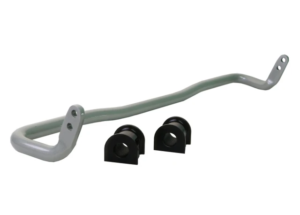
A stiffer front sway bar increases front roll resistance, which generally increases understeer rather than reducing it, the opposite direction of a rear bar upgrade. This is not inherently a downside, a front bar upgrade paired with wider front tires or a lower ride height can help manage front-end grip on a car that has become too eager to rotate after other suspension changes. But installed on its own, a front bar upgrade moves handling balance in the opposite direction from what most owners chasing sharper turn-in are actually looking for, which is why the rear bar tends to be the more popular standalone purchase on this platform.
Sway Bar End Links: A Different Job Entirely
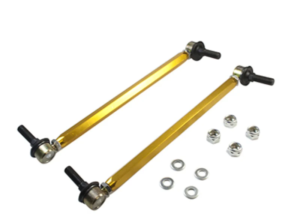
End links are frequently confused with the sway bar itself, but they serve a completely different function. The end link is the connecting piece between the sway bar and the suspension arm, and its job is to transfer force cleanly without introducing play or preload. Worn, soft, or poorly designed end links can bind or preload the sway bar even when the bar itself is in good condition, meaning a perfectly good sway bar can underperform simply because the link connecting it isn’t doing its job properly. Upgraded end links with adjustable length and stiffer bushings correct this, ensuring the sway bar, whether factory or upgraded, actually delivers the roll resistance it was designed to provide.
Do Both Together Actually Make Sense
For owners chasing a specific, deliberate balance change, front and rear bars can be run together, and adjustable bars in particular allow fine-tuning that balance rather than accepting whatever a fixed-rate bar happens to deliver. But running both is a more advanced decision than most owners need to make on a first suspension upgrade. Starting with the rear bar alone, confirming the resulting balance feels right, and only then considering a front bar change if the car has become too eager to rotate is a more measured approach than installing both simultaneously and trying to sort out the combined effect afterward.
A Known Quirk Worth Knowing About
Some owners running a stiffened rear sway bar have reported the bar gradually shifting position, sometimes described as the bar “walking,” to the point of contacting nearby suspension components. This is generally addressed with lateral locking hardware designed specifically to keep the bar centered on its mounts, a small, inexpensive addition worth considering alongside a rear bar upgrade rather than discovering the issue after the fact during a routine inspection.
Making the Actual Decision
For most Civic Type R owners looking to reduce factory understeer and sharpen turn-in, a rear sway bar upgrade delivers the more noticeable and more commonly desired handling change on its own. Upgraded front end links are worth adding alongside it, or on their own if the factory bar shows signs of preload or play, since they ensure whatever bar is in place is actually working at full effectiveness rather than being undermined by worn connecting hardware. A front bar upgrade is the right call specifically for a car that has already become too rotation-happy after other changes, not typically the first move for a car still running otherwise stock suspension.
Suspension changes work alongside the rest of a build rather than in isolation. For a broader look at how track driving affects other systems on this platform, the post on most common Honda Civic Type R failures and how to prevent them covers additional wear points worth knowing about alongside a handling-focused build.
Frequently Asked Questions
Does a rear sway bar upgrade cause oversteer?
It reduces the car’s factory understeer bias and encourages more rotation, but a properly matched rear bar upgrade is generally described by owners as sharper and more planted rather than genuinely oversteer-prone, provided it isn’t paired with an extreme mismatch elsewhere in the suspension.
Should I upgrade the front or rear sway bar first?
The rear bar is the more common and generally more impactful first upgrade for reducing factory understeer. A front bar upgrade is typically a second step for a car that has become too rotation-happy after other changes.
Do sway bar end links actually matter if my bar is already upgraded?
Yes. Worn or poorly designed end links can bind or preload the sway bar regardless of how good the bar itself is, meaning an upgraded bar can underperform without properly functioning end links.
Can I run an upgraded front and rear sway bar together?
Yes, and adjustable bars allow fine-tuning the resulting balance. This is generally a more advanced setup decision better suited to owners who have already established a baseline with one bar upgrade rather than a first-time suspension change.


0 Comments for “Sway Bar Upgrade Guide for Honda Civic Type R: Front, Rear, or Both”