

Updated October 2026
The best turbo upgrade for a Subaru WRX depends on the generation: for a 2022 or newer WRX on the FA24F, the IAG 600 Ball Bearing Turbocharger is the main bolt-on upgrade, and for a 2015 to 2021 WRX on the FA20, the Boost Lab TD06SL2-54X is a strong street turbo for builds aiming at roughly 450 to 500whp on E85. Every turbo upgrade needs a tune and supporting fuel, cooling, and exhaust upgrades, and builds going past about 550whp need a larger frame turbo and a built engine.
The stock WRX turbo is not a bad unit. It spools quickly, handles daily driving well, and supports a solid power level with the right tune. Once the build starts growing, though, it becomes the ceiling, and the question shifts from whether to upgrade to what to upgrade to.
This guide is for Subaru WRX owners who have already made that decision and want to know which turbo upgrade fits their generation, power goal, and build stage.
Best WRX Turbo Upgrades at a Glance
Turbos are specific to the engine, so the first step is matching the upgrade to your WRX generation. The table below shows the main options by platform and power goal.
| WRX generation | Power goal | Turbo option | What it needs |
|---|---|---|---|
| 2022 and newer (FA24F) | Bolt-on power on a stock engine | IAG 600 Ball Bearing Turbocharger | Tune, plus fueling upgrades for ethanol blends |
| 2015 to 2021 (FA20) | Street build, roughly 450 to 500whp on E85 | Boost Lab TD06SL2-54X | Tune, fuel system, intercooler, exhaust |
| Either generation | Beyond about 550whp | Larger frame turbo | Built short block, full fuel system, advanced tuning |
Best Turbo Upgrade for a 2022 and Newer WRX (FA24F)
For 2022 and newer WRX owners, IAG Performance offers the IAG 600 Ball Bearing Turbocharger for 2022+ WRX FA24F, a complete bolt-on turbo kit built for that platform. IAG reports 374 WHP on 93 octane and 450 WHP on E60 fuel on a stock engine. The full breakdown of what it includes and who it suits is in the IAG 600 Ball Bearing Turbocharger guide for 2022+ WRX FA24F.
To see how those numbers compare to the factory engine at every stage, the FA24 power guide covering stock and built output covers the full picture.
Best Turbo Upgrade for a 2015 to 2021 WRX (FA20)
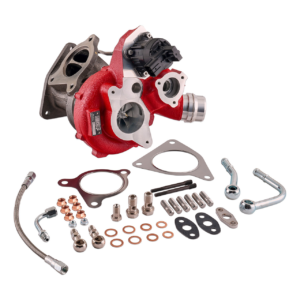
For FA20 owners, the Boost Lab TD06SL2-54X is built specifically for the 2015 to 2021 WRX and keeps streetable spool while adding substantially more airflow than the factory unit. It suits builds targeting roughly 450 to 500whp on E85 with proper supporting mods. Boost Lab makes separate versions for the WRX and STI, so confirm the platform before ordering. The Boost Lab TD06SL2-54X guide for WRX and STI covers fitment and what the build needs to support it.
STI owners evaluating the factory turbo before committing to an upgrade can find the full breakdown in the stock STI turbo guide, and the STI turbo and airflow upgrades guide covers the full forced induction path for the EJ platform.
Why WRX Owners Upgrade the Turbo
The stock turbo is sized for efficiency and daily drivability. It does that job well. The problem starts when supporting mods, a proper tune, and higher boost push the car past what that unit can flow. At that point the turbo itself limits the power, not the supporting systems around it.
Getting more out of the car means putting in a unit that flows more air at higher boost levels. If you are still weighing whether an upgrade makes sense, the stock turbo vs upgraded turbo guide covers that decision in detail.
What Changes When You Upgrade the Turbo on a WRX?
A larger turbo moves more air and supports more power. It also changes how the car delivers that power. Bigger turbos typically spool later in the rev range, and how noticeable that is depends on the specific turbo and how aggressive the upgrade is.
A turbo upgrade also raises the requirements for everything around it. Fueling, tuning, exhaust flow, and engine internals all become more important at higher boost levels. If you are still on stock internals, understanding how much boost is safe on a stock WRX is a useful starting point before committing to a big turbo setup.
WRX Turbo Upgrade Tiers by Power Goal
Beyond the specific turbos above, the right choice depends on your power goal, how the car is used, and what the rest of the build can support. There are three general tiers worth understanding.
Street-friendly upgrades sit closest to the stock turbo in spool and drivability. These suit owners who want a meaningful power increase without overhauling the entire supporting setup. Power in the 350 to 400whp range is realistic with a proper tune and upgraded fueling.
Mid-range big turbo setups target 450 to 550whp, typically on E85 with upgraded fueling and a reinforced bottom end. Spool is later than a stock replacement, but top-end power delivery is significantly stronger. This is the most common tier for serious street and occasional track builds, and it is where the TD06SL2-54X sits.
Top-end competition setups push beyond 600whp. They require large frame turbos, advanced engine management, and a fully built bottom end. The turbo is one piece of a much larger build, and everything else needs to match.
Do You Need to Upgrade the Internals First?
It depends on the power level you are targeting. The stock FA20 handles modest turbo upgrades well when the build is properly supported. At a certain point, though, the block becomes the weak link. Our post on how much power the stock FA20 and FA24 can handle covers where that ceiling sits.
For builds targeting 500whp and above, a built short block is the right foundation. Running serious power on stock internals turns an expensive turbo upgrade into an even more expensive engine rebuild. IAG short blocks for WRX and STI are the logical next step for builders pushing past that threshold.
Supporting Mods a Turbo Upgrade Requires
A turbo upgrade does not happen in isolation. Every system that feeds and supports the turbo needs to keep up, or it becomes the new restriction point.
Fueling is the first thing to address. A bigger turbo demands more fuel, and the stock injectors and fuel pump have limits. The fuel pumps vs injectors guide breaks down which upgrade matters more depending on where your build is headed.
A tune is not optional. Running a larger turbo on an outdated tune is one of the most common ways builds go wrong. Our post on what EFI tuning does for your WRX explains why the tune is what actually unlocks the upgrade.
Engine movement increases with torque. Upgraded engine mounts for WRX and STI keep the drivetrain stable under added load and reduce engine movement.
The exhaust needs to match the turbo. A bigger unit pushing more air needs a system that flows it out efficiently, and the WRX exhaust upgrades guide shows the options from downpipe to tips. STI owners can find the EJ-specific breakdown in the Subaru STI exhaust upgrades guide.
Cooling capacity needs to match the increased heat output of a larger turbo. The best intercooler upgrades for Subaru WRX and STI covers intercooler options by power goal, and the WRX cooling mods guide covers radiator and oil cooler upgrades too.
Managing crankcase pressure becomes increasingly important as boost levels rise. The best oil catch cans for WRX and STI covers which systems work best on high-boost Subaru builds.
For a complete checklist of everything a big turbo build requires beyond the turbo itself, the supporting mods guide for big turbo WRX builds covers every upgrade needed to support serious power safely.
WRX Turbo Upgrade FAQ
What is the best turbo upgrade for a 2022 or newer WRX?
For the FA24F in the 2022 and newer WRX, the IAG 600 Ball Bearing Turbocharger is a complete bolt-on kit built for the platform. IAG reports 374 WHP on 93 octane and 450 WHP on E60 on a stock engine, with a proper tune.
What is the best turbo upgrade for a 2015 to 2021 WRX?
For the FA20, the Boost Lab TD06SL2-54X is a strong street option for builds targeting roughly 450 to 500whp on E85. It needs a tune, upgraded fueling, and the usual cooling and exhaust supporting mods.
Do I need a tune for a turbo upgrade?
Yes, always. A larger turbo changes airflow, boost, and fueling, and the engine needs a calibration built for it. Running a bigger turbo on the wrong tune is one of the most common ways builds fail.
Can I keep the stock engine with a bigger turbo?
For moderate power goals with proper supporting mods, often yes. Builds targeting 500whp and above should plan for a built short block, since the stock internals become the weak link at that level.
Will a bigger turbo add turbo lag?
Usually some. Larger turbos spool later in the rev range than the stock unit. Street-focused upgrades keep that change small, while big turbo setups trade some low-end response for much stronger top-end power.
Does an FA20 turbo fit a 2022 or newer WRX?
No. The 2015 to 2021 FA20 and the 2022 and newer FA24F use different turbo setups, so each generation needs a turbo built for it. Always confirm fitment for your exact model year before ordering.
Choosing the Right Turbo for Your WRX Build
The best turbo upgrade matches the power goal, the supporting mods already in place, and how the car is actually used. A street build needs a different setup than a dedicated track car. Choosing based on peak power numbers alone, without considering spool and drivability, leads to a build that underperforms where it matters.
Wrench Masters Auto sells these turbos and works on Subaru WRX and STI builds at its shop in St. Petersburg, Florida, so fitment and build questions can go straight to people who handle these cars every day. Browse the full range of WRX turbo upgrades and find the unit that fits your build and power goals.