
Updated October 2026
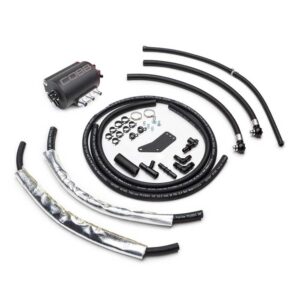
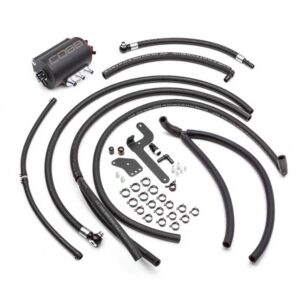
The best oil catch can for most Subaru WRX and STI owners is an air oil separator that drains back to the crankcase, such as the IAG AOS, which is built for each WRX and STI generation and designed to run without routine emptying. COBB’s air oil separator is an alternative for the same generations. Whichever you choose, match the unit to your exact model year, because fitment is not interchangeable between engines.
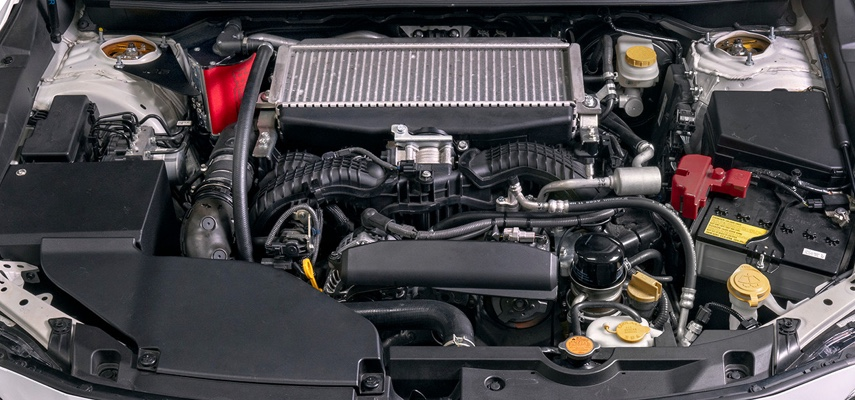
Oil blow-by is a known characteristic of the EJ and FA engine families. Combustion gases push oil vapor into the intake system over time, and the stock PCV system does not stop it. An oil catch can, or air oil separator (AOS), intercepts that vapor before it reaches the intake. This guide covers what to look for and which option fits your Subaru WRX or Subaru STI.
Best Oil Catch Can for WRX and STI by Generation
Each engine needs its own unit because the PCV ports and hose routing differ. The table below shows the options available for each generation.
| Model | IAG AOS | COBB AOS |
|---|---|---|
| 2022 to 2024 WRX (FA24F) | IAG AOS for 2022 to 2024 WRX | Not listed |
| 2015 to 2021 WRX (FA20) | IAG AOS for 2015 to 2021 WRX | COBB AOS for 2015 to 2020 WRX |
| 2008 to 2014 WRX and 2008 to 2021 STI (EJ) | IAG AOS for 2008 to 2014 WRX and 2008 to 2021 STI | COBB AOS for 2008 to 2014 WRX and 2008 to 2020 STI |
| 2002 to 2007 WRX and 2004 to 2007 STI (EJ) | IAG AOS for 2002 to 2007 WRX and 2004 to 2007 STI | COBB AOS for 2006 to 2007 WRX and 2004 to 2007 STI |
2022 to 2024 WRX (FA24F)
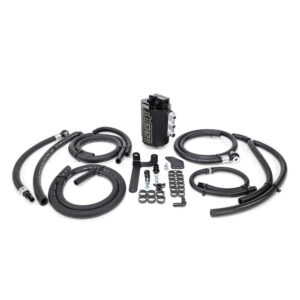
The IAG AOS for the 2022 to 2024 WRX uses a 1-liter cast aluminum swirl pot with an internal baffle system. According to IAG, it drains separated oil back to the crankcase without routine emptying and ties into the cooling system to reduce condensation and sludge. It works with the factory PCV system and comes with model-specific quick-connect lines.
2015 to 2021 WRX (FA20)
The FA20 is a direct injection engine, so fuel no longer washes over the intake valves and oil vapor has more chance to bake onto them. The IAG AOS for the 2015 to 2021 WRX is the dedicated unit for this platform and also fits the 2014 to 2018 Forester XT. Our FA20 vs FA24 guide explains how the two WRX engines differ if you are unsure which one your car has.
2008 to 2021 STI and 2008 to 2014 WRX (EJ)
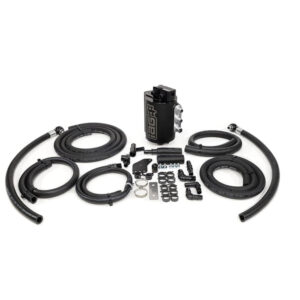
The IAG AOS for the EJ platform covers the 2008 to 2014 WRX and the 2008 to 2021 STI, along with the 2009 to 2013 Forester XT and 2005 to 2009 Legacy GT and Outback XT. It is the unit most STI owners on the EJ257 will need, and the STI engine build and power goals guide shows where it fits in a full STI build.
2002 to 2007 WRX and 2004 to 2007 STI (EJ)
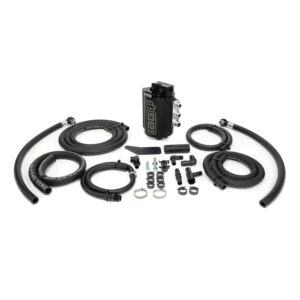
Owners of earlier cars have their own IAG unit, which fits the 2002 to 2007 WRX, the 2004 to 2007 STI, and the 2004 to 2008 Forester XT.
What Does an Oil Catch Can Actually Do?
Combustion gases and oil vapor push past the piston rings and into the crankcase during normal engine operation. The PCV system then routes that vapor back into the intake to be burned. On the WRX and STI, this process deposits an oily residue on the intake valves, intercooler, and intake manifold over time. That buildup reduces airflow, dulls throttle response, and contributes to carbon deposits on the valves that become progressively harder to remove.
On direct injection engines like the FA20 and FA24, the problem is worse. Fuel no longer washes over the intake valves the way it did on port-injected engines, so oil vapor from the PCV system coats the valves with nothing to clean it off. An oil catch can or AOS sits in the PCV line and intercepts that vapor before it re-enters the intake. For anyone still weighing whether an AOS is worth it for your WRX or STI, the dedicated post covers that decision in detail.
Oil Catch Can vs Air Oil Separator: Is There a Difference?
Yes. A basic oil catch can is a simple reservoir in the PCV line. It collects blow-by but returns nothing to the crankcase, so the reservoir needs to be emptied periodically or it fills up and stops doing its job.
An air oil separator uses baffles and chambers to separate oil from the air. The separated oil drains back to the crankcase and cleaner air goes back into the intake, so there is no reservoir to empty on a routine basis. For the WRX and STI, a proper AOS is the better long-term solution because it handles the blow-by these engines produce without adding a maintenance chore.
What to Look for in an Oil Catch Can for WRX and STI
Platform-specific fitment is the most important factor. Generic catch cans need custom plumbing that does not always route cleanly on the WRX and STI engine layout. Hose runs that are too long, too short, or poorly routed can create vacuum leaks and defeat the purpose of the upgrade. A purpose-built unit connects to the correct ports and routes cleanly within the factory engine bay.
Separation design determines how much oil vapor actually gets caught versus passing through into the intake. Baffling, chamber volume, and internal construction all affect how well the unit works under boost and high engine loads.
Build quality matters for long-term reliability. The unit lives in a hot engine bay and handles blow-by every time the engine runs, so cheap materials and fittings can degrade under heat cycling. A cast aluminum housing with quality fittings holds up far better.
Drainage design determines how much maintenance the system needs. A collect-and-empty catch can has to be checked and drained regularly, and neglecting it lets blow-by pass straight through. With a drain-back AOS, that routine chore goes away.
Why Choose an IAG Air Oil Separator?
IAG builds its AOS units for specific Subaru engines rather than adapting a universal catch can. Each kit is designed around the PCV routing and port locations of its platform, with model-specific hoses, so installation does not require custom fabrication.
On the FA24 unit, IAG pairs a swirl pot and internal baffles with a drain back to the crankcase and a coolant-heated canister to limit condensation. That combination is what makes it practical as a set-and-forget upgrade on a daily driven car. Browse all IAG air oil separators for WRX and STI to compare the options for your platform.
When Should You Install an Oil Catch Can on a WRX or STI?
Blow-by starts as soon as the engine runs, so the sooner an AOS goes in, the less residue builds up in the intake system. For most WRX and STI owners, this is a smart early install rather than a late build-stage upgrade, and it sits naturally alongside the first round of bolt-on mods for the WRX. Waiting until the car is fully built means years of oil deposits may already be on the intake valves and intercooler.
For built engines and high-boost setups, the AOS becomes even more important, because blow-by increases with boost and cylinder pressure. The WRX engine reliability guide covers how supporting modifications like the AOS contribute to long-term engine health, and our post on most common WRX engine failures covers what happens when supporting mods are skipped.
WRX and STI Oil Catch Can FAQ
What is the best oil catch can for a WRX or STI?
For most owners, a drain-back air oil separator built for their exact generation, such as the IAG AOS. COBB also makes air oil separators for several WRX and STI generations.
What is the difference between a catch can and an air oil separator?
A catch can collects oil in a reservoir that has to be emptied. An air oil separator separates the oil and drains it back to the crankcase, so it does not need routine emptying.
Does an air oil separator need to be emptied?
A drain-back AOS is designed not to. IAG describes its FA24 unit as maintenance-free, with a heated canister to limit condensation. A basic catch can, by contrast, has to be checked and drained regularly.
Do I need a tune after installing an AOS?
No. IAG states its AOS is compatible with standard ECU calibrations when installed properly.
Will the same AOS fit any WRX or STI?
No. Each unit is built for specific engines and model years because the PCV ports and hose routing differ. Match the AOS to your exact year and engine before ordering.
Is an AOS emissions legal?
The IAG and COBB units listed here are not CARB approved, so check the rules in your state before installing one on a street car.
Find the Right Oil Catch Can for Your WRX or STI
A purpose-built, drain-back AOS is the right call for most WRX and STI owners. Installing it early protects the intake system from the start and removes one more variable from long-term reliability. Wrench Masters Auto sells these units and works on Subaru WRX and STI builds at its shop in St. Petersburg, Florida, so fitment questions can go straight to people who handle these cars every day. Explore all air oil separators and catch cans for WRX and STI to compare what is available.