
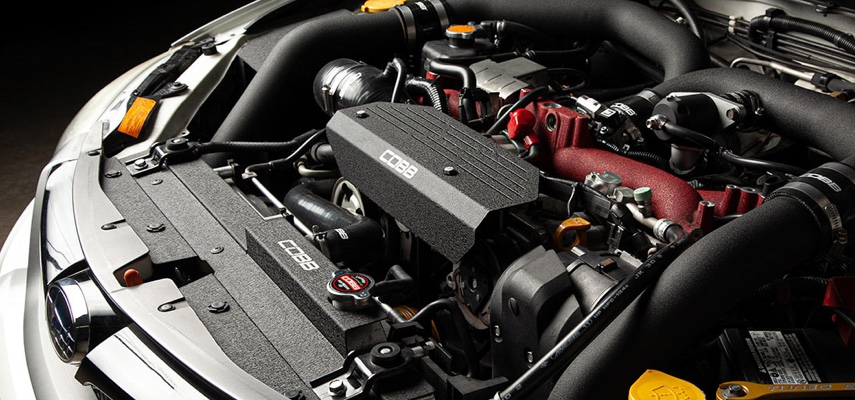

More power means more heat. On a turbocharged platform like the WRX, that heat shows up in three places: the intake charge coming from the turbo, the engine coolant, and the engine oil. As builds grow, the stock cooling system starts to fall behind. Performance drops, reliability suffers, and the engine works harder than it should.
This guide breaks down what each cooling upgrade does on a Subaru WRX, when you actually need it, and which one to prioritize for your build stage.
Why Cooling Matters More as Power Increases
Higher boost means more compressed air entering the engine, more combustion, and more heat generated throughout the system. That heat affects power output, oil viscosity, and long-term engine reliability. A cooling system that handles stock power levels quietly starts to show its limits when boost increases and the engine runs harder for longer periods. Understanding how much boost is safe on a stock WRX is a useful starting point for anyone still in the early stages of the build.
Intercooler Upgrade: The First Cooling Priority on a Turbo Car
The intercooler cools the compressed air coming from the turbo before it enters the engine. Turbo compression generates significant heat. Hot compressed air is less dense, which means less oxygen per charge and less power. It also increases the risk of detonation under boost. A larger, more efficient intercooler drops intake temps and supports more consistent power delivery across the rev range.
On the WRX, there are two intercooler configurations to understand. The stock top mount intercooler sits directly on top of the engine under the hood scoop. It works adequately at stock power levels but heat soaks quickly under sustained load. A top mount upgrade improves on the stock unit without changing the configuration. A front mount intercooler moves the core to the front of the car where it gets direct airflow, which delivers better cooling capacity for higher power builds but requires more piping and a more involved install.
Of all the cooling upgrades available for the WRX, the intercooler has the most direct impact on performance. It affects every pull, every boost event, and every lap. Browse intercooler kits for WRX to compare top mount and front mount options. Since the intercooler and turbo work closely together, the turbo upgrades for WRX post covers how to match the right intercooler to the right turbo setup.
Radiator Upgrade: When the Engine Runs Hot
The radiator manages engine coolant temperature. On a stock or mildly modified WRX, the factory radiator handles daily driving and moderate performance use without issue. It starts to become a limitation on track days, in high ambient temperatures, or on builds running significantly more power than stock.
Signs the radiator is struggling include coolant temps climbing higher than usual under load, the fan running constantly, or temperature spikes during sustained high-RPM driving. An upgraded aluminum radiator flows more coolant and dissipates heat more efficiently than the stock plastic-tank unit. The WRX radiator upgrade guide covers exactly when an upgrade is necessary and what to look for. Browse radiator upgrades for WRX to see available options.
Oil Cooler: Protecting the Engine at High Load
Engine oil does more than lubricate — it also transfers heat away from critical components like bearings, the turbo shaft, and the short block. When oil temperatures climb too high, viscosity drops and the oil film protecting those components thins out. That accelerates wear and increases the risk of bearing failure on sustained high-load runs.
On a stock or mildly modified WRX, oil temps are usually manageable. On a big turbo build running hard on track or in hot climates, an oil cooler becomes a reliability upgrade rather than a performance one. It keeps oil temps in a safe range when the engine is under sustained load for extended periods. This is especially relevant for built engine combinations — a short block upgrade is an expensive investment, and an oil cooler helps protect it. Explore the full range of WRX cooling upgrades to see what is available. For context on what happens when cooling is neglected, our post on most common WRX engine failures covers oil-related failures in detail.
Which Cooling Upgrade Should You Do First
On a stock or mildly modified WRX, the intercooler is the first cooling upgrade worth doing. It has the most direct impact on performance and addresses the biggest heat source in a turbocharged system. The radiator and oil cooler become more relevant as power increases and the car sees more aggressive use.
For builds running higher boost or hitting the track regularly, a radiator upgrade makes sense alongside the intercooler. The two work on different parts of the heat equation and complement each other well. For serious big turbo builds pushing hard on track, all three work together as a complete cooling system. The intercooler handles intake charge temps, the radiator manages coolant temps, and the oil cooler protects the engine under sustained load.
Budget-wise, the intercooler delivers the most noticeable improvement for the money on a turbocharged platform. Start there and add the radiator and oil cooler as the build and the use case demand them.
Cooling as Part of a Bigger Build
Cooling upgrades are supporting mods. They protect and enable the rest of the build rather than adding power on their own. A built engine running the right intercooler, radiator, and oil cooler combination holds up far longer under hard use than the same build without them.
For a complete picture of what a serious WRX build requires beyond cooling, the post on supporting mods for big turbo WRX builds covers the full checklist. The WRX engine reliability guide covers how supporting modifications work together to protect the engine long term. Solid engine mounts for WRX and STI round out the supporting mod picture by keeping the drivetrain stable when torque increases alongside the cooling upgrades.