
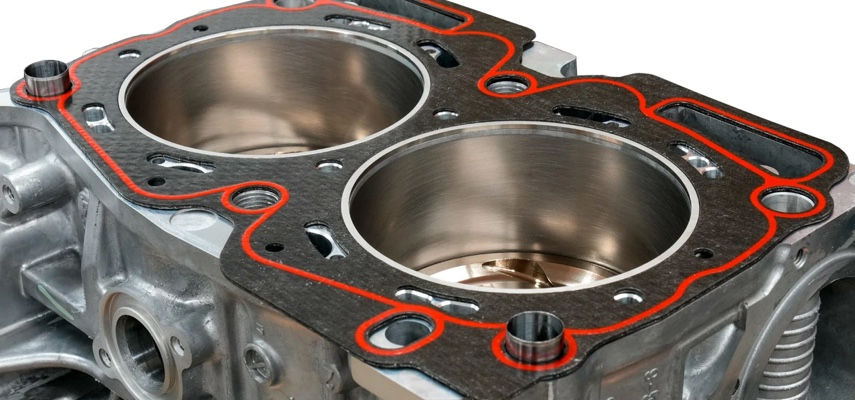

The IAG 1150 sits at the top of the IAG closed deck short block lineup. Most owners research it. Fewer actually need it. IAG builds it for extreme power applications where the 950 spec level falls short. This guide gives an honest answer for Subaru WRX and Subaru STI owners who want to know whether the 1150 fits their specific goals or whether the 950 covers the build.
What the IAG 1150 Rating Actually Means
IAG rates the 1150 at 1,150 BHP at the crank. At the crank, IAG engineers the block to support that 1,150 BHP ceiling. What that translates to at the wheels depends on the specific turbo, fueling, and tune combination of the build.
The 1150 uses a billet crankshaft, Tri-Beam connecting rods, and pinned main bearing caps. These are not incremental upgrades over the 950. They represent a fundamentally different spec level for sustained extreme power. IAG machines the billet crank from solid steel rather than forging it. The Tri-Beam rods are IAG’s proprietary connecting rod design for extreme load applications. The pinned mains prevent cap movement under the cylinder pressure extreme power applications generate on every combustion event. Our post on the IAG 1150 power rating covers the real-world numbers behind both spec levels.
What Makes the IAG 1150 Different From the 950
The 950 uses forged internals: forged pistons, forged rods, and a forged crank. That spec covers serious street and track builds targeting 400 to 600 WHP. The 1150 goes beyond forged at every point in the rotating assembly.
IAG machines the billet crankshaft from a solid block of steel to final dimensions. That process delivers tighter tolerances and higher strength than a forged crank. The Tri-Beam connecting rods handle loads that standard forged rods cannot sustain at extreme boost and RPM. Pinned main bearing caps add mechanical fastening that keeps the caps in position under extreme pressure spikes. Understanding what closed deck construction means for the EJ25 gives important context for why these internal components matter alongside the block architecture.
What Builds the IAG 1150 Is Actually Designed For
The 1150 suits a specific set of applications. Most builds do not need it.
Dedicated drag builds targeting 700 WHP and above at the wheels. Competition builds with sustained high-boost operation at extreme power levels where the engine runs near its ceiling on every pass. Builds where the builder has identified the 950 spec level as the limiting factor. Large frame turbo applications running extreme boost where the billet crank and Tri-Beam rods make the difference between a reliable pass and a failed engine.
For anyone outside those categories, the 950 covers the build. The STI engine build guide and WRX engine build guide cover how to match the block spec to the power goal from the start.
The High Compression Variant
The IAG 1150 High Compression Closed Deck Short Block serves a specialized purpose. Builders push the compression ratio higher in naturally aspirated builds or specific low-boost applications where maximum compression delivers more power. Most 1150 buyers choose the standard variant. The high compression version suits a narrow set of competition applications where the build specifically calls for it.
IAG 1150 vs IAG 950: The Honest Answer
This is the question most owners researching the 1150 are actually asking. Here is the direct answer.
Under 650 WHP at the wheels, choose the 950. It has the closed deck construction, forged internals, and power headroom to support serious builds with margin above the target. Running the 950 at 500 WHP is the correct approach. Headroom above the goal is what makes a built engine reliable.
At 650 WHP and above, the 1150 is the right foundation. The billet crank, Tri-Beam rods, and pinned mains handle what sustained extreme power demands. The 950 spec level does not cover those loads.
If the final power goal is still uncertain, choose the 950. Moving from a 950 to a 1150 later costs more than choosing correctly the first time. Browse IAG short block options for WRX and STI to compare both spec levels side by side. The IAG 1150 EJ25 Closed Deck Short Block is available now for builds that need it.
What the IAG 1150 Build Requires
A 1150-based build demands more from every supporting system. Each component needs to match what the block can produce.
The turbo must match the power goal. Large frame turbos that support 700 WHP and above are the right fit for a 1150 build. Browse WRX turbo upgrades to compare available options. The fueling system must supply the volume at extreme power. High-capacity injectors and a fuel pump that handles E85 at big turbo demand are both required. The WRX fuel system upgrades hub covers what the fueling system needs at this level.
A tuner must write a pro tune or standalone engine management calibration for the specific build combination. Our post on what EFI tuning does for your WRX explains why the tune makes the build perform reliably. The full cooling system needs to match the power level. Intercooler, radiator, and oil cooler all need to work together. Our WRX and STI cooling mods guide covers how the cooling system handles extreme power levels. Solid engine mounts for WRX and STI keep the drivetrain stable under the torque an extreme power build delivers.
Is the IAG 1150 the Right Build for Your Goals
The 1150 suits builds that genuinely need it. Extreme power goals, competition applications, and sustained high-boost use at 650 WHP and above justify the billet crank and Tri-Beam rods. For everything below that threshold, the 950 is the correct and more cost-effective foundation.
The IAG 1150 EJ25 Closed Deck Short Block is available now. Browse all IAG short block options to compare the full lineup and confirm the right spec level for the build.
0 Comments for “IAG 1150 EJ25 Closed Deck Short Block: Is It the Right Build for Your Goals”