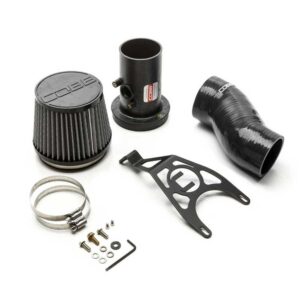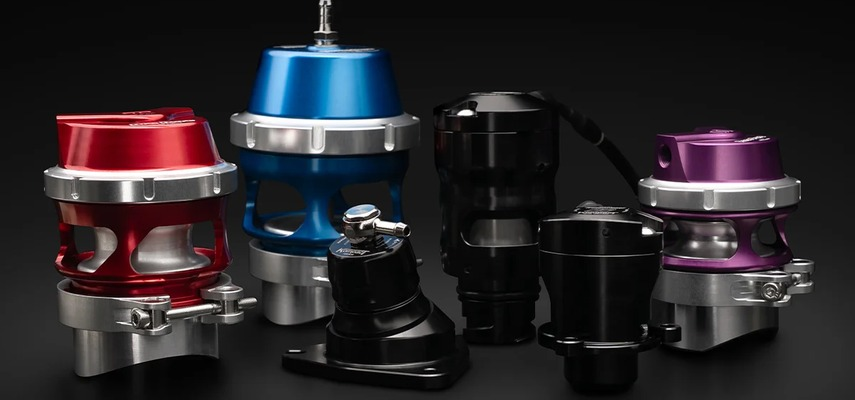
The whoosh sound of a blow off valve is one of the most recognizable signatures of a modified turbo car, and it is easy to assume that sound comes with a real performance upgrade attached to it. The truth is more specific than that. A blow off valve solves a real mechanical problem, but the sound is a side effect, not the benefit itself, and installing the wrong type on the wrong platform can actually hurt how the car runs. This post covers what a BOV actually does, and why the WRX and STI platform specifically has a detail worth knowing before picking one.
The Actual Problem a BOV Solves
Under boost, the turbo compressor is pushing pressurized air toward the engine. The moment the throttle closes, whether from lifting off the gas or shifting, that pressurized air has nowhere to go. It slams back against the still-spinning compressor wheel, a condition called compressor surge. Repeated surge cycles stress the compressor blades and the turbo’s bearings, and over time this contributes to premature turbo wear. A blow off valve opens during that throttle closure and releases the trapped pressure, letting the turbo keep spinning freely instead of fighting against trapped air.
Atmospheric vs Recirculating, and Why It Matters Here
This is the detail that actually matters for a WRX or STI specifically. Blow off valves come in two main types, atmospheric valves that vent pressurized air out into open air, and recirculating valves that route that same air back into the intake system before the turbo. Atmospheric valves produce the loud whoosh sound most people associate with a BOV. Recirculating valves are quieter, since the air stays contained in the system.
The WRX and STI both run mass airflow, or MAF, based engine management. The MAF sensor measures air entering the engine and the ECU calculates fuel delivery based on that reading. When an atmospheric valve vents already-measured air out to atmosphere instead of recirculating it, the ECU still believes that air made it to the cylinders and delivers fuel accordingly. The result is a temporarily rich condition every time the valve vents, which can show up as hesitation, a rough idle, or a check engine light depending on how far off the fueling gets. This is exactly the kind of drivability issue covered in the post on what EFI tuning actually does for your WRX, and it is directly relevant here since running an atmospheric BOV on a MAF-based car typically requires a tune to correct for it.
Does It Actually Improve Turbo Performance?
The primary benefit of a BOV is protecting the turbo from surge damage, not adding power. There is a secondary benefit worth mentioning, releasing trapped pressure quickly does help the turbo maintain spool between shifts slightly better than a sluggish or undersized factory valve might, which can translate to marginally quicker spool recovery after a shift. This is a real but modest effect, not a meaningful power or response upgrade on its own. The post on what happens when you run too much boost on a WRX or STI covers turbo bearing stress in more depth, and surge protection from a properly matched BOV is one of the more direct ways to avoid that kind of wear.
What Happens Without One
Every factory turbocharged car, including the WRX and STI, already has a bypass or diverter valve from the factory, it is simply built into the factory turbo housing and tuned for quiet, recirculating operation rather than the atmospheric sound aftermarket valves are known for. Running a turbo without any form of pressure relief at all is not something factory or aftermarket setups do, since the repeated surge would cause real damage over time. The question for most owners is not whether to run one, but whether to keep the factory recirculating valve or switch to an aftermarket atmospheric or hybrid valve, and what that switch requires to run correctly.
Choosing the Right Valve for a Build
For most WRX and STI owners not chasing the aftermarket sound specifically, a recirculating valve avoids the tuning complications an atmospheric valve introduces while still providing the surge protection a BOV is actually for. For those who do want the atmospheric sound, confirming the tune accounts for it, whether through an off-the-shelf map or custom tuning, is the difference between a clean running car and one with a hesitation problem hiding under a cool sound. The post on how boost control and forced induction work on WRX and STI covers how boost system components like this one interact with the rest of the forced induction setup.
The WRX turbo and airflow upgrades hub and STI turbo and airflow upgrades hub both cover where a BOV upgrade fits alongside turbo, wastegate, and boost control decisions on either platform.
Frequently Asked Questions
Do I need to retune my car if I install an atmospheric blow off valve?
On a MAF-based platform like the WRX or STI, yes, in most cases. Venting already-measured air to atmosphere creates a rich condition the ECU needs to be recalibrated to account for.
Does a blow off valve add horsepower?
Not meaningfully on its own. Its main benefit is protecting the turbo from compressor surge damage, with a modest secondary benefit to spool retention between shifts.
Can I run a WRX or STI without any blow off valve or bypass valve?
No factory or properly built aftermarket turbo system runs without some form of pressure relief. The factory system already includes a recirculating valve built into the turbo housing.
Is an atmospheric or recirculating valve better for a WRX or STI?
Recirculating valves avoid the tuning complications atmospheric valves introduce on MAF-based platforms. Atmospheric valves work fine but typically require a tune update to run cleanly.