
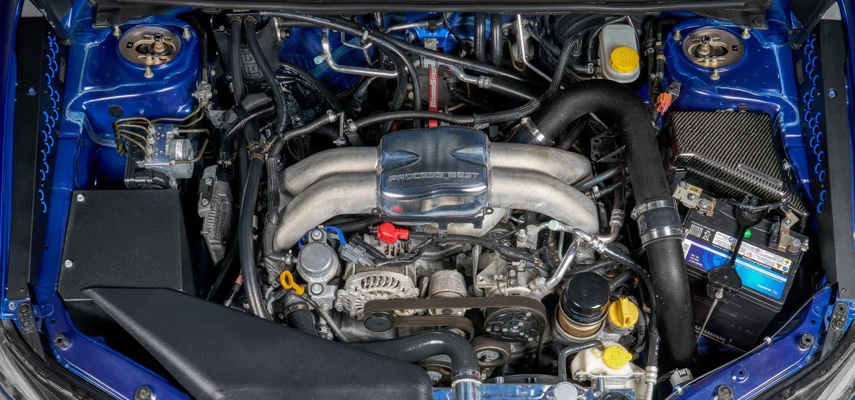

Fuel system upgrades are one of the most misunderstood parts of building a Subaru WRX or STI. Many owners assume bigger injectors are only needed for extreme builds, while others upgrade them far too early without understanding the real limitations.
The truth is, injectors become a bottleneck based on airflow, fuel type, and power goals. Understanding when they actually matter is key to building a reliable setup.
If you are running a Subaru WRX, Subaru STI, or even a Forester XT, this guide will help you understand when injector upgrades are necessary and how they fit into your overall build.
What Do Fuel Injectors Actually Do?
Fuel injectors control how much fuel enters the engine. The ECU adjusts injector pulse width based on airflow, throttle input, and tuning parameters to maintain the correct air-fuel ratio.
As power increases, more air enters the engine. To keep the mixture safe, more fuel must be delivered. This is where injectors become a limiting factor.
If you are not familiar with how tuning controls this process, our EFI tuning guide explains how fuel delivery and timing are adjusted to support power safely.
When Do Stock WRX Injectors Become a Limitation?
Stock injectors are designed for factory airflow levels with some headroom. However, they reach their limit faster than most people expect.
On most WRX and STI platforms, injectors begin to max out when:
- Running higher boost levels
- Upgrading to a larger turbo
- Switching to ethanol blends like E85
- Targeting higher horsepower numbers
Injector limits are typically measured by duty cycle. Once injectors consistently operate near 90–100%, they can no longer deliver additional fuel safely.
This is especially important if you are pushing boost levels beyond stock. Our boost safety guide explains how airflow increases quickly with pressure and why fueling must scale accordingly.
E85 Is the Biggest Trigger for Injector Upgrades
One of the most common reasons WRX owners upgrade injectors is switching to ethanol-based fuels.
E85 requires significantly more fuel volume compared to pump gas. Even at moderate power levels, stock injectors often cannot keep up.
That is why ethanol builds almost always require injector upgrades alongside fuel pump improvements. If you are planning to run ethanol, our E85 vs pump gas guide breaks down how fuel demand changes and why supporting mods are critical.
Bigger Turbo = More Air = More Fuel Required
Upgrading the turbocharger dramatically increases airflow. More air means more fuel is required to maintain a safe air-fuel ratio.
This is where injectors often become a bottleneck, even if the car feels fine at lower boost levels.
If you are considering turbo upgrades, it is important to plan fueling alongside airflow. Our turbo upgrade guide explains how airflow scales and why supporting modifications must match your power goals.
Injectors vs Fuel Pump: Which Comes First?
Injectors and fuel pumps work together, but they solve different problems.
The fuel pump delivers fuel from the tank to the engine, while injectors control how much enters the combustion chamber.
In many builds, both need to be upgraded together. However, depending on your setup, one may become a limitation before the other.
If you want a deeper comparison, our fuel pump vs injectors guide explains how to prioritize upgrades based on your goals.
Power Goals That Typically Require Injector Upgrades
While exact numbers vary by platform and tuning strategy, injector upgrades are commonly required when:
- Running ethanol or flex fuel setups
- Upgrading to larger aftermarket turbos
- Pushing beyond moderate horsepower levels
- Targeting aggressive boost and timing
Understanding your engine limits is just as important as fueling. Our FA20 vs FA24 guide explains how different platforms handle power and where limitations typically appear.
Why Proper Fueling Is Critical for Engine Reliability
Running out of fuel is one of the fastest ways to damage a turbocharged engine.
When injectors cannot keep up, the engine runs lean. This increases combustion temperatures and can lead to detonation, ringland failure, or even complete engine failure.
Proper fueling is not just about making power, it is about protecting the engine under load.
If you are planning higher power levels, reinforcing the engine becomes important. IAG Performance offers proven solutions designed to handle increased stress and improve long-term reliability.
When a Built Engine Becomes Necessary
At a certain point, increasing fuel and airflow pushes the limits of stock internals.
Even with upgraded injectors and proper tuning, factory engines have mechanical limits that cannot be ignored.
This is where built engines come into play. Upgraded internals are designed to handle higher cylinder pressure, improved cooling, and long-term durability.
If you are considering this step, our short block vs long block guide explains the differences and when each option makes sense.
For high-performance builds, exploring options like IAG short blocks is a common next step once fueling and airflow upgrades are maximized.
Supporting Mods That Work Together With Injectors
Upgrading injectors is only one part of a complete system. For reliable performance, supporting components must work together.
Common supporting upgrades include:
- Fuel pumps to maintain pressure and flow
- Proper ECU tuning to calibrate injector scaling
- Air oil separators to reduce contamination
- Engine mounts to stabilize drivetrain movement
- Exhaust upgrades to improve airflow efficiency
Managing oil and crankcase pressure is also critical at higher power levels. Our AOS guide explains how this system helps protect engine internals under boost.
Additional supporting components like engine mounts for WRX and STI improve drivetrain stability, while exhaust upgrades help optimize airflow and overall efficiency.
Fuel system health also ties into oil management. Solutions like oil catch cans help reduce contaminants entering the intake system, supporting long-term engine reliability.
Final Thoughts: Upgrade Injectors With a Plan
Injectors are not a first modification, but they become essential as power increases.
The key is understanding when they are actually needed. Upgrading too early adds unnecessary cost, while upgrading too late can risk serious engine damage.
A well-planned build considers airflow, fuel delivery, tuning, and engine strength together. When these elements are aligned, you get not only more power, but also a safer and more reliable WRX or STI.
0 Comments for “When Do You Actually Need Bigger Injectors on a WRX”