
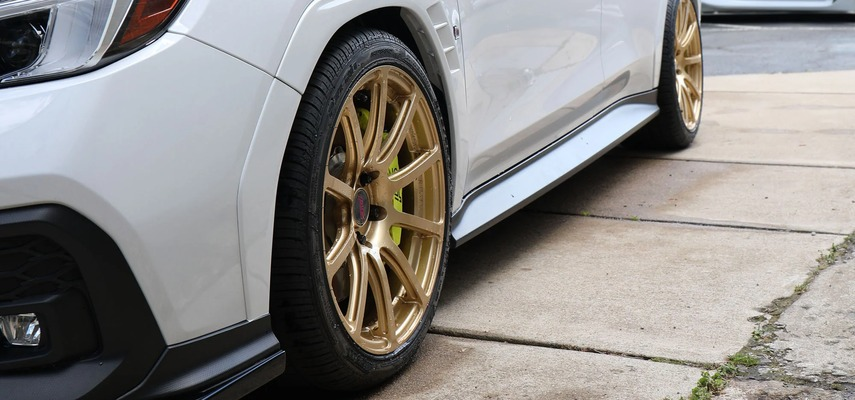
Wheel studs are one of those parts that most owners never think about until a specific situation forces the question, adding wheel spacers, running wider wheels, or preparing for track or drag use. Outside of those situations, factory studs rarely cause any problems at all. This post covers what wheel studs actually do, when an upgrade genuinely matters, and when it is simply not necessary.
What a Wheel Stud Actually Does
A wheel stud’s job is straightforward, it provides the threaded connection that a lug nut clamps down on to hold the wheel against the hub. The clamping force generated by that connection is what actually keeps a wheel secured, not the stud’s raw strength alone. That distinction matters, because it means stud length and thread engagement play a bigger role in real world safety than most people assume. The dedicated post on ARP wheel studs for Subaru WRX and STI covers the specific product side of this upgrade in more depth, while this post focuses on the broader question of whether the upgrade actually matters for a given build.
The Thread Engagement Rule Worth Knowing
There is a widely cited rule of thumb in the wheel and tire community, proper thread engagement should roughly equal the stud’s diameter. A 12mm stud needs at least 12mm of thread engagement to reach its full clamping potential. Once that threshold is met, additional engagement beyond it does not meaningfully increase clamping force further. This is the actual engineering reason behind stud length requirements, not an arbitrary safety margin.
Why Wheel Spacers Change the Equation
Adding a wheel spacer physically moves the wheel’s mounting surface further from the hub, which eats into the thread engagement the factory stud was designed to provide. A 5mm spacer reduces available thread engagement by roughly 5mm, and depending on the factory stud’s original length, that reduction can push engagement below the safe threshold. This is the single most common reason aftermarket studs get installed, not for raw strength, but simply to restore adequate thread engagement once a spacer is in the picture.
How to Actually Check Thread Engagement
Rather than guessing, actual thread engagement can be measured directly. With the wheel and spacer test-fitted, threading a lug nut on by hand and checking how much stud protrudes past the nut gives a real number to compare against the stud’s diameter. This is worth doing before assuming a given spacer thickness is safe on factory studs, since stock stud length varies enough across model years that a spacer thickness safe on one WRX generation is not automatically safe on another.
Wheel Stud Failure: Bending vs Breaking
When a wheel stud does fail, it typically happens in one of two ways, and neither is something to wait out. Insufficient thread engagement under load can cause a stud to stretch or shear at the threads, while excessive stress from an ill-fitting spacer or over-torqued lug nut can cause a stud to bend or snap outright, particularly under the repeated lateral loads of hard cornering or aggressive acceleration. A stud failure rarely happens in isolation either, once one stud loses proper clamping force, the remaining studs on that wheel absorb more load than they were designed for, which can cascade into further failures if not caught quickly.
Material Strength and Track or Drag Use
Beyond the spacer scenario, upgraded studs also address raw strength, which matters more under track or drag conditions than typical street driving. Aftermarket studs like ARP’s are forged from higher strength alloy than factory studs, giving them more resistance to stretching or shearing under repeated hard launches or high lateral loads. Many tracks and drag strips actually require studs long enough to pass fully through an open-ended lug nut, specifically so the thread engagement can be visually verified before running. That requirement alone pushes plenty of track-focused owners toward extended studs even when spacers are not part of the equation. The post on how much does track use actually change what your WRX or STI needs covers this same theme across other systems on the car, not just wheels and studs.
The Open-Ended Lug Nut Tradeoff
Running studs long enough for a spacer or for track requirements usually means switching to open-ended lug nuts, since a closed factory-style lug nut may not have room for the extra stud length. This is a real tradeoff worth knowing about ahead of time, open-ended lug nuts look different and some owners find them less visually appealing than a closed acorn style nut. It is a minor cosmetic consideration next to the actual clamping and engagement benefits, but worth knowing before ordering longer studs and being surprised by the lug nut requirement afterward.
Why This Matters More as Builds Get More Serious
A mildly modified WRX running factory wheels rarely runs into any of these considerations. A build running wider wheels, aggressive offsets, or a real track schedule is a different story, and wheel studs tend to sit low on the priority list even on builds where fuel system, turbo, and drivetrain upgrades have already been addressed. The post on supporting mods required for big turbo WRX builds covers a similar theme, smaller supporting parts that matter more than their price tag suggests once a build gets serious, and wheel studs fit that same category once spacers or track use enter the picture.
When Factory Studs Are Genuinely Fine
For a WRX or STI running factory wheel offsets with no spacers and no track or drag use, factory studs are not a problem worth solving. This upgrade is situational, not something every build needs by default. The honest answer to whether aftermarket studs matter depends entirely on whether spacers, wider wheels, or hard track use are actually part of the plan. The post on the perfect street Subaru STI build covers a similar principle applied more broadly, matching upgrades to how a car is actually driven rather than upgrading every component by default.
The WRX bolt-on upgrades hub and STI bolt-on upgrades hub both cover where a wheel stud upgrade fits alongside other budget-friendly modifications, and the post on coilovers vs lowering springs, what’s best for your WRX covers a related fitment consideration, since suspension changes and wider or spaced-out wheels often get addressed around the same time on a build focused on stance and handling.
Frequently Asked Questions
Do I need longer wheel studs if I am running a small spacer?
It depends on the spacer thickness relative to the factory stud’s original thread engagement. A small spacer may still leave adequate engagement, but calculating the actual remaining engagement, covered above, is the only reliable way to know rather than guessing.
Are aftermarket wheel studs actually stronger than factory studs?
Yes, in most cases. Aftermarket studs like the ones covered in the ARP wheel studs post are typically forged from higher strength alloy than factory studs, which matters more under track or drag conditions than typical street driving.
Why do some tracks require open-ended lug nuts with long studs?
So thread engagement can be visually verified before running. Studs long enough to pass through an open-ended lug nut let tech inspectors confirm proper engagement at a glance.
Do I need aftermarket studs if I am not running spacers or wider wheels?
Generally no. Factory studs are adequate for factory wheel offsets under normal street driving, and this upgrade is really only necessary once spacers, wider wheels, or track use enter the picture.
What happens if a wheel stud fails while driving?
A failed stud shifts extra load onto the remaining studs on that wheel, which can lead to additional failures if not caught quickly. Any sign of a loose wheel, unusual vibration, or a visibly damaged stud should be addressed immediately rather than driven on.
Can I mix factory and aftermarket studs on the same car?
It is not recommended. Consistent thread engagement and material strength across all studs on a given wheel, and ideally across the whole car, keeps clamping force even and predictable rather than introducing a weak point at whichever corner still runs factory studs.

0 Comments for “Do Aftermarket Wheel Studs Actually Matter, What They Change”