
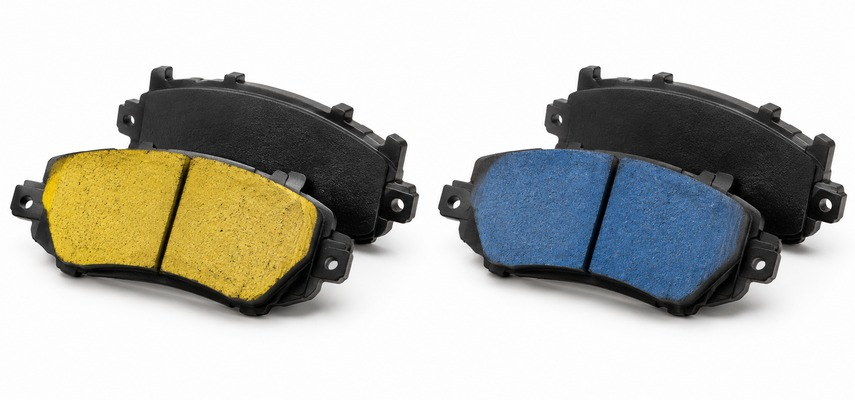
EBC Yellowstuff is the better choice for a daily-driven Civic Type R focused on street performance, while EBC Bluestuff is the better choice for a car that regularly sees track days. Both pads fit the FK8 and FL5 Civic Type R with the factory Brembo calipers, and both improve meaningfully on the stock pad, but EBC’s own current guidance draws a clear line between the two rather than treating them as interchangeable upgrades. Here is what actually separates them, and which one fits a given car.
EBC Yellowstuff: Built for Fast Street Driving
Yellowstuff is EBC’s flagship fast-street compound, an aramid fiber based pad that delivers strong bite from a cold start without needing a warm-up lap, and improves stopping power by up to 15 percent over a stock pad. It carries EBC’s R90 street-legal approval and works well across daily driving, spirited backroad use, and the occasional light track session. Following a 2021 reformulation that removed copper from the compound for environmental compliance, EBC no longer recommends Yellowstuff for dedicated track use, its green fade threshold sits around 400°C, and a full track day can push braking temperatures well past 500°C. For genuine street use with real bite, it remains one of EBC’s most popular compounds for exactly this reason.

EBC Bluestuff: Built for Street and Track Together
Bluestuff sits a step above Yellowstuff specifically for track capability, engineered with a higher fade threshold and a faster bedding process so a car can be driven to a track day, run hard on circuit, and driven home again the same day. EBC positions this pad explicitly as the current recommendation for anyone who splits time between street driving and regular track use, replacing Yellowstuff’s older reputation as a dual-purpose pad now that EBC’s official guidance has shifted.
Why This Distinction Actually Matters Now
Older forum discussions and product reviews sometimes still describe Yellowstuff as a street-and-track pad, which reflected EBC’s positioning before the 2021 reformulation. That guidance has changed, and following outdated advice here risks showing up on track with a pad that fades sooner than expected under sustained heat. Modern performance cars like the Civic Type R are also heavier and faster than many of the vehicles this older guidance was originally written around, which pushes brake temperatures higher during a track session than older recommendations accounted for.
This is not a minor technicality. A pad that fades mid-session loses stopping power exactly when a driver is relying on it most, going into a corner at speed rather than during a routine street stop. Understanding which compound EBC actually recommends today, rather than relying on a five-year-old forum post, is part of making a genuinely informed brake decision rather than just picking whichever name sounds more familiar.
What Real Owners Report
Owner feedback on the FK8 and FL5 consistently describes Yellowstuff as delivering noticeably stronger initial bite than the factory Brembo pad, with good daily manners and only occasional minor squeal. Reports on Bluestuff highlight its shorter bedding process specifically as the reason to choose it over Yellowstuff for a car headed to the track soon after installation, since Yellowstuff’s longer bed-in period is not ideal for someone trying to arrive at a track day ready to go.
Pairing the Pad With the Rest of the Brake System
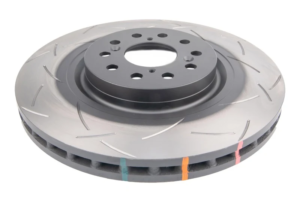
A pad upgrade delivers the most improvement when paired with rotors and hardware in similarly good condition, since a fresh, high-friction pad running against a worn or glazed rotor won’t perform to its full potential. The DBA 4000 Series T3 Slotted Front Rotors for Honda Civic Type R are a direct OE-replacement option built to pair with either compound, improving pedal feel and cooling as part of a complete brake refresh rather than a pad swap alone.
Making the Actual Choice
If the Civic Type R in question is primarily a street car with occasional light track exposure, Yellowstuff delivers the stronger daily brake feel EBC built it for. If track days are a regular, planned part of how the car gets used, Bluestuff is the pad EBC itself now points toward, and skipping past Yellowstuff directly avoids paying for a compound built around a use case that doesn’t match the car’s actual driving pattern.
Braking is one part of how a car actually performs under repeated hard use. For a broader look at how track driving affects other systems on this platform, the post on most common Honda Civic Type R failures and how to prevent them covers additional wear points that show up specifically under track conditions, and the post on how much boost is safe on a stock Civic Type R covers a related theme, factory components that behave differently once a car moves from occasional spirited driving into genuine track use.
Frequently Asked Questions
Is EBC Yellowstuff good for track days?
EBC no longer recommends Yellowstuff for dedicated track use following its 2021 reformulation. It handles occasional light track exposure but is built primarily as a fast-street compound rather than a track pad.
Does EBC Bluestuff work for daily street driving?
Yes. Bluestuff is street-friendly and provides strong initial bite for daily commuting while also handling regular track day use, making it a genuine dual-purpose compound.
Do these pads fit both the FK8 and FL5 Civic Type R?
Yes. Both the Yellowstuff and Bluestuff compounds covered here fit the FK8 and FL5 generations with the factory Brembo calipers.
Which pad has more brake dust?
Neither is a low-dust compound. For a low-dust street pad, EBC Redstuff is the better option, though it is not built for the fade resistance either Yellowstuff or Bluestuff offer.
Should I replace my rotors at the same time as the pads?
If the rotors show glazing, uneven wear, or heavy scoring, replacing them alongside a pad upgrade gets the full benefit of the new compound rather than pairing it with a rotor surface that limits performance.


0 Comments for “EBC Yellowstuff vs Bluestuff, Which Brake Pad Fits Your Civic Type R”