
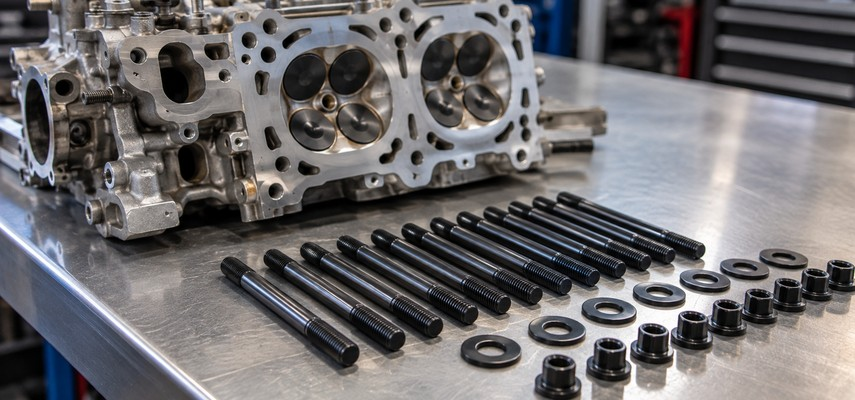

ARP head studs become necessary on a 2002 to 2012 WRX or STI once boost or power targets move meaningfully past stock levels, since factory head bolts are not rated to keep the head clamped down under sustained increased cylinder pressure. Most owners planning 350 to 400 whp or more, or anyone building the engine for reliability at any power level, should treat head studs as a required part of that build rather than an optional upgrade. Below is exactly what they do, when they actually matter, and what else belongs in the same job.
Head gasket failure and cylinder lifting are two of the most common failure points on a boosted EJ engine once power climbs past what the factory head bolts were designed to clamp. Owners who have already read the most common WRX engine failures guide will recognize head gasket failure as one of the recurring issues on a pushed EJ engine, and ARP head studs address that specific weak point directly. This is one of the few upgrades on this platform where the case for installing them only gets stronger the harder the engine is being pushed.
What ARP Head Studs Actually Do
The ARP Head Stud Kit replaces the factory head bolts with premium alloy studs heat treated to 220,000 PSI, engineered specifically to keep the cylinder head clamped down under the pressure spikes that come with a built or boosted EJ257. This fits the 2002 to 2012 WRX and STI.
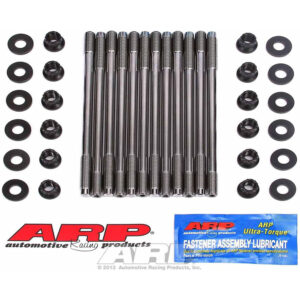
The kit includes twelve head studs, twelve 12-point nuts, and twelve washers, everything needed to replace the full set of factory head bolts in one job. ARP studs are thread rolled after heat treatment rather than before, which the manufacturer rates at roughly 1000 percent better fatigue strength than studs threaded prior to heat treat, a detail that matters over the long service life these studs are expected to provide. The stud head uses a 4mm Allen for threading into the block, and the kit ships with parallel ground washers included, so nothing beyond the stud kit itself needs to be sourced separately for the clamping hardware.
For builds pushing well beyond what an 11mm stud is rated for, ARP also offers a 14mm stud option through IAG, though that kit sits at a significantly higher price point and is intended for a different tier of build than the 11mm kit covers here. Most owners running 500 whp or less on this platform are well served by the 11mm kit rather than jumping straight to the larger option.
Do You Actually Need Them on a Stock Power Car
For a completely stock or mildly modified WRX or STI running low boost, factory head bolts are generally adequate and head studs are not a necessary upgrade. The calculation changes once boost increases significantly, particularly on builds approaching or exceeding 350 to 400 whp, where the risk of head lifting and gasket failure rises sharply enough that most experienced shops consider studs mandatory rather than optional at that point. Fuel quality and tune aggressiveness also factor into this decision, since a car running E85 or a more aggressive tune at the same power number puts different cylinder pressure demands on the head than a conservative pump gas tune at that same output figure.
Owners planning a build around the numbers covered in the reliable 400whp EJ257 build recipe are already in the range where head studs stop being optional. The same logic applies to anyone following a WRX engine build and power goals plan, since head clamping force is one of the first things that needs to scale alongside boost and power targets, not an afterthought addressed once a problem already shows up.
Installation Requires Removing the Cylinder Head, Not the Engine
A common misconception is that head stud installation requires pulling the entire engine. It does not. The cylinder head must come off, but this is typically done alongside head gasket replacement or other top end work rather than as a full engine removal job, which keeps the labor scope more reasonable than owners sometimes expect going in.
This is exactly why head studs are so commonly installed as part of a larger job rather than on their own. Anyone already planning gasket work should treat head studs as the obvious addition to that same job, since the labor to access the head is already being spent regardless of whether the studs go in at the same time. The same logic applies to the broader distinction covered in short block versus long block builds, since head hardware decisions are part of the same planning conversation as bottom end decisions once a build moves beyond bolt on modifications.
What Else Belongs in the Same Job
Head studs never go in alone, since removing the head means the head gasket comes out too. New gaskets and seals are required alongside any head stud installation, and reusing an old gasket against new studs defeats much of the point of the upgrade in the first place.
Owners planning a more complete engine build rather than a standalone head stud job should look at the IAG short block lineup, since head studs are commonly installed as part of a full short block build rather than bolted onto an otherwise stock bottom end. Builds already reading through how much power an IAG short block can handle are exactly the audience this stud kit is built for, since a stronger bottom end and a properly clamped head go hand in hand once power targets climb.
Turbo selection matters here too. Builds working through the best turbo upgrades guide or comparing options in stock versus upgraded turbo should factor head studs into the budget once the target power level pushes past what stock hardware can reliably clamp, rather than treating the turbo and the head hardware as separate, unrelated purchases.
Torque Sequence Matters More Than Most Owners Expect
ARP includes a specific torque procedure and recommended lubricant with every kit, and following that sequence exactly is not optional. Improper torque sequence or the wrong lubricant can result in uneven clamping load across the head, which undermines the entire point of installing premium studs in the first place. This is a job where following the included instructions precisely matters more than it does on most bolt on parts, since an uneven clamp can cause the same gasket failure the studs were installed to prevent. Shops experienced with EJ engine builds already follow this sequence as routine practice, but any owner attempting the install themselves should treat the included torque specification as non-negotiable rather than a general guideline to approximate.
Frequently Asked Questions
At what power level do I actually need ARP head studs?
Most shops consider head studs necessary once a build approaches or exceeds 350 to 400 whp. Below that range, factory head bolts are generally adequate for a WRX or STI running low to moderate boost.
Do I need to remove the entire engine to install head studs?
No. Only the cylinder head needs to come off, which is commonly done alongside head gasket replacement or other top end work rather than a full engine pull.
Can I reuse my old head gasket with new ARP studs?
No. A new head gasket should always be installed alongside head studs. Reusing an old gasket against new clamping hardware defeats much of the purpose of the upgrade.
Are head studs required on a built short block?
Head studs are strongly recommended on any built short block, since the increased power potential of a built engine puts more load on the head gasket seal than stock head bolts are rated to handle.
What torque spec should I use for ARP head studs?
Follow the specific torque sequence and ARP lubricant included with the kit exactly. Torque specs vary by application, and using the wrong lubricant or sequence can result in uneven clamping load across the head.
0 Comments for “Do You Need ARP Head Studs on Your WRX or STI”