
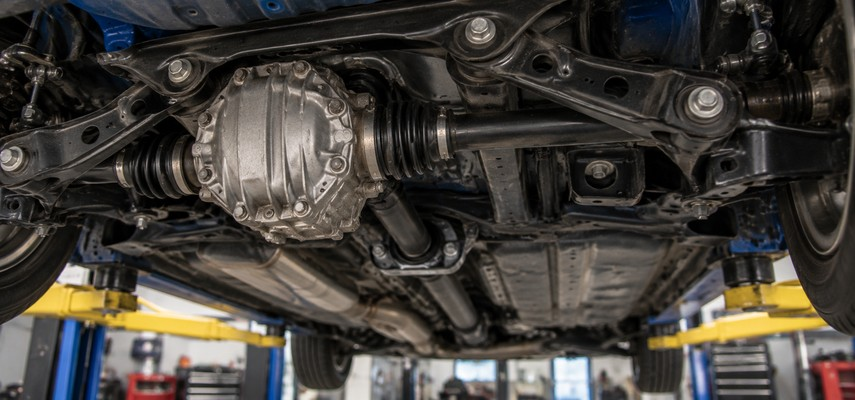

Drivetrain slop on a WRX or STI comes from three specific places: soft rubber bushings in the rear differential mounts, play in the driveshaft carrier bearing setup, and flex in the diff carrier housing itself under load. Fixing all three tightens up power delivery through the entire drivetrain without touching the engine, the turbo, or the tune. None of these parts make more horsepower. They make the horsepower already there actually reach the pavement without getting absorbed by soft factory rubber and housing flex first.
Anyone who has read what drivetrain movement actually costs a modified build already understands the problem. Power hits, the drivetrain shifts slightly in its mounts and bushings before it fully transmits to the wheels, and that lag shows up as a soft, delayed feeling on hard acceleration and during quick throttle changes. This post is the parts list for actually fixing it, not just diagnosing it.
Why a WRX or STI Feels Loose Under Power Even When Nothing Is Broken
Every part in a WRX or STI drivetrain sits on some amount of rubber isolation from the factory, and that rubber is chosen for noise, vibration, and harshness control rather than outright stiffness. It works fine at stock power levels. Add a turbo upgrade, a stiffer clutch, or just more consistent hard launches, and that same rubber starts to compress and flex in ways that translate directly into wasted motion before torque actually reaches the wheels.
None of this shows up as a check engine light or a diagnostic code. It shows up as a car that feels slightly disconnected on a hard pull, a driveshaft that seems to clunk faintly on quick throttle transitions, or a rear end that feels less planted than the power level should suggest. Three specific parts address the three most common sources of that looseness, and none of them require touching the transmission internals or the differential gears themselves.
Rear Differential Bushings: The First Place Slop Hides
The rear differential on a WRX or STI mounts to the subframe through a set of rubber bushings, and those bushings are the first thing to compress and shift under hard acceleration. Every time the diff wants to rotate slightly under load, the factory rubber allows a small amount of movement before it resists, and that small amount of movement repeats every single time the throttle goes down hard.
The Torque Solution Rear Differential Bushing Inserts fit inside the factory bushing housings and reduce that compression without requiring a full bushing replacement or any cutting or welding. They are a bolt in insert, not a full aftermarket bushing kit, which keeps installation simple while still cutting down meaningfully on how much the differential shifts under load.
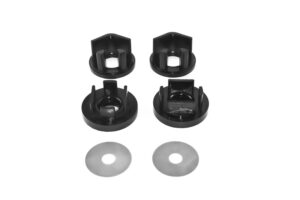
This is the cheapest part on this entire list and also the one most owners skip because differential bushings are not visible and not something anyone thinks about during a typical mod list. It belongs at the top of the list precisely because it addresses the very first place power gets absorbed before it even leaves the differential housing.
Driveshaft Carrier Bearing Play: The Clunk Nobody Can Diagnose
The center support bearing on a WRX or STI driveshaft allows a small amount of float by design, since the factory setup needs to accommodate normal drivetrain flex during regular driving. Under hard acceleration or aggressive shifting, that same float becomes a source of driveline lash, the small back and forth clunk that happens when power comes on and off quickly and the driveshaft has a moment of slack before it engages fully again.
The Perrin Driveshaft Lockdown Kit reduces that float by securing the carrier bearing assembly more rigidly than the factory setup allows. This is one of the more commonly misunderstood upgrades on a WRX or STI because most owners assume driveline clunk is a worn part rather than a design tolerance built into a completely healthy factory driveshaft.
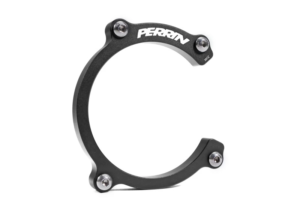
Owners chasing a phantom clunk that a shop cannot diagnose as a broken part should look here first. It is one of the more common causes of an otherwise mechanically sound WRX or STI feeling like something is loose in the drivetrain when nothing is actually failing.
Diff Carrier Housing Flex: The Part Most Builds Never Address
Even with tighter bushings and a locked down driveshaft, the differential carrier housing itself can still flex slightly under repeated hard load, particularly on cars that have moved past stock power levels or see regular launch control use. That flex is small on any single pull, but it repeats every time the car sees hard acceleration, and it contributes to the same soft feeling under power that bushings alone cannot fully solve.
The Cusco Reinforced Rear Differential Carrier Brace bolts to the differential housing and adds structural rigidity to reduce that flex directly. It does not replace or modify anything inside the differential. This part reinforces the housing around it, which is the part actually flexing under load.
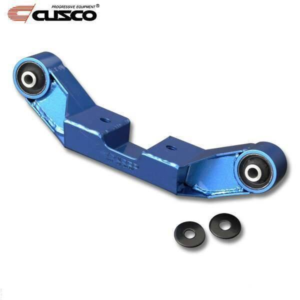
This is the part most drivetrain focused builds skip entirely, usually because it sounds like a track only upgrade rather than something that benefits a daily driven car making moderate power. In practice it addresses a real source of flex that exists on every WRX and STI differential housing, stock power or not, and it becomes more relevant the harder and more often the car gets launched.
Why These Three Parts Work Better as a Set
Each of these three parts fixes a different point where the drivetrain absorbs motion instead of transmitting power cleanly. The bushing inserts address the diff mounting points. A driveshaft lockdown kit addresses carrier bearing float. The carrier brace addresses housing flex under load. Installing only one part still leaves the other two sources of slop in place, which is why owners who fix just the bushings sometimes report the car still feels slightly loose under hard acceleration.
Builds that have gone through a clutch upgrade or the broader question of what actually changes with a performance clutch tend to notice drivetrain slop more, not less, once the clutch grabs harder and transmits power more aggressively. A stiffer clutch makes the same drivetrain slop more noticeable because power comes on faster and with less slip to mask the movement underneath it.
This list also pairs naturally with the shift feel side of a build. Owners who have already tightened up their shifter bushing setup are usually the same owners chasing every source of driveline slop, since a tight shifter feel and a tight drivetrain feel go hand in hand on a car that is otherwise mechanically sound.
Does This Matter More on High Power Builds
Yes, though the reasons are slightly different at each power level. On a lightly modified WRX or STI covered by a bolt on power upgrade path, drivetrain slop is a feel issue more than a durability issue. The car has enough power to make the looseness noticeable, but not enough to stress the parts involved. On a build closer to the power levels in the 400whp EJ257 build recipe, the same slop becomes a repeated stress cycle on the bushings and housing every time the car launches hard, which is where a loose drivetrain starts to actually shorten the life of the parts absorbing that movement.
Builds following a big turbo supporting mods list or working from a full street STI build plan should treat this list as part of the same category as engine mounts and transmission mounts, since all of them exist to stop power from being absorbed by soft factory hardware before it reaches the wheels.
What Order Should These Be Installed In
There is no strict order requirement since all three parts address separate components, but the bushing inserts are the cheapest and quickest to install, so most shops knock those out first during a routine service. The driveshaft lockdown kit requires removing the driveshaft, so it makes sense to combine that step with any other driveline work already planned. A carrier brace bolts directly to the differential housing and can go on at any point without affecting the other two parts.
Frequently Asked Questions
Will these parts make my WRX or STI louder or harsher inside the cabin?
The bushing inserts and carrier brace add a small amount of stiffness but are not designed to eliminate noise isolation entirely, so any change in cabin noise is minor. A driveshaft lockdown kit reduces clunk rather than adding noise, so most owners report the car feeling and sounding tighter, not harsher.
Do I need all three parts or just one?
Each part addresses a separate source of drivetrain slop, so installing only one still leaves the other two in place. Owners on a budget often start with the bushing inserts since they are the cheapest, then add the other two parts as funds allow.
Is this drivetrain slop a sign something is failing on my WRX or STI?
Not usually. This looseness is built into the factory tolerances of the bushings, carrier bearing, and housing design, not a sign of a worn or failing part. A completely healthy, low mileage WRX or STI will still exhibit this behavior because it comes from how the factory drivetrain is designed, not from wear.
Does fixing drivetrain slop actually add horsepower?
No. These parts do not increase power output. They reduce the amount of existing power lost to movement and flex in the drivetrain before it reaches the wheels, which improves how the power that already exists gets delivered.
Can I install this drivetrain slop fix list myself?
The bushing inserts and carrier brace are within reach of most home mechanics with basic tools and a lift or jack stands. A driveshaft lockdown kit requires removing the driveshaft, which is a more involved job best handled by someone comfortable working under the car or at a shop already doing other driveline work.
0 Comments for “The Drivetrain Slop Fix List: Cheap Parts That Tighten Up Power Delivery”