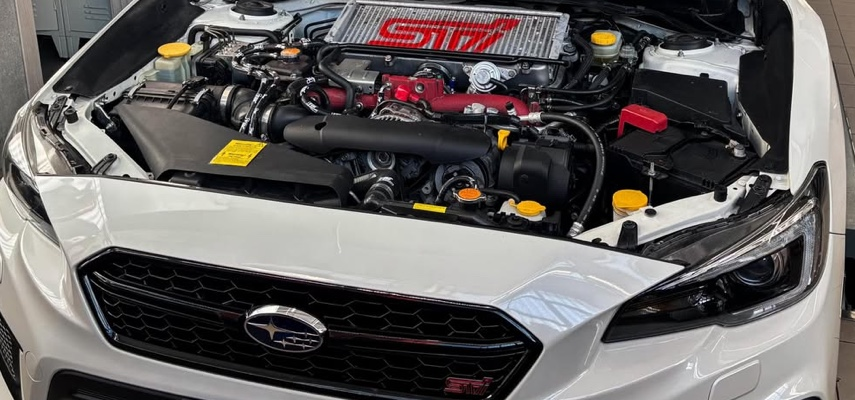
The EJ207 and EJ257 are both flat-four turbocharged engines from Subaru’s EJ engine family, and both power versions of the Subaru STI. However, they are not the same engine, and the differences between them matter significantly for anyone sourcing replacement parts, planning an engine swap, or researching why JDM and USDM STI builds behave differently on paper. This post covers what sets these two engines apart, where the differences actually show up in practice, and what STI owners need to know before making decisions based on either platform.
Where Each Engine Comes From
The EJ207 is the engine that powers the Japanese domestic market Subaru Impreza STI. It was never sold new in the United States. The EJ257 is the engine Subaru developed specifically for the North American market STI, introduced with the USDM model in 2004. Both engines share the same basic EJ architecture, the same 2.0 liter or 2.5 liter displacement class, and the same flat-four boxer layout, but Subaru made meaningful differences between them in displacement, internals, and turbo specification.
The distinction matters most for two groups of STI owners: those sourcing a used or replacement engine and considering a JDM swap, and those researching why Japanese-spec STI builds appear to make power differently from USDM builds at similar modification levels.
Displacement: 2.0 vs 2.5 Liters
This is the most fundamental difference. The EJ207 displaces 2.0 liters. The EJ257 displaces 2.5 liters. Subaru chose 2.5 liters for the USDM market because North American buyers and regulations favored the additional low-end torque and broader power delivery that extra displacement provides. The JDM market received the 2.0 liter engine with a focus on high-revving performance and a more aggressive turbo setup to compensate for the smaller displacement.
In practice, the EJ257’s additional 500cc of displacement gives it more torque at lower RPM and a broader usable power band for street driving, which suits the USDM market’s preference for everyday drivability. The EJ207 makes up for its smaller displacement with a more aggressive turbocharger and higher boost targets that bring peak power up into a similar range, but the powerband shape is different and the engine’s character is generally more rev-dependent.
Turbocharger Differences
The turbocharger difference between the two engines is significant. The EJ207 in JDM STI applications used a variety of turbos across different model years, but later versions used a twin-scroll IHI VF series turbocharger that Subaru specifically developed for the 2.0 liter application. The twin-scroll design improves exhaust gas separation into the turbine housing, which reduces turbo lag and improves spool at lower RPM where the smaller displacement engine would otherwise lose ground to the larger 2.5 liter.
The EJ257 in USDM applications also used IHI VF series turbochargers, but tuned for the larger displacement engine’s exhaust flow characteristics. The turbo sizing and mapping differs between the two applications, and parts are not always directly interchangeable without additional calibration work.
For USDM STI owners considering turbo upgrades, the post on stock turbo vs upgraded turbo on WRX and STI covers when the factory EJ257 turbo reaches its limits and what upgrade paths are available. The STI turbo airflow upgrades hub covers the specific options for the EJ257 platform.

Internal Differences
Beyond displacement and turbo, the EJ207 and EJ257 differ in their internal specifications in ways that affect both stock capability and the cost of building them. The EJ207, particularly in later generations, used higher compression pistons and a more aggressive cam profile suited to the high-revving, high-boost nature of the JDM application. The shorter stroke of the 2.0 liter also allows higher RPM operation without the additional stress that a longer stroke introduces at high engine speeds.
The EJ257’s longer stroke gives it its displacement advantage but also introduces additional stress at the rod and piston level at high RPM. This is one of the reasons the EJ257 has a reputation for rod and piston failure at aggressive power levels that the shorter-stroke EJ207 handles more comfortably. The trade-off is that the EJ257’s broader torque delivery makes it a more forgiving engine for street use where sustained high-RPM operation is less common.
Both engines share the open-deck block architecture that is a known weak point under high boost, which is why closed-deck short block upgrades exist for both platforms. However, IAG’s short block lineup for the US market targets the EJ257 specifically, as that is the engine in USDM STI builds. For EJ257 owners considering a short block upgrade, the post on IAG short block options for Subaru STI covers the full tier range and which build level suits which power goal.
What This Means for JDM Swaps
Some USDM STI owners consider sourcing a JDM EJ207 as a replacement or swap engine, typically because used JDM engines can be found at lower mileage than equivalent USDM units at similar price points. The swap is physically possible since the engines share the same basic mounting and drivetrain interface, but it introduces complications that are worth understanding before committing.
The displacement difference means the tune needs to be rebuilt from scratch for the new engine. A USDM STI tune calibrated for the EJ257’s 2.5 liter displacement, compression ratio, and turbo characteristics cannot simply transfer to an EJ207 without significant recalibration. A professional custom tune on the new engine is not optional. Additionally, parts sourcing changes, since EJ207-specific components are JDM parts that require importing rather than domestic sourcing.
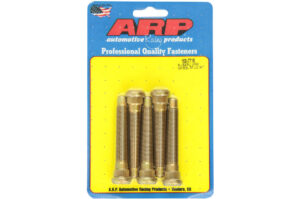
For most USDM STI owners, a rebuilt or upgraded EJ257 using aftermarket internals is a more practical path than a JDM swap. The parts ecosystem for the EJ257 in the US is significantly more developed, professional experience with the engine is more widely available, and the upgrade path through IAG short blocks, ARP head studs, and supporting modifications is well documented for the EJ257 specifically.
Common Failure Modes: Both Engines Share the Same Risks
Despite their differences, the EJ207 and EJ257 share the same fundamental failure modes under high boost operation. Both use open-deck block architecture that allows cylinder wall flex under high cylinder pressure, leading to head gasket failure. Both use factory pistons that are vulnerable to ringland cracking under detonation or aggressive boost. Both rely on ARP head stud upgrades and proper head gasket selection to maintain sealing at modified power levels.
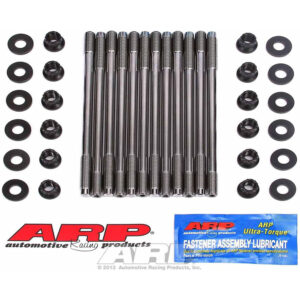
For a detailed look at why these failures happen and how to prevent them on the EJ platform, the post on most common WRX engine failures covers each failure mode and the build decisions that reduce risk. The STI engine reliability upgrades hub covers the supporting modifications that protect the EJ257 specifically under increased load.
Which Engine to Build
For USDM STI owners, the answer is almost always to build the EJ257 they already have. The parts availability, professional knowledge base, and documented build paths for the EJ257 in the US make it the more practical engine to work with. The EJ207’s advantages in rev character and stroke length are real but do not outweigh the practical costs of sourcing, swapping, and supporting a JDM engine in a US market car.
For owners who want to understand what a fully built EJ257 supports and what the upgrade path looks like, the post on reliable 400 horsepower EJ257 STI build covers a proven build combination that uses the USDM engine as its foundation. The STI engine build and power goals hub covers how the short block, turbo, fueling, and supporting modifications work together across the full range of EJ257 build levels.