
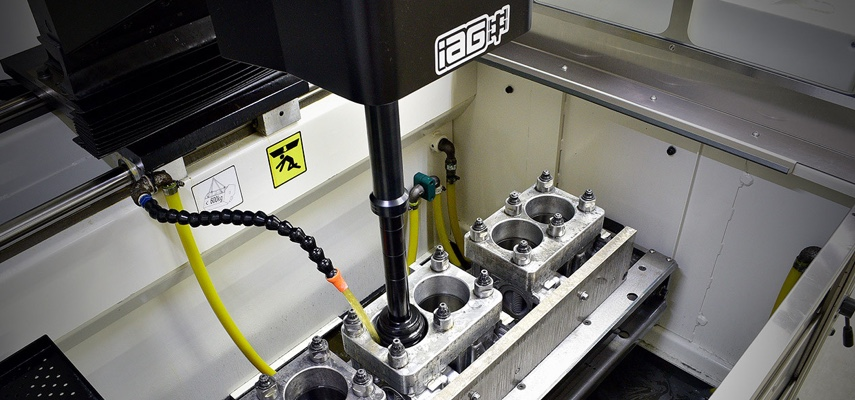

The EJ257 in the Subaru STI is a capable engine, but its open-deck architecture has a well-documented ceiling. As boost increases and tuning becomes more aggressive, cylinder wall distortion, head gasket failure, and spun bearings become increasingly common outcomes. An IAG closed-deck short block addresses those failure points directly by replacing the factory architecture with a reinforced foundation built for sustained high-boost use.
Choosing the right IAG short block for an STI build, however, requires matching the build tier to actual power goals. Each level uses different internal components, targets a different power ceiling, and suits a different type of build. This guide covers the three main tiers available for the EJ257 STI, what each one is built for, and how to decide which level fits the build.
Why the EJ257 Needs a Built Short Block
The stock EJ257 uses an open-deck block design. Under high cylinder pressure, the deck flexes, and that flex creates the conditions for head gasket failure, cracked cylinder walls, and bearing damage. On a lightly modified STI running moderate boost with a quality tune, the stock block can hold together reliably. However, as power goals increase and boost climbs, the open-deck architecture becomes the limiting factor in the build.
IAG’s closed-deck short blocks address this by filling in the open deck area, which stiffens the cylinder walls and significantly improves sealing stability at elevated boost levels. Additionally, every IAG short block replaces the factory internals with forged pistons, upgraded connecting rods, and race-grade bearings suited for the power level the block targets. The result is a foundation that handles what the factory block cannot.
For a deeper look at the specific failure modes that push STI owners toward a built short block, the post on most common WRX engine failures covers the failure points in detail. The same failure patterns apply directly to the EJ257 STI platform.
The IAG Short Block Tiers for EJ257 STI Builds
Three closed-deck short block tiers are available for the EJ257 STI at Wrench Masters. Each tier targets a different power ceiling and uses a progressively stronger internal component specification. The right choice depends on the power goal, the turbo setup, and whether the build prioritizes street reliability, track use, or extreme competition performance.
IAG 550: Entry-Level Closed-Deck for Street Builds
The IAG 550 is the entry point into closed-deck territory for the EJ25 platform. It replaces the factory open-deck architecture with a reinforced block and upgrades the internals with IAG-spec H-Beam forged connecting rods, ARP2000 rod bolts, ACL or King race bearings, and IAG-spec JE forged pistons at 99.75mm. The result is a significantly stronger foundation than the stock EJ257 without stepping into the more extreme component specifications of the higher tiers.
The 550 suits STI owners who have outgrown the stock block on a street build and need a more durable foundation for sustained use at moderate to aggressive boost levels. It works well for builds targeting the 400 to 550 horsepower range on a street-driven car where drivability and reliability matter as much as peak power. Owners who have already addressed fueling, cooling, and tuning and need the block to keep up with those upgrades will find the 550 a sensible next step.
IAG 950: Closed-Deck for High-Power Street and Track Builds
The IAG 950 is where the component specification steps up significantly. The block uses IAG-spec JE FSR forged pistons manufactured from 2618 alloy with electroless nickel-plated crowns and ring lands for increased durability under high heat and pressure. IAG-spec Tuff H-beam connecting rods with ARP 625+ rod bolts replace the lower-tier rod specification, and H13 wrist pins add additional strength in extreme cylinder pressure environments. Every 950 short block is blueprinted, bored, honed, and assembled in-house by IAG technicians to precise tolerances.
The 950 targets builds approaching four-digit horsepower where the stock architecture and lower-tier blocks reach their limits. It suits aggressive street builds, dedicated track cars, and STI owners running large-frame turbos on E85 or ethanol blends. Because the 950 uses closed-deck cylinder reinforcement combined with race-grade internals, it also handles the sustained high-boost conditions that track use demands better than an open-deck block at comparable boost levels.
At $6,499.99, the 950 represents a serious investment. However, for owners building toward 700 to 950 horsepower on the EJ257, it provides the foundation that makes those power levels sustainable rather than short-lived.
IAG 1150: Extreme Horsepower and Competition Use
The IAG 1150 is the top production-tier short block for the EJ25 platform and targets builds pursuing four-digit horsepower in competition or extreme street applications. 1150 builds on the closed-deck foundation with IAG Fire-Lock receiver groove machining for head gasket sealing at extreme boost levels, where conventional sealing solutions become a liability. The internal specification matches the severity of the application, with components selected for sustained operation under conditions that exceed what lower tiers handle.
The 1150 is not a street build engine for most owners. It suits STI competitors, time attack builds, and drag applications where the power goal is well above 950 horsepower and the supporting systems, tuning, and driver skill match the engine’s capability. At $9,499.99, the investment also assumes the rest of the build is at a level where the 1150 is not the limiting factor.
For owners considering this tier, the decision typically centers on whether the supporting build, turbocharger, fueling, and tuning can justify and utilize what the 1150 offers. If those components are not already at a matching level, the 950 is usually the more appropriate choice.
How to Choose the Right Tier for Your STI Build
The most common mistake STI builders make is choosing a short block tier based on peak power ambition rather than the complete build plan. A 1150 in a car with a stock turbo, stock fueling, and an off-the-shelf tune is not going to produce 1150 horsepower. The short block tier should match the turbo, fueling, and tuning strategy as a complete system.
For most street-focused STI builds targeting 400 to 550 horsepower, the 550 provides a meaningful reliability upgrade over the stock block without requiring the full component specification of the higher tiers. When it comes to serious builds targeting 600 to 950 horsepower on aggressive turbo and fuel setups, the 950 is the appropriate foundation. For competition builds where power goals exceed 950 horsepower and supporting systems are built to match, the 1150 is the right call.
Additionally, the choice between tiers should factor in how the car is used. A street car that also sees occasional track days operates under different sustained load conditions than a dedicated track car. The higher tiers offer more headroom, but that headroom only matters if the rest of the build and the use case actually demand it.
For a broader view of STI engine build planning at each power level, the STI engine build and power goals hub covers the full picture. The IAG short block hub at Wrench Masters lists all available tiers and platforms in one place.
What Else the Build Needs
A short block upgrade on the EJ257 STI does not exist in isolation. Because the short block raises the ceiling on what the engine can handle, the supporting systems need to match the new capability. Fueling, intercooling, turbocharging, and tuning all need to support the power level the short block is built for.
Specifically, the STI fuel system requires attention before or alongside a short block upgrade at higher power levels. The stock STI fueling architecture limits power potential independently of the block, so addressing fueling is part of the same conversation. The STI fuel system upgrades hub covers what the fuel system needs at each power tier.
Turbocharger selection also plays a direct role in which short block tier makes sense. For STI owners considering a turbo upgrade alongside a short block, the STI turbo and airflow upgrades hub outlines the options and what each level supports.
Frequently Asked Questions
What IAG short block tiers fit the Subaru STI EJ257?
The IAG 550, 950, and 1150 short blocks all fit the EJ257 platform used in the Subaru WRX STI. Each tier targets a different power ceiling and uses progressively stronger internal components to match the intended application.
Is the IAG 550 enough for a 500 horsepower STI build?
Yes. The IAG 550 supports builds targeting up to 550 horsepower with proper supporting modifications and tuning. For a street-focused STI build in the 400 to 550 horsepower range, the 550 provides a reliable closed-deck foundation without requiring the higher-tier component specification.
What is the difference between the IAG 950 and the IAG 1150?
Both use closed-deck construction and race-grade internals, however the 1150 adds IAG Fire-Lock receiver groove machining for head gasket sealing at extreme boost levels and targets builds pursuing four-digit horsepower in competition applications. The 950 suits serious high-power street and track builds up to approximately 950 horsepower.
Does an IAG short block require a new tune?
Yes. A professional custom tune is required after installing any IAG short block. The engine management system needs calibration to match the new compression ratio, internal clearances, and the power level the build targets.
Can I reuse my stock cylinder heads with an IAG short block?
Yes, as long as the heads are in good condition. IAG short blocks are sold without cylinder heads, camshafts, or valvetrain components. Many STI builders retain their factory or already-upgraded heads when installing a short block.