
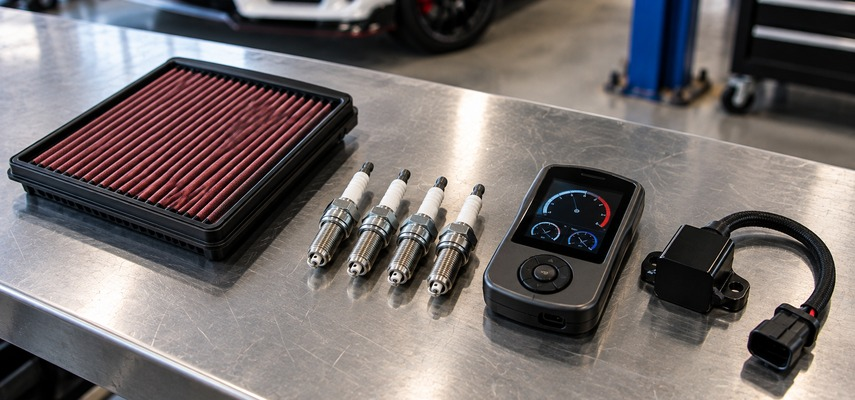

The best first upgrades for a 2022 and newer Subaru WRX (FA24) are a COBB drop-in air filter, fresh COBB spark plugs, and a COBB Accessport tune, followed by a COBB flex fuel upgrade for owners who want to run E85. All four are built for the 2022 and newer WRX, and none of them fit the 2015 to 2021 FA20 car. Together they cost about $2,035 at current prices, or about $955 without the flex fuel kit.
The 2022 WRX brought a new platform and a new engine, a 2.4 liter turbocharged flat-four that Subaru rates at 271 horsepower at 5,600 rpm and 258 lb-ft of torque from 2,000 to 5,200 rpm. It is a strong car straight from the factory, which makes the first round of upgrades more about unlocking what is already there than adding bolt-on power. This guide covers the four parts most owners start with, states exactly what each one fits, and explains the order that makes sense.
Check Fitment First: FA20 Parts Do Not Cross Over
The jump from the FA20 to the FA24 changed more than the displacement. Subaru moved the 2022 car to a new chassis and a different engine, so most parts made for the 2015 to 2021 WRX will not fit. A comparison in FA20 versus FA24: what WRX owners should know covers the differences in detail, and EJ257 versus FA24 explains how the new engine compares with the older STI motor.
Tuning hardware follows the same rule. COBB sells a different Accessport for each generation, so an Accessport from a 2015 to 2021 WRX does not carry over to a 2022 car. Each part in this list is listed for the 2022 and newer WRX, and dealer notes on COBB’s parts mention the 2026 model year in a few places, so confirm fitment for a 2026 car before ordering.
1. COBB High Flow Drop-In Filter: The Simplest Airflow Step
Swapping the paper factory filter for a free-flowing one is the lowest risk airflow upgrade on a turbocharged car. The COBB High Flow Filter is molded to drop straight into the factory airbox, so nothing needs cutting or modifying. COBB builds it from synthetic nanofiber and describes it as washable and reusable, and the same filter also covers other 2.4 liter turbo Subarus such as the Ascent and Outback XT.
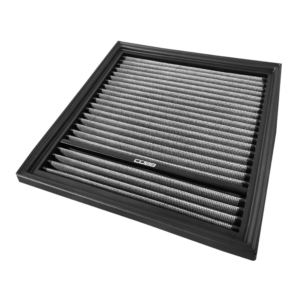
COBB lists the filter as compatible with its Accessport off-the-shelf maps, which makes it a natural pairing with a tune. It is also not an emissions-related part, so it can be used on emissions controlled vehicles. Owners who plan a full intake later can compare options in the cold air versus short ram guide and the best air intake upgrades guide, both of which cover the WRX and STI broadly.
2. COBB Spark Plugs: A Fresh Start Before Any Tune
Spark plugs are the most overlooked maintenance item on a modified car. A tune and higher boost ask more of the ignition system, so starting from a fresh set removes a variable before any other changes go on.
These COBB plugs are the factory spark plug for the 2.4 liter turbo engine, a heat range 8 plug that matches the OEM part numbers. That detail matters, because they are not a colder plug. They suit regular maintenance and the stock heat range, while owners who need a colder plug for much higher power should talk to their tuner first. COBB sells them as a set of four with trivalent metal plating and a ceramic insulator.
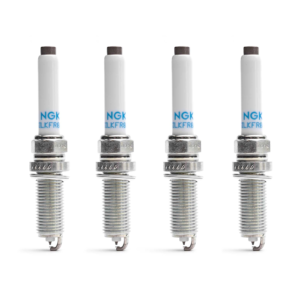
The plugs fit the 2022 and newer WRX, and COBB’s listing also covers the Ascent and the Outback and Legacy XT, since all of them use the same 2.4 liter turbo engine. Pairing fresh plugs with the filter costs about $185 together, which makes this the cheapest first step on the list. The guide on how much power a stock FA20 and FA24 can handle explains why the ignition system matters as power rises.
3. COBB Accessport V3: The Tune and the Gauges
The Accessport is the part that turns the first two upgrades into a complete setup. COBB’s AP3-SUB-006 unit covers the 2022 to 2026 WRX with either the 6-speed manual or the CVT. It flashes pre-loaded off-the-shelf maps or custom maps, stores up to 100 maps so owners can switch between them, and shows up to six live parameters on its full color screen.
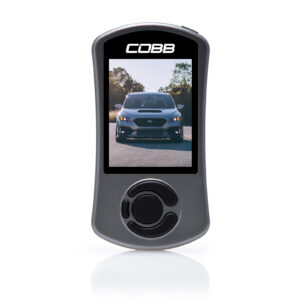
The Accessport also acts as a gauge and a data logger. Owners can watch boost and other live values straight from the ECU, set a shift light, and review logs on a PC or Mac. COBB also builds custom features on this platform, such as a secondary rpm limit for launches. Anyone new to flash tuning should read what the Accessport does and whether it is worth it and what EFI tuning actually does before buying.
Realistic expectations help here. Subaru’s rating of 271 horsepower is the starting point, and the full picture of what stock and built FA24 cars make is in how much power the FA24 actually makes. The post on how much boost is safe on a stock WRX or STI covers the limits of stock hardware, though it was written for the WRX and STI in general, so FA24 limits can differ.
4. COBB CAN Flex Fuel Upgrade: For Owners Ready to Run E85
Flex fuel is the step that makes ethanol practical. The kit includes a CAN gateway module, an ethanol sensor with its harness, a mounting bracket, and a vehicle-specific harness for the 2022 to 2025 WRX. COBB describes it as plug and play. The sensor measures the ethanol content in the fuel and sends it to the ECU, which uses an Accessport flex fuel calibration to adjust the tune.
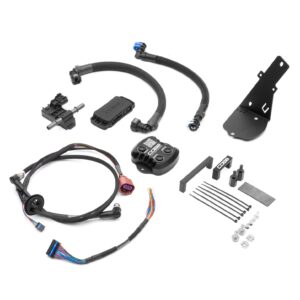
This kit needs the Accessport to work, which is why it comes last on the list. It is also listed only through the 2025 model year, and dealer notes on COBB’s listings say flex fuel products and maps are not available for the 2026 WRX. Owners unsure whether E85 is right for their car should read the E85 versus pump gas guide and the COBB flex fuel kit guide, which cover the tradeoffs.
The Order That Makes Sense
Start with the spark plugs and the filter, since they are cheap and safe at any power level. Add the Accessport next, because a tune is where the car changes the most and every later upgrade depends on it. Last comes the flex fuel upgrade, since it only pays off once the Accessport is installed and the owner is ready to commit to ethanol.
COBB groups this same path into staged power packages, and its Stage 1 plus flex fuel package bundles the Accessport, the filter, the flex fuel kit, and a fuel pressure sensor kit. The staged approach keeps each change small enough to understand and to undo if something does not feel right.
What This List Leaves Out
This list skips turbos, intercoolers, and exhausts on purpose. Those parts raise power and heat together, and they need supporting upgrades covered in supporting mods for big turbo builds. Owners who want to go that route can read about the IAG 600 ball bearing turbo for the FA24, a turbo built specifically for the FA24F engine. More parts for the car live on the Subaru WRX parts page.
Frequently Asked Questions
What should I upgrade first on a 2022 Subaru WRX?
Start with fresh spark plugs and a drop-in air filter, then add an Accessport tune. A flex fuel upgrade comes after that for owners who want to run E85.
Do FA20 WRX parts fit the 2022 and newer WRX?
Generally no. The 2022 WRX uses a new 2.4 liter FA24 engine and a new chassis, so most parts for the 2015 to 2021 car do not fit. Confirm fitment for each part before ordering.
Are the COBB spark plugs colder than stock?
No. COBB’s plugs are the factory heat range 8 plug, matching the OEM part numbers. They suit maintenance and the stock heat range, while a colder plug is a separate decision for much higher power.
Do I need the flex fuel kit to tune my 2022 WRX?
No. The Accessport works on its own with off-the-shelf maps on pump gas. Owners who want ethanol blends can add the flex fuel kit as an optional extra.
Does the Accessport work on a 2026 WRX?
COBB lists the AP3-SUB-006 for the 2022 to 2026 WRX, but dealer notes say the 2026 CVT is not supported at this time and flex fuel products are not available for the 2026 WRX. Confirm with COBB or the Wrench Masters team before ordering for a 2026 car.
How much does this first round of upgrades cost?
The filter, spark plugs, and Accessport total about $955 at current prices. Adding the flex fuel upgrade brings the total to about $2,035.
0 Comments for “2022+ WRX (FA24): What to Upgrade First (and What Fits)”