Subaru WRX Exhaust Upgrades & Systems
Exhaust upgrades on a WRX or STI come down to choosing the right combination for your build stage, not just bolting on the loudest option available.
FREE SHIPPING ON ALL ORDERS OVER $199

For most WRX and STI owners, exhaust is one of the first upgrades considered — and one of the most misunderstood. The right exhaust system does more than change the sound. It improves how efficiently spent gases exit the engine, which directly affects how well the turbo can do its job.
That is what makes exhaust upgrades more than a cosmetic decision. From the header at the engine to the catback at the rear, each component in the exhaust path plays a role in how the overall system performs under boost, at high RPM, and across different power levels.
On stock or mildly modified WRX builds, a catback or downpipe upgrade can improve exhaust flow, sharpen throttle response, and deliver a more refined sound without requiring a tune. On higher horsepower builds, the header becomes a much more important piece of the equation — especially when turbo sizing and airflow demand start to climb.
The goal is not just a louder or faster car. It is a WRX or STI exhaust system that matches your build level, supports your turbo setup, and gives you a clear path forward as the rest of the build grows.
(Daily Driver / Entry-Level Build)
Bolt-on fit, no tune required
Improves exhaust tone and flow
Good starting point for new builds
Works with stock turbo setups
Easy foundation before bigger upgrades
(Tuned / Street Performance)
More complete exhaust flow improvement
Downpipe reduces turbo backpressure
Tune recommended for best results
Stronger mid-range and top-end gains
Right setup for bolt-on performance builds
(High Power / Larger Turbo Builds)
Full exhaust system optimization
Header improves flow from cylinder head
Built for upgraded turbo applications
Requires supporting mods and tune
Best match for serious power goals
Exhaust upgrades are often sold as a sound upgrade first. But on a turbocharged platform like the WRX or STI, exhaust efficiency has a direct relationship with how the turbo spools, how quickly the engine reaches peak power, and how consistently the system performs under load.
The exhaust path starts at the header, which collects gases from the cylinder head and routes them toward the turbocharger. From there, the downpipe carries gases away from the turbine housing. The catback system handles everything from the downpipe back, including the muffler and tips.
Each of those sections can be upgraded independently, but they work best as a coordinated system. A catback upgrade on its own improves flow from the midpipe back. Adding a downpipe improves flow through the turbo section. Adding a header changes how gases arrive at the turbo in the first place — which is why header choice matters more as boost and turbo size increase.
On stock and mildly tuned WRX builds, catback and downpipe upgrades offer the best return with the least disruption. On builds pushing higher power targets, the header becomes a much more meaningful variable. Choosing the right combination depends on where the build is now and where it is headed.
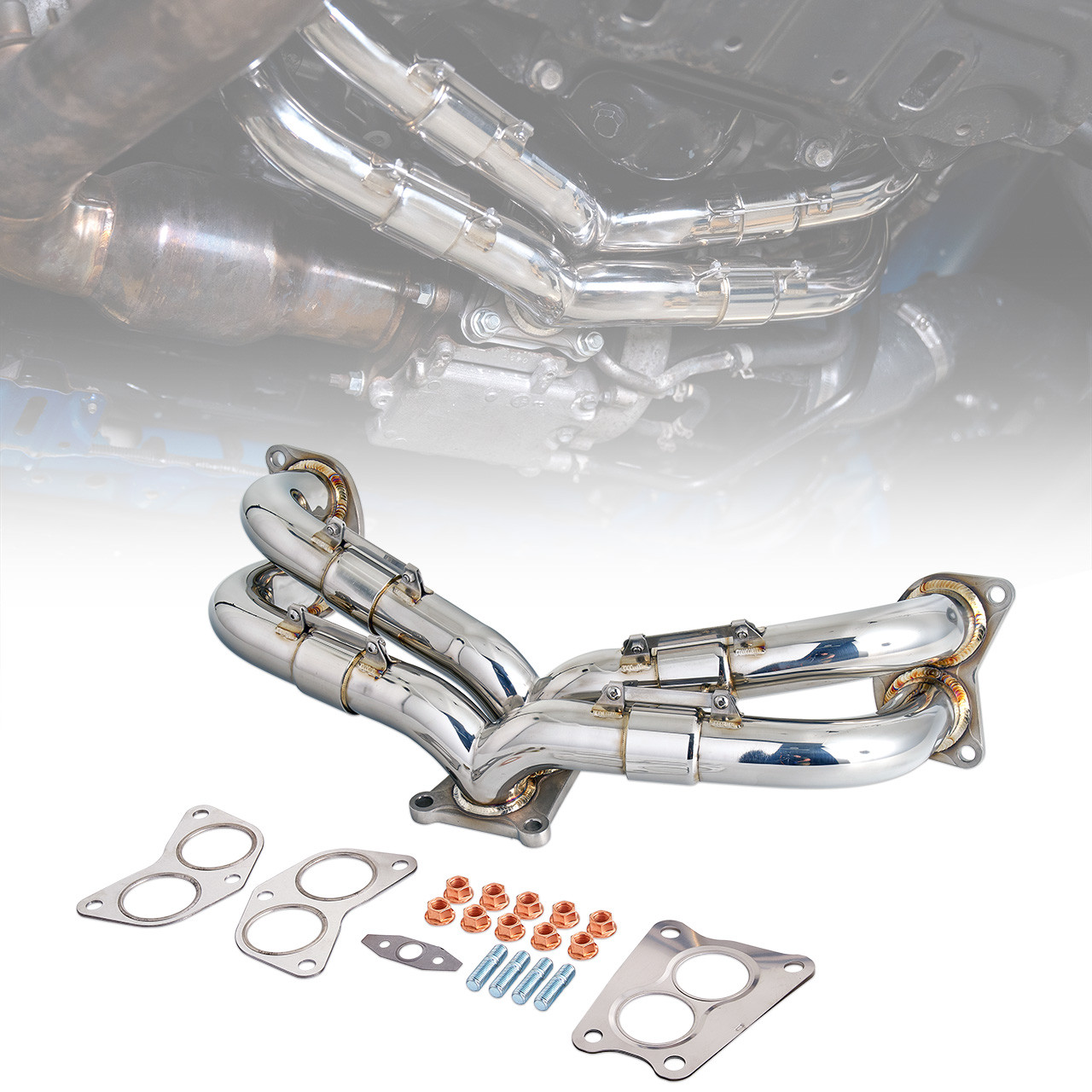
IAG Performance Equal Length Header — FA20 WRX 2015–2021
For FA20-powered WRX owners looking to improve exhaust flow at the header level, the IAG Equal Length Header is the purpose-built option for this platform. Designed around the twin-scroll turbo configuration of the 2015–2021 WRX, it delivers real flow improvement over the restrictive factory manifold with full stainless steel construction throughout.
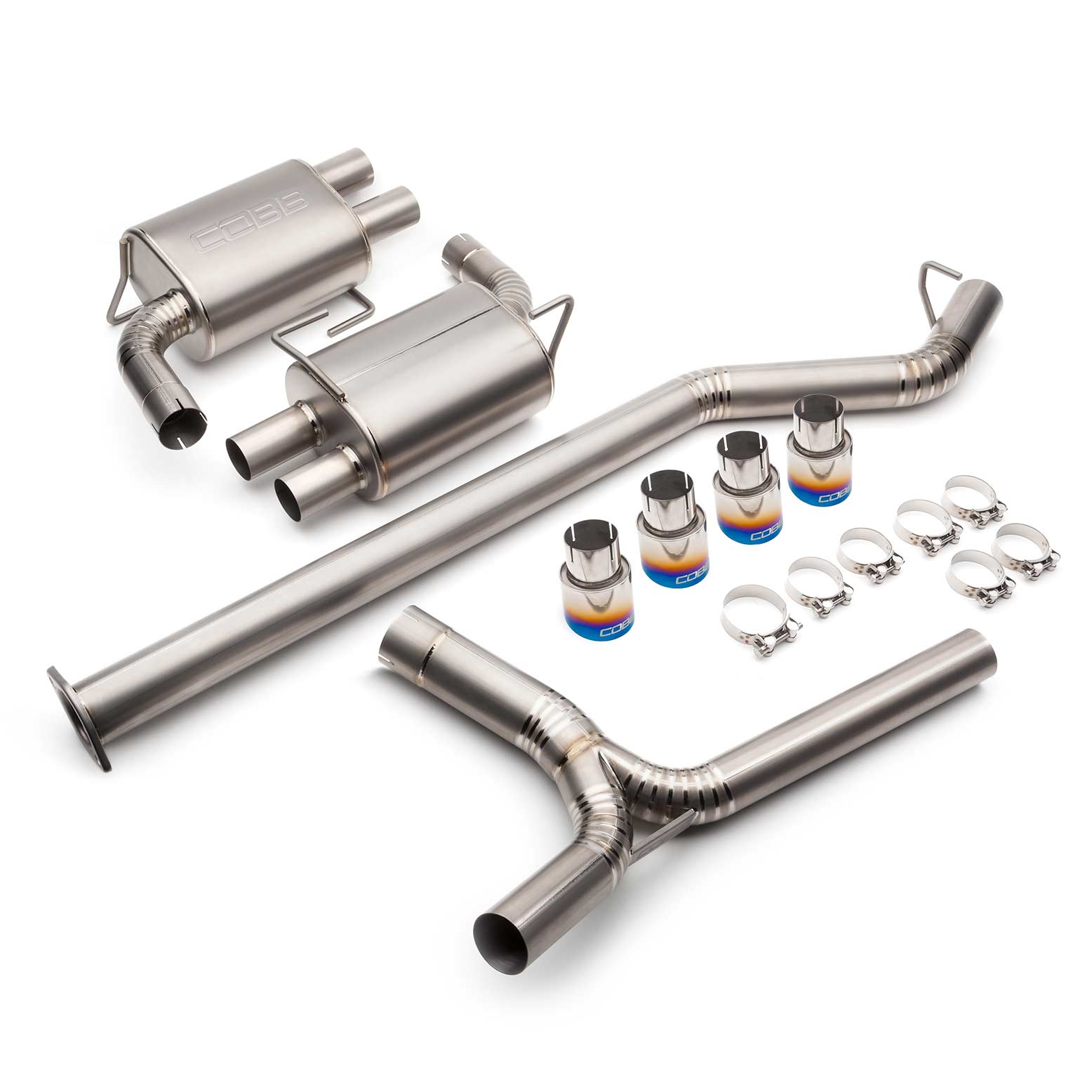
Cobb Titanium Cat-Back Exhaust: Subaru WRX 2022–2025
For owners of the current-generation VB WRX, the Cobb Titanium Cat-Back is the premium catback choice. Built entirely from titanium, it delivers a significant weight reduction over the factory exhaust while improving flow and producing a refined, aggressive sound that suits both daily driving and performance use.
EJ-powered cars, including the Subaru STI through 2021 and earlier WRX generations, respond strongly to header upgrades because the factory EJ manifold is one of the more restrictive pieces in the exhaust path. On these platforms, moving to a quality unequal or equal length header alongside a downpipe and catback creates a much more complete improvement than a catback alone.

FA20-powered Subaru WRX models from 2015–2021 have a different exhaust layout due to the twin-scroll turbo configuration. Equal length headers are the right choice here, and GrimmSpeed makes a purpose-built option for this platform. Catback and downpipe upgrades follow the same logic — more complete systems produce better results.
The FA24-powered VB WRX (2022–present) is a newer platform with its own considerations. Catback upgrades like the Cobb Titanium are a natural starting point, and the downpipe market for this platform continues to develop.
Other turbo Subaru platforms like the Forester XT, Legacy GT, and Impreza share exhaust upgrade logic with the WRX and STI, though fitment varies per model
For most builds, a catback is the right starting point. It improves exhaust tone and flow without requiring a tune, fits directly onto the factory setup, and creates a clean foundation for future upgrades. If you are already tuned or planning to be, adding a [downpipe](https://wrenchmastersauto.com/parts-category/exhaust/downpipes/) alongside the catback gives a more complete improvement.
Yes. Supporting mods are often what separate a fun setup from a fragile one. Parts like engine mounts, oil catch cans and AOS systems, and proper exhaust components help the engine operate more consistently under load.
A tune is strongly recommended when adding a catless downpipe and is a good idea with a high-flow catted downpipe as well, especially on modified cars. Running a downpipe without a tune on a stock map can result in rough idle, check engine lights, and power left on the table. A proper tune lets the ECU take full advantage of the improved flow.
A catback system covers everything from the catalytic converter back, including the midpipe and muffler. A turboback system covers everything from the turbo outlet back, including the downpipe and catback sections. Turboback systems offer more complete flow improvement but require more supporting work and typically a tune.
Performance engine mounts for WRX and STI are worth pairing with any exhaust upgrade on more aggressive builds.
Yes, especially on the downpipe side. Reducing backpressure at the turbo outlet allows the turbine to spin more freely, which can improve spool response. Header selection also plays a role on higher-power EJ and FA builds where the factory manifold becomes a restriction.
Headers become more impactful as power goals and turbo size increase. On stock or mildly modified cars, a catback and downpipe will deliver more noticeable gains per dollar. On builds targeting higher horsepower with an upgraded turbo, a quality header becomes a meaningful part of the exhaust equation. When the engine itself is being upgraded, it is also worth reviewing IAG short block options as part of the overall build plan.
Not directly, but exhaust upgrades are often part of a broader performance build where crankcase pressure management becomes more important. An IAG oil catch can or AOS system is worth considering on any modified WRX or STI that is being driven hard.
Exhaust upgrades perform best when the rest of the build supports them. On its own, a catback or downpipe improves flow — but the gains compound when paired with the right supporting mods.
Proper tuning is the most important companion to any downpipe or header upgrade. Without it, the ECU is still operating on a conservative factory map that was not written with improved exhaust flow in mind.
Stabilizing the drivetrain with performance engine mounts for WRX and STI helps reduce unwanted movement under load and keeps the entire setup more consistent, especially on cars that are being driven hard.
For builds running higher boost or more aggressive tuning, managing crankcase pressure becomes important too. IAG oil catch can and AOS systems help keep the engine running cleaner over time.
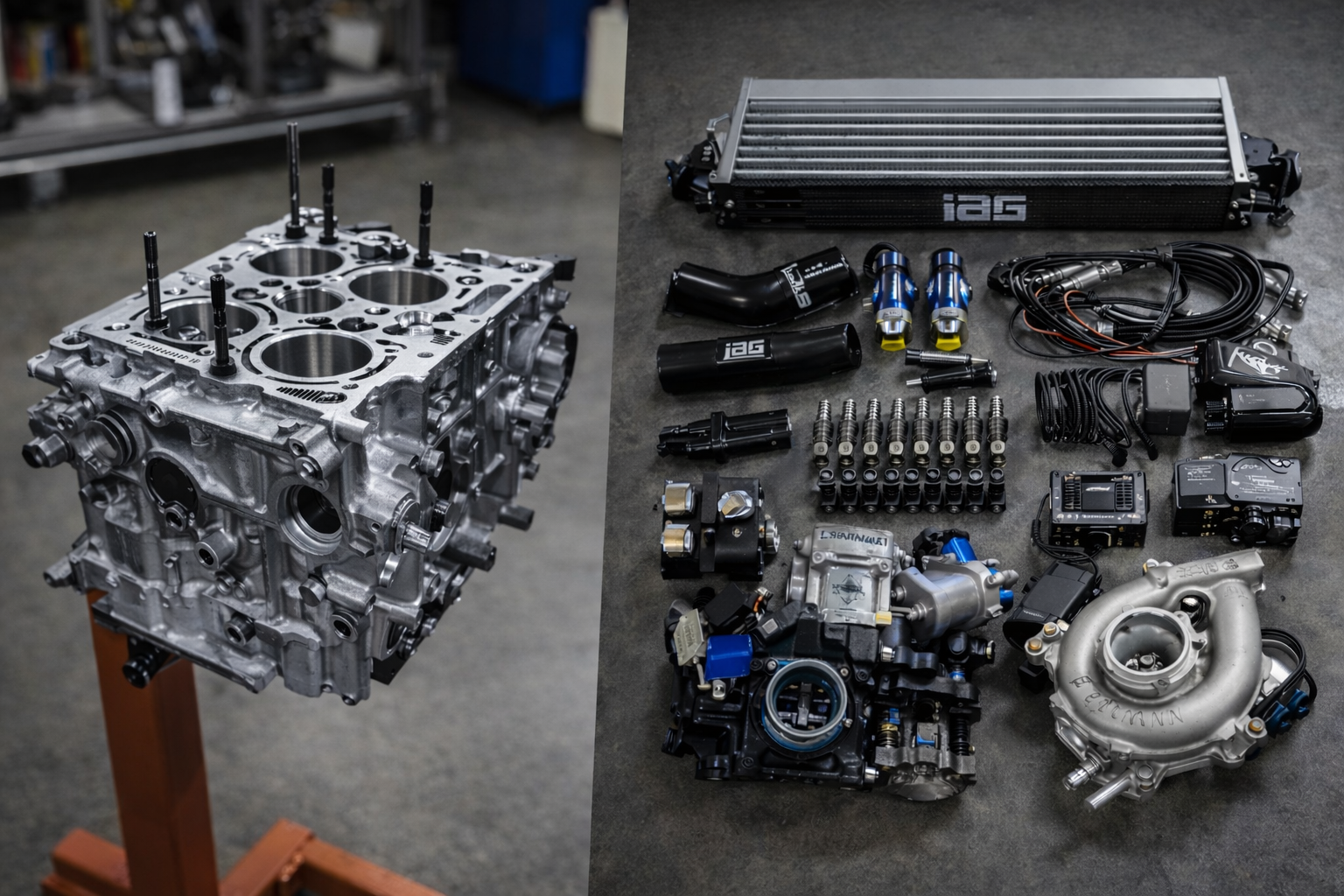
On higher-power setups where the exhaust is being optimized as part of a larger build, it is also worth considering whether the factory short block is still the right foundation. IAG short block options give serious builds a stronger internal base to work from.
If boost and forced induction are also part of the plan, our WRX turbo and airflow upgrades guide explains how those upgrades connect to the exhaust side of the build.
These upgrades work best together. Exhaust is one piece of a complete WRX performance build, not an isolated decision.
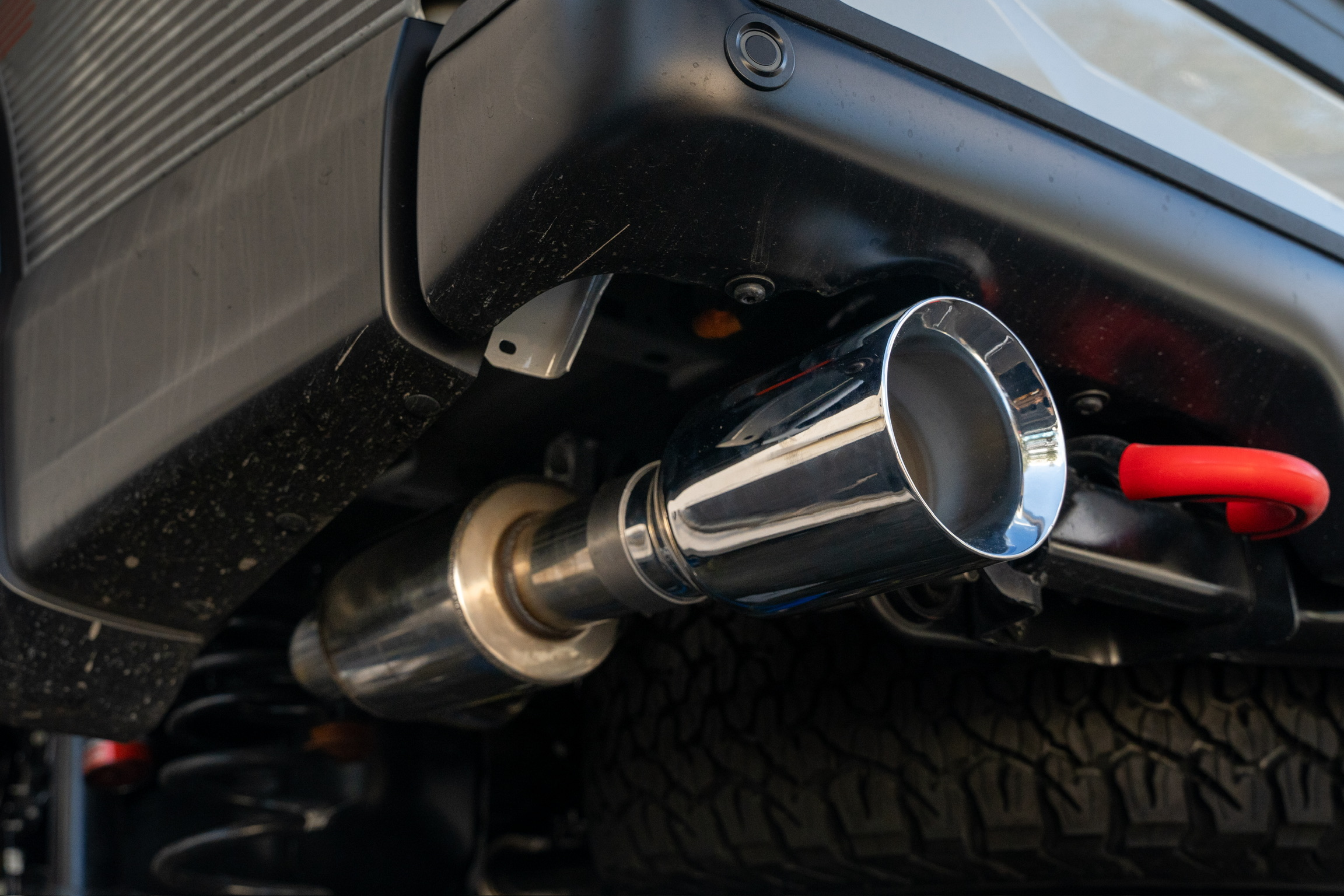
Wrench Masters focuses on Subaru performance platforms and the parts that need to work together for a build to stay consistent and keep growing.
Instead of guessing between exhaust options, you can build around combinations that match your engine platform, turbo setup, and power goals — whether that means a clean catback upgrade for a daily-driven WRX or a full header-back system for a more serious build.
From entry-level bolt-on exhausts to performance systems for high-power STI builds, the goal is the same: choose components that improve how the system actually performs, not just how it sounds.
The result is not just a louder car, but a better-planned Subaru build with a clear path forward.
Exhaust & Build Guides
If you are planning a WRX or STI exhaust upgrade or a broader performance build, these guides help explain how the exhaust system connects to the rest of the car.
Related WRX Performance Components
To support your exhaust build, explore the components that work together across the full WRX performance system.
Improving drivetrain stability with performance engine mounts for WRX and STI, managing crankcase pressure through AOS and catch can systems, and building around a stronger foundation with IAG short blocks all support a more complete and consistent WRX build.
Browse all Subaru WRX exhaust systems and components to find the right fit for your platform and build stage.