
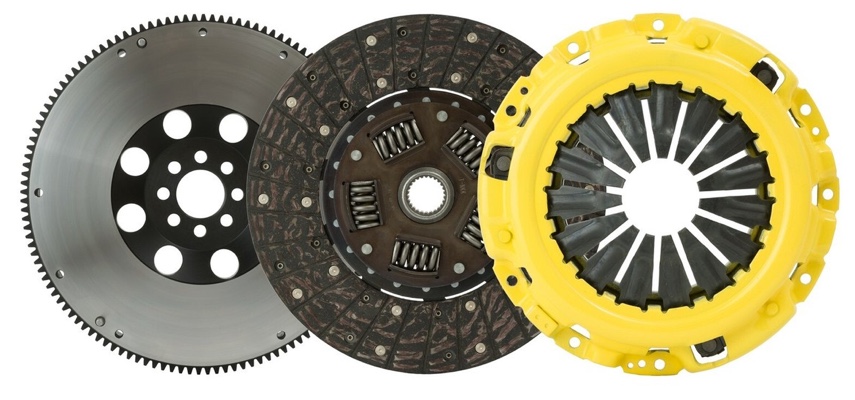

Your clutch is basically the “handshake” between the engine and transmission. When it starts slipping, chattering, or feeling inconsistent, it’s usually not random — it’s your setup telling you the clutch is at (or beyond) its limit.
This comes up a lot on turbo cars (WRX/STI, Focus ST, Civic Si/Type R, etc.), especially after adding power. If you’ve added torque recently, it’s worth checking whether the clutch is still the weak link.
5 Signs Your Clutch Is Ready for an Upgrade
1) Clutch slip under boost or load
The most common sign: RPM climbs faster than speed, especially in a higher gear (3rd–6th) when you roll into throttle. If it slips once under boost, it usually gets worse quickly.
2) Burning smell after a pull or hill
A hot, sharp “burnt” smell after spirited driving or a steep hill can mean the disc is overheating and glazing.
3) Engagement point changes (or feels inconsistent)
If the bite point suddenly gets very high/low, feels vague, or changes day-to-day, the clutch may be worn or the pressure plate may be losing clamp force.
4) Chatter, shudder, or vibration on takeoff
Some performance clutches naturally chatter a bit, but new or worsening vibration can point to a worn disc, hot spots, or a flywheel surface that needs attention.
5) You’re planning torque increases soon
If you’re about to add a tune, turbo changes, or fueling upgrades, it’s often smarter (and cheaper long-term) to plan the clutch now instead of waiting for it to fail. Pairing your clutch upgrade with engine mounts helps stabilize the drivetrain and improves how that added power is transferred to the wheels.
What Actually Wears a Clutch Faster?
- More torque (tunes and bolt-ons that hit hard down low)
- Heat from repeated pulls, traffic, hills, or aggressive launches
- Driving style (slipping the clutch excessively, riding the pedal)
- Old/uneven flywheel surface (glazing, hot spots, or improper resurfacing)
- Track use (especially on heavier cars and sticky tires)
If you’re adding power with something like a tuning path from COBB Tuning, just remember: power is fun, but torque is what tests the clutch first.
How to Choose the Right Clutch Upgrade
There isn’t one “best” clutch — the right one depends on power, driving style, and how much comfort you want to keep. Here’s a simple way to think about it:
Daily driver with mild power
- Best for: stock turbo + tune, OEM-like drivability
- Look for: full-face disc, smooth engagement
Street performance with aggressive torque
- Best for: bigger turbo, hard boost ramps, spirited driving
- Look for: higher clamp load pressure plate, performance street disc
Track / drag / high power builds
- Best for: repeated launches, very high torque
- Look for: puck/segmented discs or twin-disc setups (expect more noise/harshness)
If you’re shopping options, start with the category pages below and filter by your vehicle and goals.
Recommended Parts to Consider (Quick Links)
- Drivetrain (browse everything related)
- Clutch Kits
- Flywheels
- Transmission Mounts (helps reduce movement and improve feel)
Example picks (to get you started)
Do You Need to Replace the Flywheel Too?
Sometimes you can resurface a flywheel, but if there are hot spots, cracks, or heavy glazing, replacement can be the safer call. A fresh clutch on a bad surface can chatter, slip, or wear early.
Browse options here: Flywheels
Break-In Matters More Than People Think
Even the best clutch can feel terrible (or fail early) if it’s not broken in properly. In general, plan for a gentle break-in period with normal stop-and-go driving, avoiding hard launches and full-boost pulls until it’s ready.
FAQ
Can I keep driving if my clutch is slipping?
If it’s slipping under boost/load, it’s usually on borrowed time. The more it slips, the more heat it generates — and that can damage the flywheel surface too.
Will a heavier clutch feel worse in traffic?
Not always, but it can. Higher clamp load and more aggressive disc materials often trade comfort for holding power. The goal is choosing the least aggressive clutch that still holds your torque reliably.
What’s the smartest time to upgrade?
Right before (or immediately after) a power jump. If you’re planning upgrades, it’s cheaper to plan the clutch than to be forced into it after it starts slipping.
Next Step
If you’re not sure what level makes sense for your build, start by browsing Clutch Kits, and consider your current torque and driving style. If you’ve recently added power through COBB Tuning upgrades, a clutch upgrade is one of the most common “support mods” to keep everything reliable.