
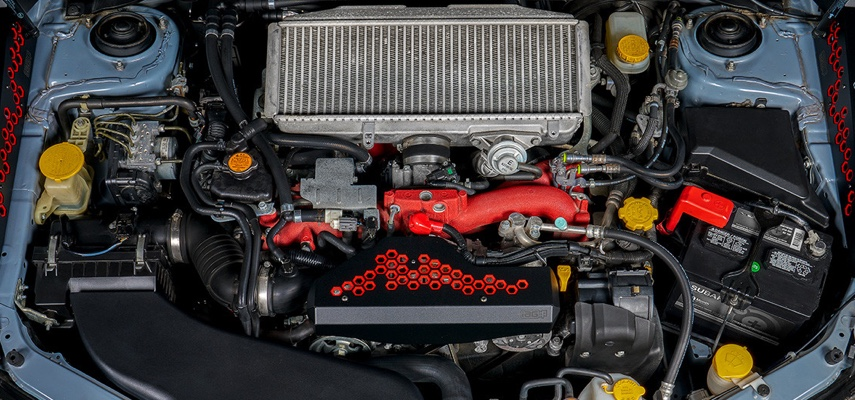

Upgrading the radiator is one of the most overlooked reliability mods for Subaru owners.
Whether you drive a WRX or STI, cooling becomes more important as soon as the car sees harder driving, warmer climates, or added power. This becomes even more critical on higher horsepower builds using reinforced internals like the IAG Performance short block lineup, where managing heat is key to long-term reliability.
In this guide, we’ll walk through the real-world signs that your stock radiator is holding you back, what changes with a performance radiator, and how to approach cooling upgrades without overdoing it.
What an Upgraded Radiator Actually Improves
A radiator’s main job is to keep coolant temperatures stable under load. When the system struggles to shed heat, temperatures creep up and stay there longer than they should. This is especially common in traffic, during repeated pulls, or when driving aggressively for extended periods.
Many factory radiators use plastic end tanks, which can become a weak point over time. An all-aluminum radiator improves durability and helps the cooling system recover faster when heat builds up. You can explore available options in our radiators category.
Signs You’re Ready for a Radiator Upgrade
Not every WRX or STI needs an upgraded radiator right away. However, these are common signs that cooling is becoming a limitation:
- Coolant temperatures rise noticeably in traffic and take time to come back down
- Cooling fans run constantly in normal driving conditions
- The car feels strong initially, then loses consistency after repeated pulls
- You drive aggressively, attend track days, or push the car for long stretches
- You are planning power upgrades such as turbo upgrades or performance exhaust systems and want to address cooling early
- Your factory radiator is aging or showing early signs of seepage
When the Stock Radiator Is Still Fine
For stock or lightly modified cars that see mostly relaxed driving, the OEM radiator can work just fine. If temperatures stay stable and the system is healthy, upgrading purely for the sake of it is not always necessary.
That said, many owners choose to upgrade proactively as part of a reliability-focused build, especially if the car sees heat, traffic, or spirited driving on a regular basis.
OEM vs Performance Radiators
The biggest differences between factory and performance radiators come down to construction and consistency. Performance radiators are typically all-aluminum, offering improved durability and better heat rejection under load.
The goal is not maximum cooling at all times, but stable temperatures during repeated stress. This is where an upgraded radiator makes the biggest difference.
CSF Radiators for 2022+ WRX (FA24)
For 2022+ WRX owners, CSF offers a bolt-in all-aluminum radiator designed to improve cooling capacity while maintaining factory-style fitment. These options are well suited for daily-driven cars that also see spirited use.
You can view the available CSF options here: CSF 2022+ Subaru WRX All Aluminum Radiator
and CSF 2022+ Subaru WRX All Aluminum Radiator (Black).
Supporting Cooling Upgrades to Consider
While the radiator does the heavy lifting, the rest of the cooling system still matters. As power and heat increase, supporting components across the car, including engine mounts, help maintain stability and consistency under load.
If you’re refreshing the system, it’s worth inspecting components in the coolant hoses and fans and shrouds categories, as these parts often become weak points with age.
Coolant routing components and reservoirs can also play a role in long-term reliability. Leaks and pressure issues frequently come from small plastic parts rather than the radiator itself. Reviewing options in the coolant routing and coolant reservoirs categories can help avoid future headaches.
Where Oil Cooling Fits In
Coolant temperature and oil temperature are related but separate concerns. For most street-driven cars, addressing radiator performance first makes the biggest impact. If oil temperatures remain high during sustained load, that’s when an oil cooler becomes relevant.
Drivers who regularly push their cars may want to explore options in the oil coolers category after confirming the radiator setup is doing its job.
Installation Notes That Matter
A radiator upgrade only works as well as the installation. Proper bleeding, quality coolant, and attention to clamps and caps all play a role in final results. Many reported cooling issues after an upgrade come down to air trapped in the system rather than the radiator itself.
Other Radiator Options Worth Considering
Depending on your goals, there are also performance radiators from established brands like Mishimoto that focus on increased cooling capacity and broader vehicle coverage. These can be a good fit for owners comparing different construction styles, finishes, or price points
while still prioritizing reliability and proper fitment.
Final Thoughts
An upgraded radiator is one of the smartest reliability-focused upgrades you can make on a WRX or STI.
It may not add horsepower, but it helps preserve performance, protect the engine, and keep temperatures consistent when the car is driven the way it was meant to be.
If you’re planning future mods or already pushing the car harder than stock, starting with a quality radiator is a solid foundation for the rest of your cooling system.