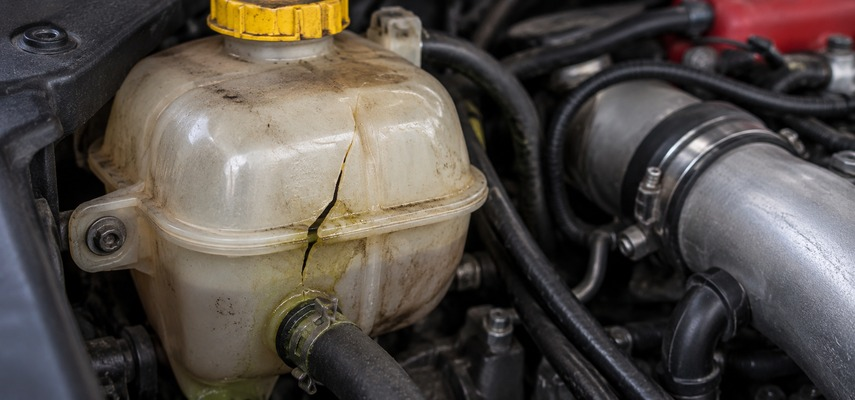
The factory coolant expansion tank on the FK8 and FL5 Civic Type R is made of plastic mounted directly next to the turbo, and repeated heat cycling makes that plastic brittle enough to crack, sometimes with fewer than 1,000 miles on the car. This is not a rare fluke, it is a well documented, widely reported failure that Honda has replaced under warranty on multiple occasions, often with the same design that fails again. Here is why it happens and what actually fixes it for good.
Why the Factory Tank Fails
The coolant expansion tank sits close to the turbocharger, one of the hottest components in the engine bay, and gets heat soaked constantly during normal driving. Plastic handles heat fine when new, but every heat cycle, the engine warming up and cooling down, gradually makes the material more brittle. Over enough cycles, especially at a seam or mounting point where stress concentrates, the plastic eventually cracks and starts leaking coolant. Owners have reported this happening as early as a few thousand miles, and it has been common enough on the FL5 specifically to generate an extended, active forum thread documenting repeated cases.
What This Actually Looks Like When It Happens
A cracked coolant tank typically shows up as a coolant smell in the cabin or engine bay, visible fluid around the tank itself, or a warning light indicating low coolant. In more sudden cases, owners have reported the tank spraying coolant while driving, sometimes tied to the tank being over-tightened during factory assembly. Left unaddressed, a leaking coolant system risks overheating, which can escalate into far more expensive engine damage than the tank itself ever cost.
Why a Warranty Replacement Isn’t Always the End of It
Honda has replaced failed coolant tanks under warranty, but the replacement part is frequently the identical design, which means the same failure mode remains in play going forward. Several owners have reported a second tank cracking after the first warranty replacement, which is why many choose to upgrade to an aftermarket aluminum tank once a failure happens rather than simply reinstalling the same plastic part and hoping for a different outcome the second time.
What an Aluminum Replacement Actually Changes
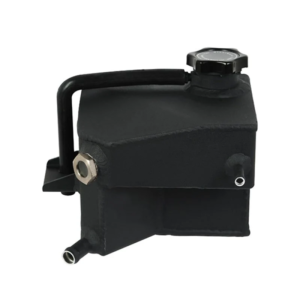
A fully welded aluminum tank eliminates the specific failure mode entirely, since aluminum does not become brittle from the same heat cycling that degrades plastic over time. Beyond durability, a well designed aluminum tank typically adds useful features the factory unit lacks, internal baffling to keep the coolant pickup submerged under hard cornering or braking so the system doesn’t ingest air, and an external sight glass that makes checking coolant level a glance rather than trying to read markings through stained, discolored plastic. Some aftermarket options also include a higher pressure filler cap for more consistent boiling margins during track use, while still accepting the stock cap for anyone who prefers to keep that closer to factory behavior.
Is This Actually Worth Doing Before a Failure Happens
Given how frequently this specific tank fails, and how early some owners experience it, replacing it proactively is a reasonable choice rather than waiting for a crack to appear on the side of the road. This is a low-cost, bolt-in upgrade relative to the cost and inconvenience of an actual coolant leak, and it directly addresses a documented weak point rather than being a speculative upgrade for a problem that may never materialize.
Cooling capacity matters for more than just this one component. The post on most common Honda Civic Type R failures and how to prevent them covers this coolant tank issue alongside other known weak points on the platform, and the post on how much power can a stock Honda Civic Type R handle covers why cooling capacity matters even more once a build starts pushing past stock power.
Frequently Asked Questions
Is a cracked coolant tank covered under Honda’s warranty?
Yes, Honda has replaced failed tanks under warranty in documented cases, though the replacement is often the same design, which means the same failure mode can recur.
How early can the coolant tank actually fail?
Some owners have reported cracking and leaking with fewer than 1,000 miles on the car, though it can also take considerably longer depending on driving conditions and heat exposure.
Does an aluminum coolant tank actually fix the problem permanently?
Yes, in the sense that aluminum does not develop the same brittleness from heat cycling that causes the factory plastic tank to crack. It directly removes the failure mode rather than just delaying it.
What are the warning signs of a failing coolant tank?
A coolant smell, visible fluid around the tank, a low coolant warning light, or in more severe cases, active spraying or leaking while driving.
Do I need to replace the tank if mine hasn’t failed yet?
It is not mandatory, but given how commonly and sometimes how early this specific part fails, replacing it proactively is a reasonable way to avoid dealing with a leak and potential overheating down the line.