
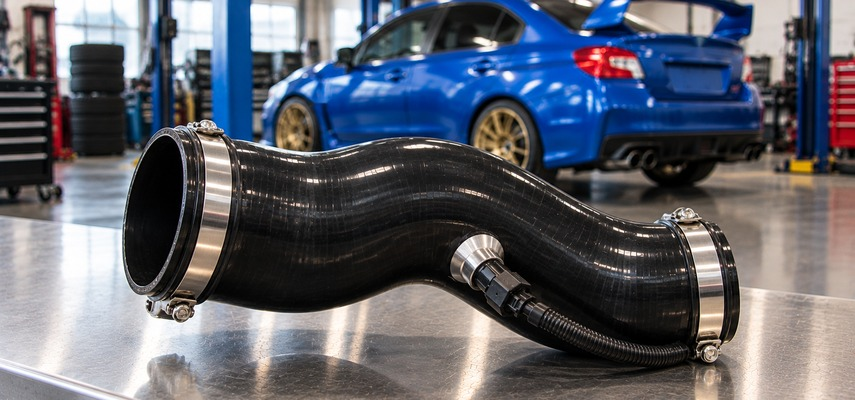

The Perrin 2.4 inch turbo inlet hose replaces the pleated factory inlet on a 2004 to 2021 STI, a 2002 to 2007 WRX, or a 2004 to 2008 Forester XT with a smooth-bore silicone hose that has a stainless steel support wire. It suits owners with a cracked or collapsing factory inlet and builds with higher airflow demand, and it costs about $283. The 2015 to 2021 FA20 WRX and the 2022 and newer WRX are not covered.
The turbo inlet is the hose that carries filtered air from the intake tract into the turbo, and it does a quiet job until it fails. A cracked or collapsing inlet leaks air that the ECU never accounts for, which can show up as lost boost or an unsteady tune. This guide explains what the Perrin hose changes, which cars it fits, and who should buy it, with realistic expectations about power and throttle response.
Check Fitment First: This Hose Is for the EJ Era
Wrench Masters lists the Perrin 2.4 inch inlet hose for three platforms. It fits the 2004 to 2021 STI, the 2002 to 2007 WRX, and the 2004 to 2008 Forester XT. Later WRX years are not listed, so owners of a 2008 or newer WRX should confirm fitment before ordering, since some dealer listings elsewhere state different year ranges.
The 2015 to 2021 WRX uses a different inlet because it runs the FA20 engine. Those owners should read the post on the COBB cast aluminum turbo inlet for the 2015 to 2021 WRX instead. The two parts are not interchangeable, so a comparison between them would only confuse the choice.
What the Factory Inlet Gets Wrong
The factory inlet has internal pleats that sit right before the air enters the turbo, which is the spot where the smoothest possible path matters most. Those pleats create restriction. The rubber also ages, and it is common for the factory hose to crack around the clamps or hose connections over time and mileage.
A crack there is more than a cosmetic problem. Any leak on the inlet side of the turbo lets unmetered air into the system, which throws off the airflow assumptions the tune is built around. For many owners that reliability issue is the real reason to replace the part, which matches the explanation in whether an aftermarket turbo inlet actually improves throttle response.
What the Perrin Hose Changes
The Perrin 2.4 Inch Turbo Inlet Hose swaps the pleated factory piece for a smooth-bore silicone hose. An embedded stainless steel support wire keeps it from collapsing under high boost, and a glass-filled nylon coupler gives a rigid transition from the intake to the turbo.
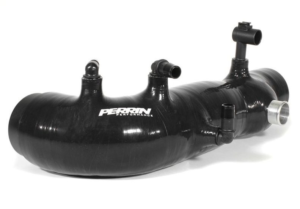
Two details make the hose easier to live with. A machined aluminum insert is bonded into the silicone for a solid blow off valve connection, and an OEM-style crankcase vent connector plugs in without defeating the factory emission control. Perrin backs the hose with a five year manufacturer warranty, and the product page notes that it is not CARB approved, which matters for owners in California.
Perrin does not require a tune to install the hose, though it recommends one to capture the full gains. That advice lines up with the usual rule for airflow parts, covered in what the Accessport does and whether it is worth it.
Will It Add Power or Sharpen Throttle Response?
Perrin says the smoother, larger bore improves airflow, adds horsepower and torque, and shortens spool time. Those gains depend heavily on the rest of the car. A stock turbo on a healthy inlet is rarely limited by the inlet, so most owners will not feel a dramatic change from the hose alone.
Throttle response comes mostly from turbine size, boost control, and tuning. The guide on how boost control and forced induction work explains why, and stock versus upgraded turbo on the WRX and STI covers how turbine sizing shapes the tradeoff. An inlet matters most once those pieces are in place and airflow demand has outgrown the stock hose.
Who Should Buy the Perrin Inlet Hose
Three kinds of owners get the most from it. The first is anyone with a cracked, torn, or collapsing factory inlet, since replacing it fixes a real leak. Another is a build that raised airflow demand through a bigger turbo, more boost, or a free-flowing intake, where Perrin positions the reinforced hose for large turbo applications running high boost. Last comes an owner adding a blow off valve, because the bonded insert gives a clean connection point. A quick inspection helps decide which group applies. With the engine off, look for cracks at the bends and around the clamps, and squeeze the hose to feel for soft or collapsing sections.
Owners who want a stock-power car to feel quicker should look elsewhere first. A tune, a better turbo choice, or boost control changes response far more than an inlet does. The best turbo upgrades guide covers the options that move the needle most.
Installation Notes Worth Knowing
Fit around the turbo is the tricky part. Some owner reviews on dealer listings describe the fit as snug and challenging, so allow extra time and take care seating the hose. After installation, check every clamp and connection for leaks, since an inlet leak defeats the point of the upgrade. The hose is off anyway during the swap, so it is also a good moment to inspect the nearby vacuum lines and the blow off valve hose for cracked rubber and replace anything that looks tired.
Owners who would rather hand the job off can use the Wrench Masters shop in St. Petersburg, where ASE certified techs install performance parts. Appointments can be scheduled online. More parts for the same area of the intake live in the air intake components category.
What to Pair It With
The inlet works best as part of a complete airflow plan. A blow off valve is the natural companion, and the guide on whether an aftermarket blow off valve changes how your turbo performs explains what that change actually does. Builds heading toward larger power targets should also read supporting mods for big turbo builds.
STI owners planning a full build can follow the reliable 400whp EJ257 build recipe and browse the STI turbo and airflow upgrades hub. Owners of an older WRX can use the WRX turbo and airflow upgrades hub, and the STI performance guide ties the whole path together. Anyone chasing reliability should skim the most common WRX engine failures guide before spending on power.
Frequently Asked Questions
Does the Perrin turbo inlet hose fit my 2015 WRX?
No. Wrench Masters lists this hose for the 2002 to 2007 WRX, the 2004 to 2021 STI, and the 2004 to 2008 Forester XT. The 2015 to 2021 WRX needs a different inlet.
Does a turbo inlet hose add horsepower?
Perrin states that its smooth, larger bore improves airflow and adds horsepower and torque. The effect depends on the rest of the setup, and it shows most on builds where airflow demand has outgrown the stock hose.
Do I need a tune after installing the Perrin inlet hose?
No tune is required to install it. Perrin recommends tuning to capture the full gains from the added airflow.
Will the Perrin inlet hose work with my blow off valve?
Yes. The hose has a machined aluminum insert bonded into the silicone for a solid blow off valve connection.
Is the Perrin turbo inlet hose CARB approved?
No. The product page lists it as not CARB approved, so owners in California should confirm local rules before buying.
Is the Perrin turbo inlet hose hard to install?
Fitting it around the turbo is the tricky step, and some owner reviews call the fit snug. Allow extra time, or schedule an install at the Wrench Masters shop.
0 Comments for “Perrin Turbo Inlet Hose for the STI and 2002-2007 WRX: What It Changes and Who Needs It”