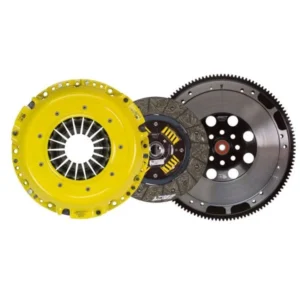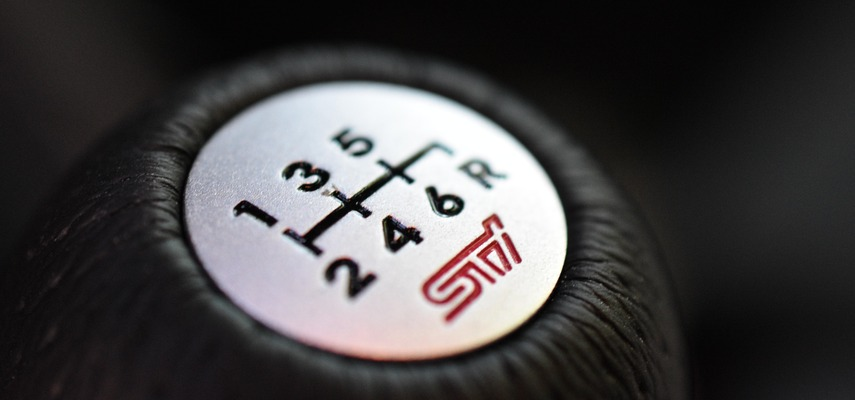
The factory clutch on a Subaru STI has a reputation for being tougher than most people expect, and that reputation is largely earned. Owners regularly report holding well past 400 wheel torque on the factory clutch with no issues, while others report slipping well before that point. That spread is not random. Driving style plays a bigger role in how long a stock clutch lasts than horsepower alone does, and this post covers why, along with a realistic sense of where the ceiling actually sits.
Why There Is No Single Hard Number
Subaru does not publish an official torque capacity rating for the factory clutch, and the wide range of real-world experience reported by owners reflects that. Some STI owners report over 450 wheel torque with zero slipping for years of daily driving. Others report slipping starting closer to 380 wheel torque after a relatively short period. The most consistent thread across that range is not the power number itself, it is how the car gets driven, particularly how often it gets launched hard or held at high RPM during shifts. This mirrors a similar theme covered in the post on how much power can a stock FA20 and FA24 handle, where component limits also depend heavily on how the car is actually driven rather than a single fixed number.
What Actually Wears a Clutch Out Faster
A clutch does its hardest work during the moment of engagement, not while fully locked up and driving normally. Hard launches, aggressive power shifts, and prolonged partial engagement, riding the clutch through a slow rolling start, for example, generate far more heat and wear than smooth, deliberate engagement at the same power level. Two STI owners making identical wheel torque numbers can have completely different clutch lifespans purely based on how each one actually uses the clutch pedal. This is why the community-reported range for stock clutch capacity is so wide, the power level matters less than the pattern of use behind it.
Signs the Clutch Is Actually Slipping
Slipping does not always announce itself dramatically. RPM flaring up without a matching increase in road speed during hard acceleration, a burning smell after spirited driving, and inconsistent power delivery on back to back pulls are all signs worth paying attention to. The post on when is it time to upgrade your clutch covers these signs in more detail, and catching slipping early matters, since continuing to drive on a slipping clutch accelerates wear on the pressure plate and flywheel surface as well.
The Transmission Is Rarely the Limiting Factor
It is worth knowing that the stock 6-speed manual transmission behind the clutch is generally considered capable of handling more torque than the stock clutch itself, with some owners reporting the transmission holding up fine at 500 wheel torque and beyond. In practice, this means the clutch is almost always the first component to show strain as power climbs, not the gearbox behind it. The post on do you need a built transmission for your WRX or STI covers when the gearbox itself actually does become the limiting factor, which is useful context for deciding whether a clutch upgrade alone is enough, or whether other drivetrain components need attention at the same time.
When It’s Actually Time to Upgrade
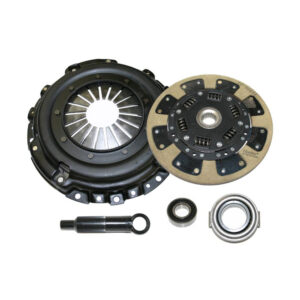
For builds staying close to stock power or running mild bolt-ons, the factory clutch typically has no trouble keeping up, provided it is not being abused with aggressive launches. Once a build moves into the 350 to 450 wheel torque range, particularly with a bigger turbo or E85 in the mix, the odds of the stock clutch holding up long term start dropping regardless of driving style. The post on best clutch upgrades for Subaru WRX and STI covers how to match an upgrade stage to an actual power target, and the post on a reliable 400 horsepower EJ257 STI build shows what a build actually making that kind of power looks like in practice, right around the point where the stock clutch question becomes unavoidable. For builds pushing well past that range with real track or strip use planned, the post on the Comp Clutch Stage 3 Segmented Ceramic Kit for Subaru STI covers the more aggressive end of that upgrade path.
OEM vs Aftermarket: Why the Factory Clutch Holds Up So Well
Part of why the stock STI clutch has earned its reputation is that Subaru specs a genuinely solid OEM unit from the factory rather than the bare minimum needed to handle stock power. The post on OEM vs performance clutches, what actually changes covers why that factory quality matters and what actually separates a stock replacement clutch from a genuine performance upgrade, which is a useful distinction for anyone whose clutch is simply worn out rather than being asked to hold more power than stock. For owners who want to keep the car close to stock while maximizing reliability, the post on the perfect street Subaru STI build covers how far a build can reasonably go before the factory clutch becomes the actual bottleneck.
The STI engine build and power goals hub covers how clutch capacity fits into a broader power build sequence, and the post on supporting mods required for big turbo WRX builds covers where clutch capacity ranks alongside fueling and turbo decisions once a build moves past stock power.
Frequently Asked Questions
What wheel torque number should I expect the stock STI clutch to handle?
There is no official number, but owner-reported experience commonly places the range somewhere between 380 and 450 wheel torque before slipping becomes likely, with driving style affecting where in that range a specific car actually falls.
Does aggressive launching wear out a stock clutch faster than smooth driving at the same power level?
Yes. Hard launches and power shifts generate significantly more heat and wear during engagement than smooth, deliberate driving, even at identical power levels.
Is the transmission likely to fail before the clutch does?
Generally no. The stock 6-speed transmission is commonly considered capable of handling more torque than the stock clutch, so the clutch typically shows strain first as power increases.
How do I know if my clutch is slipping instead of just wearing normally?
Watch for RPM flaring without a matching increase in road speed, a burning smell after hard driving, and inconsistent power delivery between pulls. These are more specific to slipping than normal wear.