Adding an external fuel pump to a WRX or STI build solves a flow problem, but it introduces a wiring problem most people do not think about until the pump is already installed. Factory fuel pump wiring was sized and fused for the factory pump, not for a higher draw external unit. Running a bigger pump through that same wiring invites voltage drop, overheating, or a fuse that was never rated for the load now passing through it. The Radium Engineering DIY Fuel Pump Wiring Kit exists to solve that problem correctly, and this post covers what is in the kit and why each part matters.
Why Factory Wiring Is Not Enough
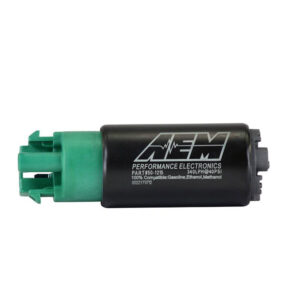
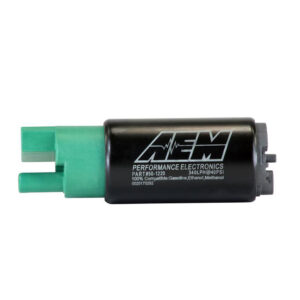
The factory fuel pump circuit is designed around the factory pump’s current draw, with a fuse and relay sized specifically for that load. An external pump like the AEM 380LPH inline fuel pump draws meaningfully more current, especially under boost when fuel pressure and demand both climb. Wiring that pump through the factory circuit either trips the factory fuse under load or, worse, allows the wiring to run hotter than it was ever designed to handle.
A dedicated wiring harness with its own relay and fuse removes that risk entirely, delivering power straight from the battery through hardware actually rated for the pump’s draw rather than relying on wiring sized for a different pump.
What Comes in the Kit
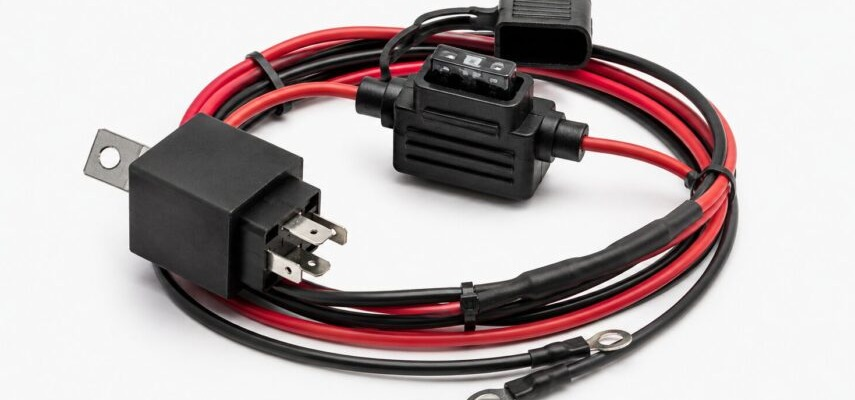
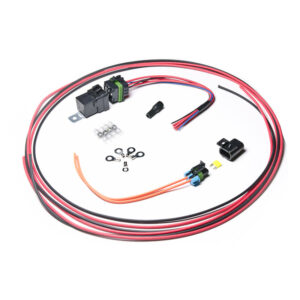
The kit includes a weatherproof SPDT 12V 40A relay with a mounting tab, a weatherproof mini fuse holder, a 25A fuse, and the connectors needed to wire both into the circuit cleanly. Aircraft grade TXL wire in both red and black handles the actual power delivery, chosen specifically because it resists chemical exposure and heat far better than standard automotive wire. Raychem crimpless solder butt connectors and stud ring terminals round out the kit, giving a complete, weatherproof harness built for one external pump.
Radium recommends one kit per pump rather than trying to share a single relay and fuse across multiple pumps, since that reintroduces the exact risk this kit is built to eliminate.
How the Wiring Actually Works
The relay is the key piece here. Instead of running full pump current through a switch or the factory wiring, the relay uses a low current trigger signal to switch a separate, properly fused circuit running straight from the battery. That trigger can be wired to a keyed ignition source or a separate switch, and the relay handles the actual high current load safely from there.
This setup keeps the pump’s full electrical draw isolated on its own dedicated circuit, protected by a fuse actually sized for that pump rather than one sized for the factory setup. Anyone comfortable with basic wiring and a multimeter can complete this install without specialty tools, though following Radium’s wiring diagram closely matters more here than on most DIY jobs, since a wiring mistake on a fuel pump circuit is not a minor issue.
Where This Fits in a Fuel System Build
A wiring kit like this becomes necessary the moment a build moves to a higher flow pump rather than a factory or drop-in replacement unit. It pairs directly with the fuel system work already covered for this platform, including the COBB fuel rails, line kit, and regulator for Subaru STI, since a fuel system upgraded to handle more flow needs the electrical side upgraded to match.
WRX fuel system upgrades and STI fuel system upgrades both cover how pump, wiring, rails, and regulator fit together as a complete system rather than isolated parts.
Frequently Asked Questions
Do I need this kit if I am only upgrading to an in-tank pump?
Not necessarily. This kit is built around wiring a single external pump with its own dedicated relay and fuse. Some in-tank kits include their own wiring solution, so check what is included before assuming a separate wiring kit is required.
Can one wiring kit power two fuel pumps?
No. Radium specifically recommends a dedicated relay and fuse for each individual pump, so a dual pump setup needs two separate kits rather than one kit shared across both.
Do I need any special tools to install this kit?
Basic wiring tools and a multimeter are typically enough. The crimpless solder butt connectors simplify the wire splicing itself, but following the included wiring diagram carefully matters more than having specialized tools.