
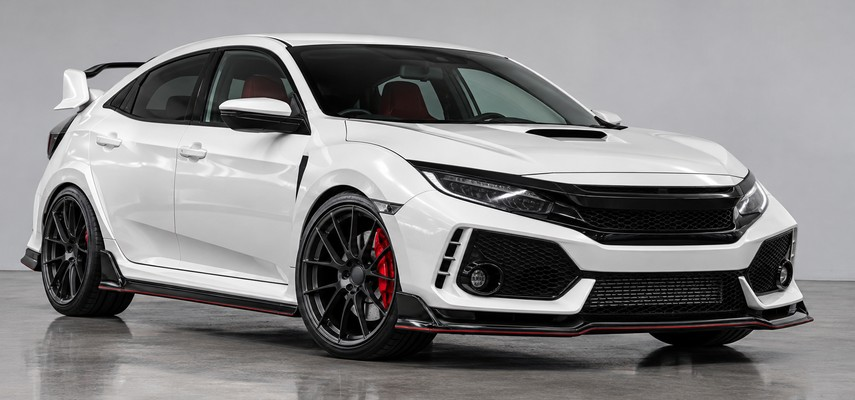

The 2017 to 2021 Honda Civic Type R (FK8) makes 306 horsepower and 295 lb-ft of torque from a turbocharged 2.0 liter K20C1 four-cylinder, and it weighs about 3,117 to 3,121 pounds. It measures 179.4 inches long, 73.9 inches wide, and 56.5 inches tall on a 106.3 inch wheelbase. Every figure below uses US-spec numbers, with notes where other markets differ.
Owners, shoppers, and anyone comparing hot hatches keep asking the same handful of questions about this car. How much power does it make, how heavy is it, and how big is it next to the car it is based on? This guide answers each one in a single place, then covers what those numbers mean for anyone planning to modify an FK8.
FK8 Civic Type R Horsepower and Torque
The FK8 produces 306 horsepower at 6,500 rpm and 295 lb-ft of torque from 2,500 to 4,500 rpm. Honda lists the redline at 7,000 rpm. That flat torque plateau explains why the car pulls so hard through the middle of the rev range instead of waiting for the top end.
Power comes from the K20C1, a 1,996 cc turbocharged inline-four with direct injection, a 16-valve DOHC head, and variable valve timing. Compression sits at 9.8 to 1, and the bore measures 86 mm. Some non-US markets list higher output, with variants rated up to 320 horsepower, so always check the market before comparing numbers between sources.
Anyone wondering how far that engine can be pushed should read how much power a stock Civic Type R can handle and how much boost is safe on a stock Civic Type R. Both posts cover the limits of the factory hardware in detail.
How Much Does an FK8 Civic Type R Weigh
The FK8 Civic Type R has a curb weight of 3,117 pounds on 2018 listings and 3,121 pounds on Honda’s 2021 specification sheet. Honda lists the Limited Edition at 3,071 pounds. At 3,121 pounds, the standard car carries roughly 10.2 pounds for every horsepower.
Other markets quote different figures. Australian listings give a kerb weight of 1,390 kilograms, which is about 3,064 pounds, and other listings range from about 2,880 to 3,160 pounds. The spread comes mostly from differing measurement standards between markets, so US owners should use the US figures when comparing.
FK8 Civic Type R Dimensions
The FK8 measures 179.4 inches in length and 73.9 inches in width. Its height is 56.5 inches in US-spec listings, while Australian and Malaysian sources list 55.9 inches, so the market again explains the gap. The wheelbase is 106.3 inches, or 2,700 mm.
Compared with the standard Civic hatchback it is based on, the Type R is about 1.7 inches longer and 3.1 inches wider, while the wheelbase stays the same. That wider stance is part of why the car looks so aggressive without being much longer. Inside, the US-spec car seats four and offers 25.7 cubic feet of cargo space behind the rear seats, growing to 46.2 cubic feet with the seats folded.
Wheels, Suspension, and Drivetrain
The FK8 rides on 20 by 8.5 inch alloy wheels wrapped in 245/30R20 tires. Up front, the suspension uses MacPherson struts, the rear uses a multi-link design, and adaptive dampers offer a choice of drive modes. A limited-slip differential is standard, and every FK8 sold in the US came with a 6-speed manual transmission and front-wheel drive.
Honda built the car in Swindon, England, on the tenth generation Civic platform. The next generation moved to a different chassis, and parts do not always cross over between them. Readers who want a full breakdown can open what changed between the FK8 and FL5, which explains where the two generations differ and why fitment matters when ordering parts.
Performance, Fuel, and Everyday Numbers
The published top speed is 169 miles per hour, which equals 272 km/h. At the Nürburgring, the FK8 lapped the Nordschleife in 7:43.8 in 2017, which made it the fastest front-wheel-drive production car on that circuit at the time. Published 0 to 60 mph times range from about 4.9 to 5.8 seconds depending on the test.
Fuel economy is rated at 22 miles per gallon in the city and 28 on the highway, with a combined figure of 25. Honda recommends premium fuel, and the tank holds roughly 12 gallons, or about 47 liters. Owners who want to know what changes on a different fuel can read the E85 versus pump gas guide for the Civic Type R.
Where an FK8 Needs Help First
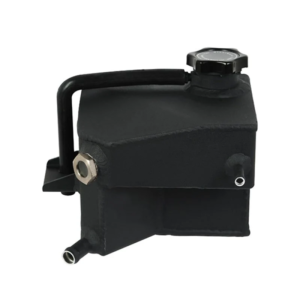
The spec sheet describes a car that is strong from the factory, and a few components limit how hard owners can use it. First is the plastic coolant expansion tank, which is a known failure point on this platform. A cracked tank leaks coolant and can lead to overheating, so replacing it early is cheap insurance, a topic covered fully in the coolant tank problem guide.
The second concern is oil vapor. A turbocharged, direct injected engine pushes blow-by gases through the PCV system, and that vapor can coat the intake valves and intercooler over time. Direct injection sprays fuel into the cylinder instead of across the valves, so nothing washes that residue away. A baffled catch can traps the oil before it reaches the intake, which is why it is one of the most common first additions on this engine.

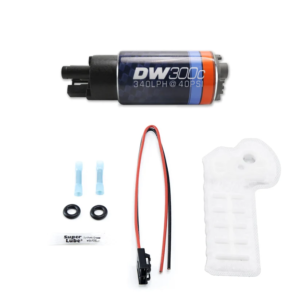
Third is fuel delivery. Stock power is fine on the factory pump, but a tune, E85, or higher boost raises the demand and shrinks the margin. Owners planning any of those changes often upgrade the pump first so the engine never runs short of fuel under load. The most common failure points on this platform are covered in the most common Civic Type R failures guide, which also explains how to prevent them.
What These Specs Mean for Modifying an FK8
A 306 horsepower car weighing just over 3,100 pounds already has strong power to weight, so most owners modify for specific goals instead of chasing a number. Common goals include more power, better handling, stronger braking, and more reliability under track use. Each of those goals has its own path, and the numbers above set the starting point for every one.
On the power side, the question is usually whether to keep the stock turbo or move up, and the stock versus upgraded turbo comparison lays out that decision. Handling upgrades usually start with the coilovers versus lowering springs guide and the sway bar upgrade guide, which cover the two most common suspension steps. Anyone planning stronger stopping power can compare compounds in the EBC Yellowstuff versus Bluestuff comparison.
Owners who want to see how these parts come together on a real car can read the FK8 street hatch build, which shows a complete street-focused setup. More Honda guides live in the Honda blog category, covering both generations of the Type R.
Frequently Asked Questions
How much horsepower does a Civic Type R FK8 have?
The US-spec FK8 Civic Type R makes 306 horsepower at 6,500 rpm and 295 lb-ft of torque from 2,500 to 4,500 rpm. Some other markets list outputs up to 320 horsepower.
How much does an FK8 Civic Type R weigh?
The FK8 has a curb weight of about 3,117 to 3,121 pounds in US specification. Honda lists the Limited Edition at 3,071 pounds.
How long is an FK8 Civic Type R?
The FK8 measures 179.4 inches long, 73.9 inches wide, and 56.5 inches tall in US listings, with a 106.3 inch wheelbase.
What does FK8 mean on a Civic Type R?
FK8 is Honda’s internal chassis code for the tenth generation Civic Type R sold in the US from 2017 to 2021. It is a model code, not an acronym. The newer generation carries the code FL5.
What engine is in the FK8 Civic Type R?
The FK8 uses the K20C1, a turbocharged 2.0 liter inline-four with direct injection and variable valve timing. It pairs with a 6-speed manual transmission and front-wheel drive.
Does the FK8 Civic Type R have a limited-slip differential?
Yes. A limited-slip differential is standard equipment, and Honda lists it on every FK8 trim.
How fast is the FK8 Civic Type R?
The published top speed is 169 miles per hour, and the car lapped the Nürburgring in 7:43.8 in 2017. Published 0 to 60 mph times range from about 4.9 to 5.8 seconds depending on the test.
0 Comments for “Civic Type R FK8 Specs: Horsepower, Weight and Dimensions”