
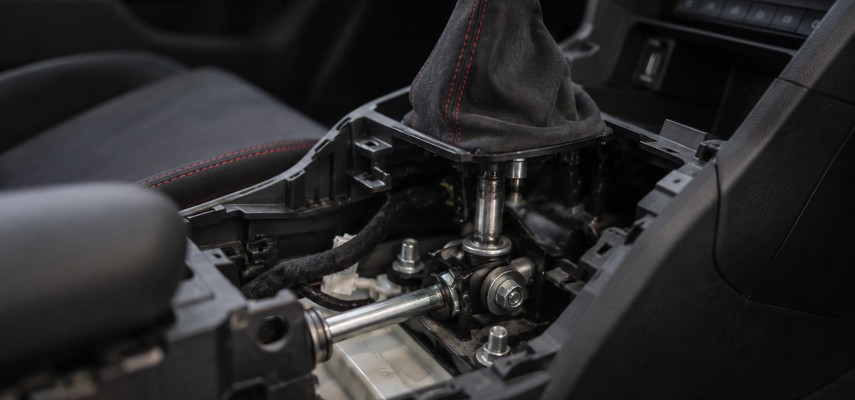

Three parts under forty two dollars each measurably tighten up shift feel on a WRX or STI: a rear shifter bushing, a clutch delay valve delete, and a billet clutch fork pivot. None of them touch the transmission internals or require a full shifter swap, and all three address a specific point where the factory setup adds vagueness to an otherwise mechanically sound shifter. One of the three is WRX specific, which matters for anyone cross shopping this list across both platforms.
Shift feel is one of those things that is easy to notice and hard to describe precisely. A WRX or STI with a slightly notchy, vague, or long throw shifter is not broken. It is just running factory bushings and hydraulics designed around noise and vibration isolation rather than outright feel, and that isolation is exactly what these three parts reduce.
Rear Shifter Bushing: The Cheapest Fix for a Vague Shifter
The rear shifter bushing sits at the base of the shifter assembly and controls how much play exists in the shifter’s mounting point before it starts moving the actual shift linkage. Factory rubber bushings here are soft by design, which absorbs vibration but also introduces a small amount of slop that shows up as a vague, imprecise feeling every time the shifter moves between gears.
The Kartboy Rear Shifter Bushing replaces this factory rubber piece with a stiffer polyurethane bushing, cutting down on that play directly at the source. This fits both WRX and STI, and it is the single cheapest, easiest part on this entire list to install, often taking less than an hour with basic tools.
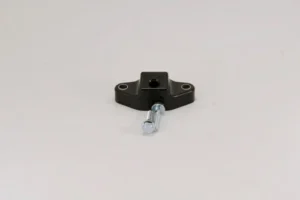
Most owners who install this one part alone already notice a tighter, more direct feeling shifter, since it addresses the most immediate source of play in the shift linkage. It is also the part most commonly recommended as a first step for anyone curious about shifter upgrades but not ready to commit to a full aftermarket short shifter kit.
Clutch Delay Valve Delete: Removing an Intentional Factory Restriction
This next part addresses something most WRX and STI owners do not even know exists. The factory clutch master cylinder includes a clutch delay valve, a small restrictor built into the hydraulic line specifically to slow down clutch engagement and disengagement for smoother, less abrupt shifts during normal driving. It is not a failing part. This is an intentional factory restriction aimed at comfort rather than performance.
The Perrin Clutch Delay Valve Delete replaces that restrictor with a straight through fitting, removing the intentional delay and letting the clutch engage and disengage as quickly as the hydraulic system physically allows. This fits WRX and STI, along with Legacy GT and Outback XT.
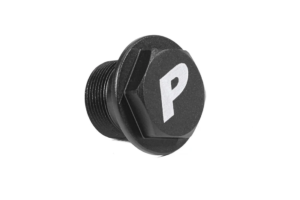
The result is a noticeably quicker, more direct clutch pedal feel that pairs well with faster shifting once the other slop in the drivetrain and shifter linkage has already been addressed. Owners doing aggressive downshifts or quick gear changes tend to notice this one the most, since a delayed clutch engagement becomes a real limitation once shift speed picks up.
Clutch Fork Pivot: A WRX Specific Fix for a Known Weak Point
This part carries an important fitment note that separates it from the other two on this list. The Torque Solution Billet Clutch Fork Pivot fits the WRX only, not the STI. A known wear point on the factory clutch fork pivot develops play over time, and that play translates directly into a spongier, less precise clutch engagement point that no bushing or hydraulic fix elsewhere in the drivetrain can correct.
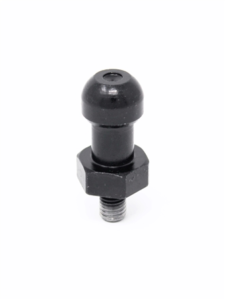
STI owners reading this list should treat the first two parts as their shift feel upgrade path, since this third part simply does not apply to the STI’s different clutch fork design. WRX owners get the full three part list, and this pivot is a cheap, worthwhile addition any time the transmission is already out for a clutch job, since installing it later means pulling everything apart again for a small part.
Why Feel Upgrades Matter Even Without More Power
None of these three parts increase horsepower, and none of them are strictly necessary for a WRX or STI to run and drive normally. What they change is the quality of the connection between driver input and mechanical response, which matters just as much on a stock power car as it does on a heavily built one. A driver who has already gone through the decision on when to upgrade a clutch or looked into what actually changes with a performance clutch already understands that feel and outright capability are separate questions, and this list sits squarely on the feel side of that equation.
Shift feel upgrades also connect naturally to the broader drivetrain tightness conversation covered in what drivetrain movement actually costs under power. A tight shifter and a tight drivetrain are two sides of the same idea, removing unnecessary slop between driver input and mechanical output wherever it exists in the car.
Does Order of Installation Matter
Not strictly, though there is a logical sequence worth following. The rear shifter bushing is the fastest and cheapest, so most owners start there and decide from feel alone whether the other two parts are worth adding. A clutch delay valve delete requires briefly opening the clutch hydraulic line, so bleeding the system afterward is part of the job. The clutch fork pivot requires transmission removal, which makes it the most involved of the three and the best candidate to bundle with any other clutch or drivetrain work already planned, similar to the timing discussed in whether a built transmission is actually needed.
Builds already working through a broader bolt on power upgrade path or a full street STI build plan often treat shift feel as an afterthought behind bigger ticket items like turbos and exhaust. These three parts cost less combined than a single catback exhaust from the best catback exhaust guide and change something the driver feels on every single shift, not just under hard acceleration. Owners chasing a build closer to the numbers in the 400whp EJ257 build recipe tend to notice shift feel more, not less, since faster, more aggressive gear changes make any remaining slop in the shifter or clutch engagement more obvious with every pull.
Frequently Asked Questions
Does the clutch fork pivot fit both WRX and STI?
No. This part is WRX specific and does not fit the STI, which uses a different clutch fork design. STI owners can still use the rear shifter bushing and clutch delay valve delete, both of which fit both platforms.
Will a clutch delay valve delete cause any driveability problems?
Most drivers adjust to the quicker engagement within a short time. The change is noticeable but not extreme, and the tradeoff is a more direct, immediate clutch response in exchange for a slightly less forgiving pedal feel during very casual, low effort shifting.
Do I need a short shifter kit instead of these parts?
Not necessarily. A short shifter kit changes throw distance, which is a different problem than the slop and delay these three parts address. Many owners install these three parts first and decide separately whether a shorter throw is also worth adding.
Can I install all three parts myself?
The rear shifter bushing is a straightforward DIY job with basic tools. A clutch delay valve delete requires opening the hydraulic line and bleeding the clutch system afterward, which is manageable for an experienced home mechanic. The clutch fork pivot requires transmission removal and is best handled by someone comfortable with that level of drivetrain work or done alongside an already planned clutch job.
How much difference will I actually feel from these parts combined?
Owners typically describe the combined effect as a noticeably tighter, more direct shifter and a quicker, more immediate clutch engagement point. The change is real and noticeable on every shift, though it is a refinement of feel rather than a dramatic transformation of how the car drives.
0 Comments for “Shift Feel Upgrade Guide: Parts That Actually Make a Difference”